
What Are Easy Baking Recipes for Kids to Try?
Easy baking recipes for kids: fairy cakes, flapjacks, shortbread and more. Simple, forgiving bakes children can genuinely make themselves.
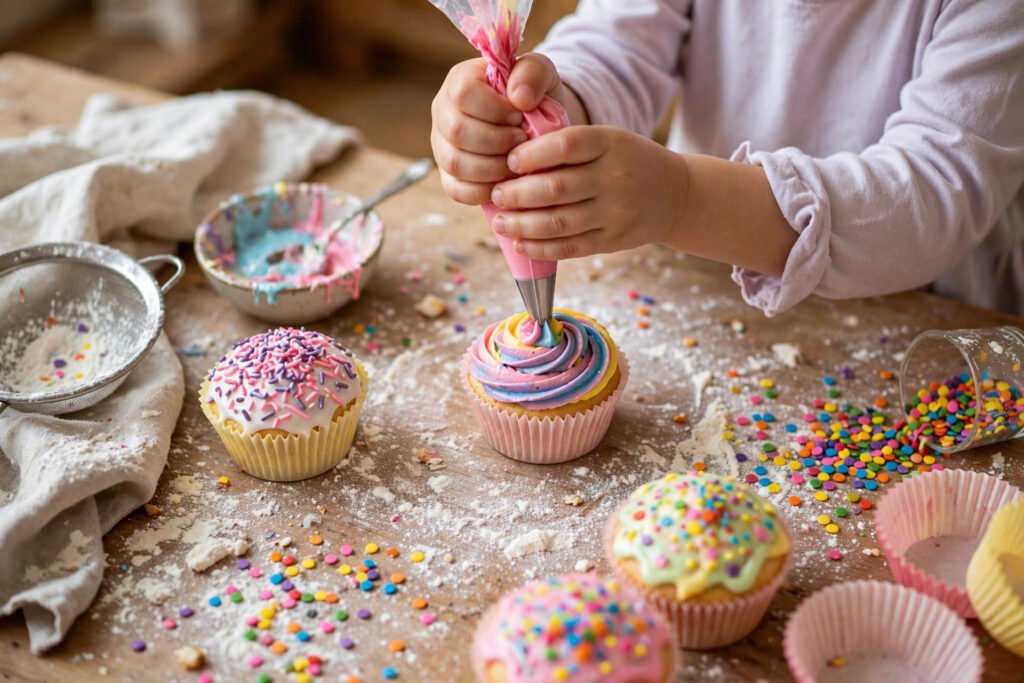
Finding easy baking recipes for kids that they can actually make — not just watch you make — is the difference between a fun afternoon and a stressful one. I’ve done both versions. The first time I “baked with” my kids, I chose croissants from scratch, spent three hours stressed while they got bored and sticky, and wept into laminated dough. Lesson learned. The recipes below are the ones we return to again and again: simple, forgiving, quick enough for short attention spans, and producing results kids are proud of.
What Makes a Recipe Kid-Friendly
Before the recipes, the principles. A good children’s bake has: minimal waiting (under an hour start to finish ideally), steps a child can physically do (stirring, squashing, rolling, cutting shapes), ingredients that forgive imprecise measuring, and a result that looks like the picture even when made by small hands. Avoid anything needing precise temperatures, tricky timing, or long proving — save the sourdough for when they’re teenagers.
Also: accept the mess. Put down newspaper or a wipeable cloth, use big bowls (small ones overflow), and wear aprons. The mess is part of the fun, and twenty minutes of clearing up is a fair price for an hour of happy, absorbed children. Our guide to cooking vegetables so kids will actually eat them has more on building food confidence through hands-on cooking.
Fairy Cakes: The Perfect First Bake
Fairy cakes (the British name for small cupcakes) are the canonical children’s bake for good reason. The all-in-one method means everything goes in a bowl together — no creaming, no folding, no technique. For 12 fairy cakes: 110g soft butter or margarine, 110g caster sugar, 2 eggs, 110g self-raising flour, a teaspoon of vanilla. Children can weigh, tip, crack (with supervision) and stir. Spoon into paper cases — let them do it messily, it doesn’t matter — and bake at 180°C for 15 minutes.
The decorating is where kids truly shine. A simple glacé icing (icing sugar + a splash of water), sprinkles, and total creative freedom. They will make abstract art. It will taste wonderful. This recipe also teaches the foundational skill of the creamed mixture without any of the pressure, since the all-in-one method is nearly foolproof.
Flapjacks: Impossible to Ruin
If fairy cakes are the perfect first bake, flapjacks are the perfect second. Melt 125g butter with 125g golden syrup and 125g demerara sugar in a pan (adult job — hot sugar), then let the kids stir in 250g of porridge oats until everything’s coated. Press into a lined tin — children love the squashing part — and bake at 180°C for 20–25 minutes until golden at the edges. Cool, cut into squares.
What I love about flapjacks: there’s no way to mess them up. Underbake slightly and they’re chewy; bake longer and they’re crisp. Both are delicious. Kids can customise with raisins, chocolate chips, dried cranberries or desiccated coconut stirred in with the oats. They keep for a week in a tin, making them ideal for packed lunches — including lunchboxes for the bakers themselves, which gives enormous pride.
Shortbread: Three Ingredients, Endless Shapes
Shortbread is 200g butter, 100g caster sugar, 300g plain flour — rubbed together, pressed out, cut into shapes. The rubbing-in step is perfect for little hands, and shaped biscuits (stars, dinosaurs, hearts) come out of the oven looking brilliant even when made wonkily. Bake at 170°C for 15–20 minutes until pale gold.
Tip: chill the cut shapes for 15 minutes before baking and they hold their edges better. And if anyone’s avoiding dairy, our dairy-free alternatives for baking include butter swaps that work well in shortbread.
More Easy Baking Recipes for Kids to Try
- Banana bread: the riper the bananas the better — a great use for the black ones nobody wants to eat. Mash, mix, bake. Very forgiving.
- Rice crispy cakes: no oven at all. Melt chocolate, stir in cereal, spoon into cases. Ideal for very young children or hot days.
- Cheese scones: savoury option, ready in 25 minutes, and children love the cutting-out stage. Eat warm with butter.
- Gingerbread people: rolling, cutting and decorating — three activities in one. The dough is sturdy and hard to overwork.
- Rock cakes: gloriously ugly, ready in 20 minutes, and the name alone delights children under ten.
- Pizza dough: not baking exactly, but kneading dough is the best sensory play there is, and dinner is sorted.
Age-by-Age: What Kids Can Actually Do
Ages 2–4: pouring pre-measured ingredients, stirring, squashing dough, pressing cutters, sprinkling decorations. Keep sessions to 20 minutes. Ages 5–7: weighing and measuring with supervision, cracking eggs (into a separate bowl first — shell happens), rolling dough, spreading icing. Ages 8+: reading the recipe themselves, using the oven with supervision, and eventually the whole fairy-cake process solo. My proudest parenting moment remains the day my nine-year-old made flapjacks entirely unaided, including washing up. Mostly.
Safety Without the Lecture
A few non-negotiables, stated calmly once: ovens and hobs are adult-only zones until you’re confident; always use oven gloves (and check they fit small hands); wash hands before starting and after cracking eggs; and raw cake batter with raw egg in it is for tasting with a clean spoon, not eating by the handful. The Food Standards Agency’s kitchen hygiene guidance covers the full picture if you want to be thorough.
Baking With Teenagers: A Different Game
Teenagers won’t sit still for fairy-cake decorating, but they’ll engage with bakes that feel grown up: brownies with flaky sea salt, proper cinnamon rolls, homemade pizza dough, or a Victoria sponge they can photograph for social media. The dynamic shifts too — less hand-holding, more independence. Give them the recipe, stay nearby without hovering, and let them own the result, including the failures, which teach more than the successes ever do. Some of my favourite kitchen memories are of my teenager and me baking side by side in companionable silence, each doing our own thing. And the life skill compounds quietly: a sixteen-year-old who can bake bread, biscuits and a decent cake is a sixteen-year-old who’ll never be helpless in a student kitchen. Start them on the recipes above while they’re young, and by the teens they’ll be teaching you things.
The takeaway: pick recipes where children do the real work, embrace the mess, and let them eat the slightly wonky results with pride. You’re not just making fairy cakes — you’re making a person who isn’t afraid of the kitchen. That’s worth a bit of flour on the ceiling.








1 thought on “What Are Easy Baking Recipes for Kids to Try?”