How to Cook Vegetables So Kids Will Actually Eat Them
How to cook vegetables so kids will actually eat them: roasting, hiding in plain sight, dips and the exposure tricks that widen young diets.
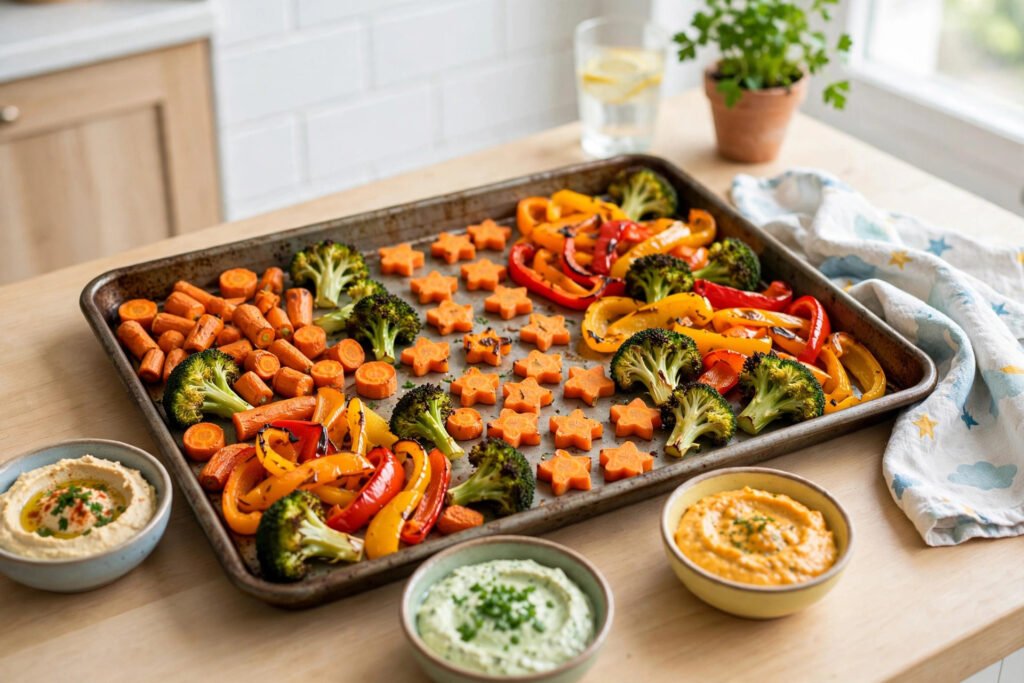
Learning to cook vegetables so kids will eat them is less about recipes and more about psychology — with a bit of food science on the side. I’ll be honest: for two years, the only vegetable my daughter would touch was a potato, and only in chip form. I tried everything — the airplane spoon, the bribes, the “just one bite” negotiations that ended in tears (mine). What finally worked wasn’t a trick at all, but a change in how I cooked and served vegetables. Here’s what the research says and what actually worked in my kitchen.
Roast Them: The Single Biggest Upgrade
If you take one thing from this article, make it this: roast your vegetables. Boiled veg — grey, squeaky, waterlogged — is the reason a generation of British children thinks they hate vegetables. Roasting transforms them completely. High heat caramelises the natural sugars, creating sweet, crisp-edged, deeply savoury bites that taste nothing like their boiled counterparts.
The method: cut veg into similar-sized pieces, toss with olive oil and salt (don’t be shy with either), and roast at 200–220°C until the edges char slightly. Carrots become candy-sweet. Broccoli gets crispy florets that kids eat like popcorn — I’m serious, try it. Cauliflower turns nutty and golden. Brussels sprouts, halved and roasted with a drizzle of honey, convert sprout-haters. Sweet potato wedges need no selling at all. Even courgettes, the slimy menace of the boiled world, become sweet and tender with crisp edges. Start every vegetable-sceptic here.
Cook Vegetables So Kids Will Eat Them: The Stealth Approach
I’m slightly ambivalent about hiding vegetables — it doesn’t teach kids to like them — but as a nutritional bridge while you work on acceptance, it’s invaluable:
- Sauces: blend roasted carrots, red peppers and courgettes into tomato pasta sauce. It tastes richer and nobody detects the veg.
- Soups: a blended soup hides anything. Butternut squash, carrot and lentil, or “cheesy” cauliflower (with actual cheese).
- Smoothies: spinach disappears into berry smoothies completely — the colour goes purple, not green, which helps enormously.
- Baking: grated courgette in chocolate muffins, carrot in cake (it’s basically law), sweet potato in brownies, cauliflower in mac and cheese sauce.
- Mince dishes: grated carrot, courgette and mushroom finely diced into bolognese or chilli — they melt in and add sweetness.
Use stealth for nutrition while also serving visible vegetables for learning — the two strategies work together, not against each other. Our guide to cooking for picky eaters explains how to combine both approaches in one family meal.
Dips Change Everything
Never underestimate the power of a dip. Children who won’t touch a raw carrot will demolish a plate of them dunked in hummus. It’s the interactivity, the autonomy, the fun of it. Keep a rotation: hummus, tzatziki, cream cheese, peanut butter (for apple and celery), salsa, and a simple yoghurt-and-herb dip. Serve a “dip platter” as a pre-dinner snack when they’re starving at 5pm — hungry kids eat vegetables they’d refuse at the table. This is genuinely one of the highest-leverage tricks I know.
The Exposure Playbook
The science is clear: children may need 10–15 neutral exposures to accept a new food, and most parents quit after three. The rules for exposure that works:
- Tiny portions alongside safe foods. One floret of broccoli next to the pasta they love. No pressure to eat it.
- No bribes, no battles. “Two more bites for pudding” frames vegetables as punishment. Pudding is separate; vegetables are just food.
- You eat them too, enthusiastically. The single strongest predictor of what children eat is what they see adults eating.
- Let them choose and prepare. A child who picked the carrots at the shop and helped wash them is invested. Our easy baking recipes for kids build the same kitchen confidence with vegetables.
- Grow something. Even a pot of cress on the windowsill. Children eat what they’ve grown with disproportionate pride — see our windowsill growing guide for the easiest wins.
Texture, Temperature and Timing
Many “fussy” eaters are actually texture-sensitive: they reject mushy, slimy or mixed textures rather than flavours. If your child eats raw carrots but not cooked, or roasted broccoli but not steamed, that’s texture talking — serve vegetables in the textures they accept and expand gradually. Temperature matters too: some children prefer veg at room temperature to piping hot. And timing: serve vegetables when they’re hungriest (as a starter while dinner finishes) rather than alongside a plate of preferred foods they’ll fill up on first.
One more reframe that helped me: stop aiming for “loves all vegetables” and aim for “accepts ten.” Ten vegetables a child will eat is a varied, healthy diet. The NHS guidance on children’s nutrition backs this up — variety matters more than volume.
The Division of Responsibility
The single most liberating idea in children’s feeding comes from dietitian Ellyn Satter: parents decide what, when and where; children decide whether and how much. You choose the menu, the mealtime and the table. They choose what goes into their mouths and how much of it. That’s it. No short-order cooking, no bribes, no battles. When you truly internalise this, mealtimes transform — because most of the conflict comes from parents trying to control the child’s half of the equation. Serve the meal (including at least one thing they’ll eat — the “safe food” that guarantees nobody goes hungry), sit down together, and let go of the outcome. Some nights they’ll eat three peas. Some nights they’ll surprise you. Over months, the trust you build by not pressuring does more for their diet than any amount of cajoling. It’s the hardest easy thing in parenting: cook well, serve calmly, and trust the process.
One Vegetable at a Time
When you’re starting from near-zero, don’t overhaul the whole plate at once — pick one vegetable and work it for a month. Sweetcorn is the classic starter (sweet, familiar, fun to eat), followed by carrots (roasted until candy-sweet), then peas. Serve the chosen vegetable three or four times a week in different forms — roasted, raw with dip, hidden in sauce — and track nothing except whether the resistance softens. Once one vegetable is accepted, the second comes faster, because the child has learned the meta-lesson: new foods are survivable. Twelve vegetables in a year is a transformed diet, built one at a time.
The takeaway: roast everything, dip everything, expose without pressure, and play the long game. My chip-only daughter now eats roasted broccoli voluntarily. It took eighteen months. It was worth every one of them.