
What Are the Best Dairy-Free Alternatives for Baking?
The best dairy-free alternatives for baking: butters, milks and cream swaps that actually work in cakes, pastry, scones and icing.
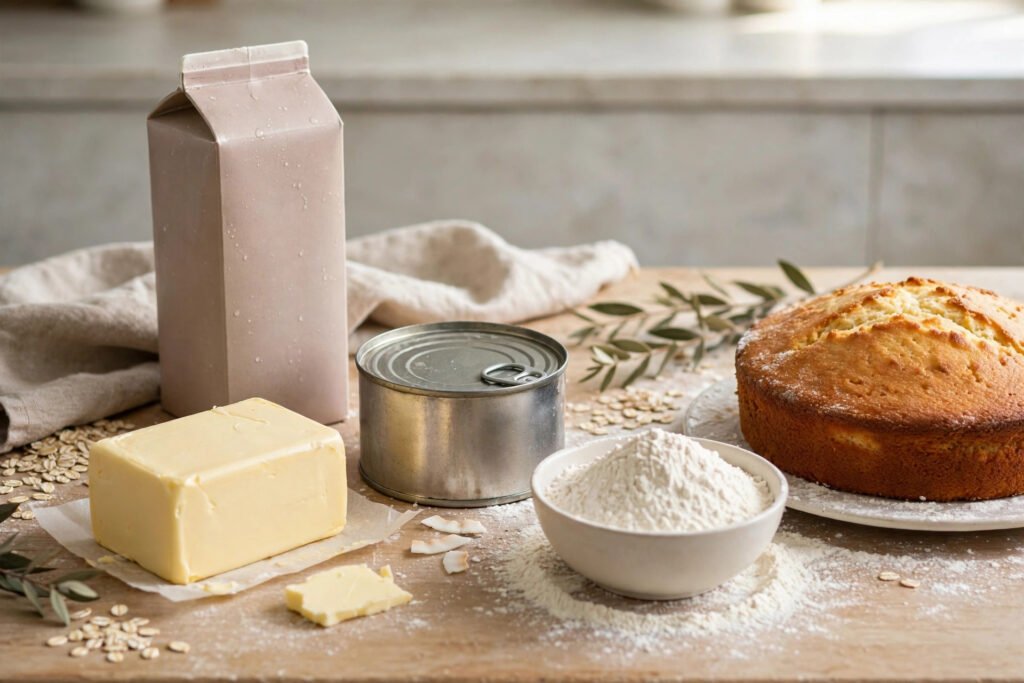
Finding the best dairy-free alternatives for baking used to mean sad, dense cakes and icing that tasted of disappointment. I know because I spent two years baking for a dairy-allergic child, and my early attempts were genuinely humbling. But the market has transformed — today’s dairy-free butters, milks and creams are so good that most people can’t tell the difference in the finished bake. The trick is knowing which swap works where, because they’re not all interchangeable. Here’s what I’ve learned through hundreds of bakes.
Dairy-Free Butter: The Foundation Swap
This is the big one, since butter does so much structural work in baking. The good news: block-style dairy-free butters (the ones sold in foil-wrapped blocks, not tubs) substitute 1:1 for dairy butter in almost everything — cakes, biscuits, pastry, scones. Look for ones based on coconut and shea or palm oil blends with a decent fat content (70%+). The tub-style spreads contain more water and give softer, cakier results — fine for some cakes, terrible for shortbread and pastry where you need the fat to stay solid.
Two practical notes: dairy-free butter melts faster than dairy butter, so work quickly with pastry and chill it well before baking. And for recipes where butter’s flavour is the star — shortbread, buttercream — choose a brand you like the taste of straight, because there’s nowhere to hide. For flaky pastry from scratch, a firm block butter is essential; soft tub spread will give you tough, sad pastry.
Dairy-Free Milks: Which One, Where
Not all plant milks behave the same in baking:
- Soya milk: the best all-rounder. Highest protein, closest behaviour to dairy milk, and the only one that reliably curdles with lemon juice or vinegar to make vegan “buttermilk” — brilliant for tender scones and soda bread.
- Oat milk: naturally sweet and creamy, great in cakes and muffins. The barista versions (higher fat) give richer results.
- Almond milk: subtle nutty flavour, works well but thinner — fine for most cakes.
- Coconut milk (tinned): the rich one. Use it where you’d use double cream — ganache, rich chocolate cakes, creamy frostings. The flavour is noticeable, so pair it with chocolate or tropical flavours.
Always use unsweetened varieties unless the recipe accounts for the sugar — sweetened plant milks can throw off a carefully balanced cake. And shake the carton; they separate.
Dairy-Free Alternatives for Baking: Cream, Yoghurt and Cheese
Double cream: oat-based and soya-based whipping creams now whip genuinely well — chill the carton, use a cold bowl, and don’t overwhip. For ganache and sauces, tinned coconut milk (the solid cream from the top of the tin) is unbeatable. Yoghurt: coconut or soya yoghurts substitute 1:1 in muffins, loaf cakes and marinades, adding the same moisture and tenderness. Cream cheese: dairy-free cream cheeses make perfectly good frosting when beaten with dairy-free butter and icing sugar — add a squeeze of lemon to mimic the tang. Condensed milk: coconut condensed milk exists and makes extraordinary dairy-free fudge and millionaire’s shortbread.
Eggs (The Bonus Round)
Strictly speaking eggs aren’t dairy, but dairy-free bakers are often egg-free too, so: for cakes, 3 tablespoons of aquafaba (chickpea water) whipped equals one egg white — it makes astonishing meringues. For binding, a “flax egg” (1 tbsp ground flaxseed + 3 tbsp water, rested 5 minutes) works in muffins and biscuits. For richness, 60g of apple sauce or mashed banana per egg. None is perfect for everything, but each is excellent at its specific job.
Recipes That Convert Brilliantly (and One That Doesn’t)
Victoria sponge, chocolate cake, banana bread, muffins, flapjacks, crumble topping — all convert seamlessly with block butter and soya or oat milk. Nobody will know. Shortcrust and puff pastry work well with firm block butter. Meringues with aquafaba are, I’m convinced, actually better than egg meringues — crisper, more stable.
The honest exception: croissants and laminated doughs. Without real butter’s precise melting behaviour, they’re extremely difficult — possible, but a project for experienced bakers, not a weeknight. Everything else? Fair game. Try converting our easy baking recipes for kids — fairy cakes and flapjacks are ideal first dairy-free bakes.
Labelling and Allergy Safety
If you’re baking for an allergy rather than a preference, read every label every time — recipes change. “May contain milk” warnings matter for severe allergies. Keep dairy-free bakes separate from regular ones to avoid cross-contamination, use clean equipment, and label clearly if you’re sharing with others. The Food Standards Agency’s allergy guidance is essential reading for anyone baking for allergy sufferers.
Reading Labels: Spotting Hidden Dairy
Baking dairy-free for an allergy means becoming a label detective, because milk hides in surprising places. Watch for: whey, casein, lactose, milk powder, butterfat, ghee, and nougat (usually contains milk). Chocolate is the classic trap — most dark chocolate above 70% is dairy-free, but many bars below that contain milk fat, and “may contain milk” warnings matter for severe allergies. Shop-bought pastry is another: many own-brand shortcrust and puff pastries are accidentally dairy-free, but recipes change, so check every time. Bread, crackers and biscuits often contain milk powder. And “non-dairy” on a label doesn’t always mean milk-free in the allergy sense — in some countries it can legally contain milk protein, so in the UK look for explicit “dairy-free” or check the ingredients. When in doubt, the Food Standards Agency’s allergen labelling guidance explains exactly what manufacturers must declare, and it’s worth reading once so you can shop with confidence ever after.
Storing Dairy-Free Bakes
One honest difference: dairy-free cakes tend to stale a day faster than their dairy equivalents, because butter’s milk solids contribute to keeping quality. The fix is storage, not recipe changes — cool completely, then wrap tightly in cling film or keep in an airtight tin, and most cakes stay lovely for three days. Freeze what you won’t eat: slices wrapped individually defrost in an hour and taste freshly baked. And serve at room temperature, never fridge-cold — cold mutes flavour in any cake, dairy-free or not.
The takeaway: block butter 1:1, soya milk as your default, coconut cream for richness, and aquafaba for the meringue miracle. Dairy-free baking isn’t a compromise any more — in blind tastings I’ve done with friends, the dairy-free versions win as often as not. The NHS advice on food allergies has useful background if you’re navigating a new diagnosis.








2 thoughts on “What Are the Best Dairy-Free Alternatives for Baking?”