How to Reduce Lag While Playing Online Games
Lag ruining your games? How to reduce lag while playing online games: proven network fixes, settings tweaks and hardware checks for smoother gameplay.
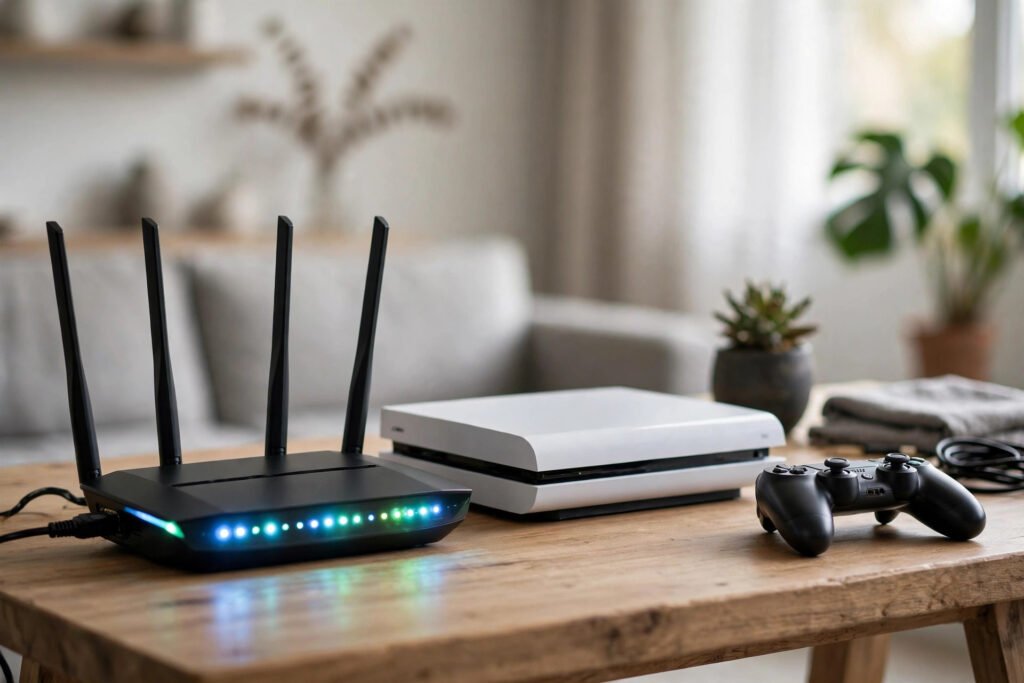
You line up the perfect shot, click — and your character teleports into a wall. Lag is the universal gaming misery: the delay between your input and the game’s response, turning skill into lottery. The good news is that most lag is fixable, and the fixes are usually free. Lag has three main sources — your network, your hardware, and the game server — and diagnosing which one is yours determines the cure. Here is how to reduce lag while playing online games, in order of impact.
First, diagnose: what kind of lag is it?
Not all lag is network lag. Check your ping (latency) in-game: consistently high ping (100ms+) means network issues; ping spikes mean unstable connection; low ping but stuttering means your PC or console is struggling (frame drops, not lag). Run a speed test: you need surprisingly little download speed for gaming (10–20Mbps suffices), but upload stability and low ping matter enormously. If ping is fine but the game stutters, skip to the hardware section — no network fix will help a struggling GPU.
Fix the network: wired beats everything
The single biggest upgrade is free: plug in with an Ethernet cable. Wi-Fi adds latency, jitter and packet loss — a wired connection is faster, stabler and more consistent, full stop. If running a cable is impractical, powerline adapters (which send network signals through your mains wiring) are the next best thing. On Wi-Fi, use the 5GHz band close to the router, and keep the router elevated and unobstructed. Beyond your home, the usual broadband wisdom applies — if your connection crawls every evening, why broadband slows in the evening explains the contention problem, and fixing Wi-Fi dropouts covers router-level troubleshooting. Ofcom’s broadband guides explain your rights when speeds consistently underdeliver.
Optimise your setup and settings
Close bandwidth hogs: streaming video, cloud backups, downloads and other devices’ updates all compete with your game. Enable Quality of Service (QoS) on your router to prioritise gaming traffic. In-game, choose servers geographically close to you — playing on distant servers adds unavoidable light-speed delay. Lower graphics settings if your hardware struggles; stable 60fps at medium settings beats stuttering 120fps at ultra. Update network drivers and router firmware — unglamorous, occasionally transformative. And game at off-peak times if your connection is contention-prone; the difference between 7pm and 11pm can be dramatic on oversubscribed networks.
Advanced: DNS, VPNs and routing
Switching to a fast public DNS (like Cloudflare’s 1.1.1.1 or Google’s 8.8.8.8) occasionally improves matchmaking and connection routing. Gaming VPNs are mostly marketing — they add a hop and rarely reduce ping — except when your ISP routes poorly to game servers, in which case a well-chosen VPN can genuinely help; test with free trials before paying. Some routers support gaming VPN clients or traffic prioritisation worth exploring. But be realistic: if your base connection is poor, no software fully compensates — the ultimate fix is a better line or provider. Which? independently reviews broadband providers for speed and reliability if you are shopping around.
When it is the server, not you
Sometimes lag is simply the game’s fault: overloaded launch-day servers, distant data centres, or poor netcode. Signs it is not you: everyone in the match complains simultaneously, the game’s server status page shows issues, or only one game lags while others are fine. In these cases, wait it out, switch server regions if the game allows, or play at quieter times. Check community channels (the game’s Discord or status page) before rebuilding your home network in frustration.
Console vs PC: lag differences and fixes per platform
Lag behaves differently by platform, and the fixes differ too. On PC, you control everything: graphics settings, drivers, background processes, network adapters. The biggest PC-specific wins are closing background apps (launchers, browsers with 40 tabs, cloud sync), updating GPU and network drivers, and using Ethernet — most desktops have the port; use it. PC also offers the most diagnostic tools: ping plotters, frame-time graphs, per-game network stats.
On console (PlayStation, Xbox, Switch), options are fewer but the principles hold: wired connection via a USB Ethernet adapter where supported, closing suspended games and apps, keeping system software updated, and choosing performance mode over quality mode in games that offer it (higher frame rates reduce input lag noticeably). The Switch’s Wi-Fi-only design makes placement critical — dock it near the router. On mobile, gaming mode features, closing background apps and playing on Wi-Fi rather than variable mobile data help enormously. Whatever the platform, the hierarchy is the same: stable connection first, then frame rate, then everything else. Lag is democratic — it ruins everyone’s fun equally — but the fixes are platform-specific. One more often-overlooked factor: your own hardware’s health. Overheating CPUs and GPUs throttle performance, creating stutter that feels like lag — clean dust from fans yearly, ensure airflow, and monitor temperatures during play. On older consoles, rebuilding the database or clearing the cache can resolve mysterious slowdowns, and on laptops, always plug in: battery-saving modes silently cap performance. Maintenance is boring; smooth gameplay is not.
Conclusion
Reducing gaming lag means: diagnose first (ping vs frames), go wired, close bandwidth hogs, pick nearby servers, optimise settings, and fix the broadband itself if the line is the problem. Most players can halve their effective lag with free changes alone — and in competitive games, that is the difference between reacting and teleporting.
Frequently Asked Questions
What is a good ping for gaming?
Under 50ms is excellent, 50–100ms is playable for most games, and over 100ms noticeably impairs fast-paced competitive play. Consistency matters as much as the number — stable 60ms beats spiky 30ms.
Does Wi-Fi cause lag in games?
Yes — Wi-Fi adds latency, jitter and packet loss versus wired. Ethernet is the single biggest free upgrade. If you must use Wi-Fi, stay close to the router on the 5GHz band.
Will a faster broadband package reduce lag?
Not necessarily — gaming needs low latency more than high speed. A stable 30Mbps line with 20ms ping beats an unstable 500Mbps line with 80ms ping. Fix stability before buying speed.
Do gaming VPNs reduce ping?
Rarely — they add a network hop. They help only when your ISP routes poorly to game servers. Test with a free trial and measure before paying.
Why do I lag only in the evening?
Network contention: your neighbours are all streaming at once, overloading the shared local infrastructure. Gaming at off-peak times or upgrading to a less contended provider helps.
Is 5G good enough for online gaming?
For casual play, yes — modern 5G has decent speeds. But mobile connections suffer higher jitter and packet loss than wired broadband, so competitive gaming on 5G remains a compromise. Fine for fun; not for ranked.
Does a gaming VPN reduce lag?
Occasionally — if your ISP routes traffic inefficiently, a good VPN can find a shorter path. But it adds a hop by default, so it usually increases latency. Test with and without; do not pay for one expecting miracles.
Should I prioritise ping or download speed?
Ping, every time. A stable 30ms connection on modest broadband beats a flashy 500Mbps line with 80ms spikes. Latency and stability determine how a game feels; download speed only matters for patches.