How to Improve Your Aim in FPS Games
Want better aim? How to improve your aim in FPS games: sensitivity settings, warmup routines, crosshair placement and practice drills that actually work.
Every FPS player remembers the humiliation: an opponent who seems to see you first, aim perfectly, and end the encounter before you have processed it began. Aim feels like talent — something you have or you do not. It is not. Aim is a trainable skill built from mouse control, crosshair placement, movement discipline and practice structure. Professional players are not born with inhuman reflexes; they have simply done thousands of hours of deliberate practice. Here is how to improve your aim in FPS games systematically.
Fix your setup first: sensitivity and hardware
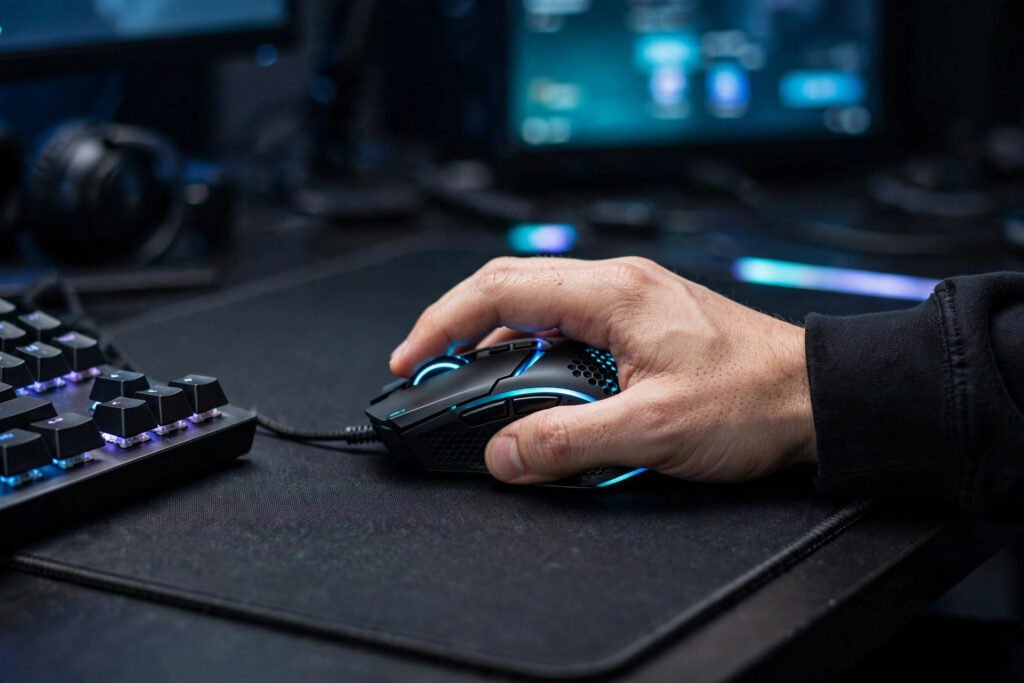
Most bad aim is bad settings. Lower your sensitivity — the overwhelming consensus among professionals is lower than beginners expect, typically requiring a full mousepad sweep to turn 180 degrees. Find yours methodically: set it so you can comfortably track a moving target without overshooting, then leave it alone for weeks. Constant sensitivity changes prevent muscle memory forming. Use a large mousepad, a comfortable grip (palm, claw or fingertip — none is “correct”, consistency is), and disable mouse acceleration in your OS and game settings — acceleration makes identical hand movements produce different results, which is poison for muscle memory. A 144Hz+ monitor helps more than an expensive mouse; seeing the game update faster genuinely improves tracking.
Crosshair placement: the free upgrade
The single biggest aim improvement costs nothing: keep your crosshair at head height, aimed where enemies will appear, before they appear. Beginners aim at the floor and flick up when surprised; good players pre-aim corners, doorways and angles so the enemy walks into their crosshair. This eliminates most “reaction time” disadvantage — you are not reacting faster, you simply started aiming earlier. Drill it consciously for a week: every corner, every doorway, crosshair up and ready. It becomes automatic, and your kill rate jumps without your raw aim improving at all.
Movement discipline: stop running and gunning
Accuracy and movement are traded against each other in every FPS: firing while moving sprays bullets, while standing still (or crouch-strafing) tightens them. Learn your game’s movement mechanics — counter-strafing in tactical shooters (tapping the opposite movement key to stop instantly before firing), slide-cancelling or strafe-jumping in faster titles. The rhythm is: move to position, stop, shoot, move. Beginners do the opposite: they shoot while moving and wonder why nothing hits. Watch your own replays and count how many deaths came from firing on the move — it is usually most of them.
Deliberate practice: aim trainers and routines
Random play improves aim slowly; structured practice improves it fast. Aim trainers (like Aim Lab or KovaaK’s, both free or cheap) isolate the skill: 15–20 minutes of tracking, flicking and target-switching drills before playing builds the neural pathways efficiently. Focus on smoothness over speed — jerky fast flicks miss; smooth controlled movements hit, and speed comes naturally. Practice one weakness at a time: if you whiff close-range tracking, drill close-range tracking. Record your scores; measurable progress keeps motivation alive through the plateau weeks.
Treat practice like physical training, because it is neurological training: regular short sessions beat weekend marathons, and fatigue destroys learning quality. Long sessions also take a physical toll — improving your posture at a desk matters as much for gamers as office workers, and the debate over whether standing desks help your back applies to gaming setups too. Internet Matters’ gaming wellbeing advice covers healthy play habits, and Get Safe Online’s gaming safety guidance is worth a read for account security.
The mental game
Aim slumps are usually mental, not mechanical. Tilt — playing frustrated — destroys decision-making and fine motor control simultaneously; the professional response to three bad games is a break, not a fourth. Warm up before competitive play, not during it. Review deaths without ego: was it aim, positioning, or game sense? Most “aim” problems are actually positioning problems — you lost before the duel started. And sleep, exercise and breaks affect reaction time measurably; the unglamorous lifestyle stuff is a genuine performance edge.
Game sense: the aim skill nobody practises
Here is the secret professionals know: at high levels, aim matters less than game sense — the bundle of positioning, timing, prediction and decision-making that puts you in winning duels before they start. A player with average aim and superb positioning beats a player with superb aim and terrible positioning, because the former takes fair fights and the latter takes bad ones. Game sense is trained differently: watch your replays and ask not “why did I miss” but “why was I there” — wrong place, wrong time, no escape route, no information.
Build it deliberately: learn the maps — common angles, rotations, timing — until movement is automatic. Play to your team’s information: check the minimap every few seconds, listen for audio cues, predict enemy positions from objectives. Study one professional player who plays your role and copy their positioning decisions, not their flicks. And communicate: the team with better information wins more duels, because informed players pre-aim correctly. Aim wins duels; game sense decides which duels happen. Train both, but if you only have twenty minutes, spend it on positioning — it pays compound interest that raw aim never will.
Conclusion
Improving your FPS aim is a system: lower stable sensitivity, crosshair placement at head height, disciplined stop-and-shoot movement, structured aim-trainer practice, and a tilt-free mental game. None of it requires talent — just deliberate repetition. Do it for a month and you will not recognise your old gameplay. Track one metric weekly — accuracy, headshot percentage, or aim-trainer score — and watch it climb. Visible progress is the most underrated motivator in skill development; what gets measured gets improved, even in games.
Frequently Asked Questions
What is the best sensitivity for FPS games?
Lower than you think — most professionals use settings requiring a large mousepad sweep for a 180° turn. Find a sensitivity where you can track smoothly without overshooting, then stop changing it.
Do aim trainers actually work?
Yes, for raw mouse control — 15–20 minutes of structured drills daily builds tracking and flicking faster than play alone. But they do not teach positioning or game sense, which matter as much.
How long does it take to get good aim?
Noticeable improvement in 2–4 weeks of deliberate practice; solid aim in 2–3 months. Consistency matters more than total hours — daily short sessions beat irregular marathons.
Does a better mouse improve aim?
Modestly — a decent sensor and comfortable shape help, but settings, technique and practice matter far more. A 144Hz+ monitor is the single biggest hardware upgrade for most players.
Why is my aim worse some days?
Usually fatigue, tilt, or inconsistent warmup — not lost skill. Sleep, breaks and mental state affect fine motor control significantly. Take a break rather than grinding through a slump.
How important is a high refresh-rate monitor?
Very for competitive play — 144Hz+ makes targets visibly smoother and easier to track than 60Hz. It is one of the few hardware upgrades that genuinely improves aim rather than just looking nicer.
Should I copy a pro player’s sensitivity?
As a starting reference, yes — but personalise from there. Pros’ settings reflect their hands, mouse and muscle memory. Use theirs as a baseline, then adjust in small steps until flicks feel natural.