Best Family Cars for Under £10000 UK
The best family cars for under £10000 UK: Octavia, Toyota hybrids, Kia and more — what £10k buys, what to avoid and the viewing checklist that finds bargains.
Ten thousand pounds is the sweet spot of the British used car market. Below £5,000 you’re gambling on other people’s problems; above £15,000 you’re paying depreciation someone else could have absorbed. At £10,000, the market offers genuinely good family cars — reliable, safe, spacious — with the worst depreciation behind them. But the difference between a bargain and a money pit is knowing which models age gracefully and which rot expensively. Here’s the expert shortlist.
What £10,000 Should Buy in Today’s Market
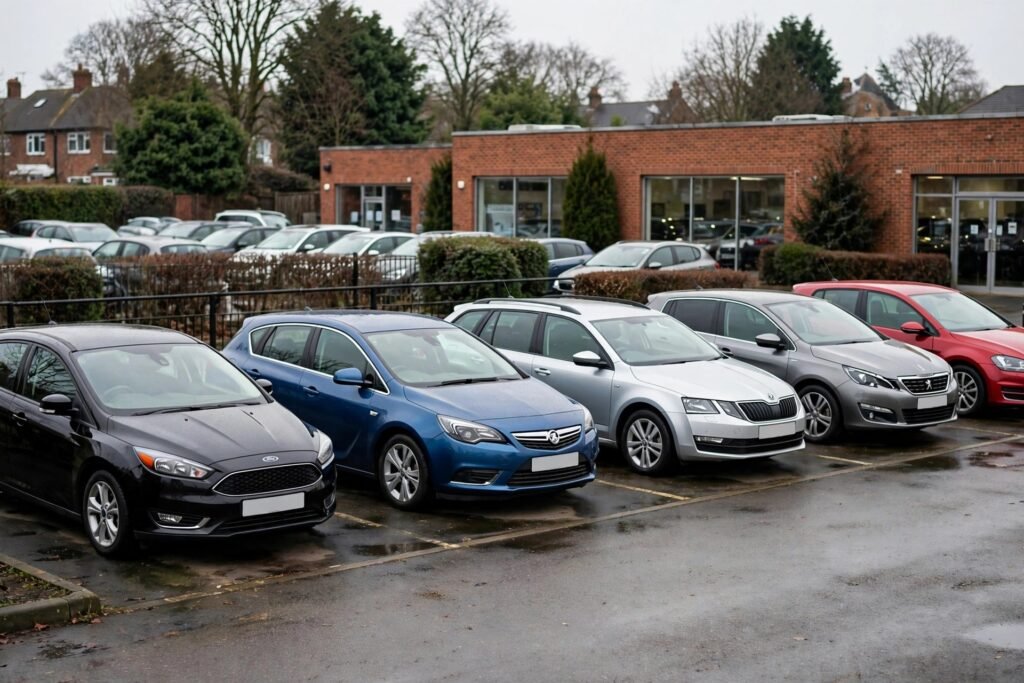
At this budget you’re shopping roughly 5–8-year-old cars with 40,000–80,000 miles — the reliability sweet spot where modern safety kit meets manageable complexity. Your money goes furthest on: mainstream brands (Ford, Vauxhall, Kia, Hyundai, Skoda, Toyota), petrol or hybrid powertrains (avoid early diesels with DPF issues unless you do regular motorway miles), and full service history (non-negotiable at this price — walk away without it).
Before viewing anything, check the MOT history free on GOV.UK — it reveals failure patterns, recurring advisories and mileage consistency. A car with three consecutive “corrosion” advisories is telling you its future.
The Shortlist: Best Family Cars Under £10,000
Skoda Octavia (2015–2019): The Thinking Family’s Choice
The Octavia is the answer to almost every family-car question at this budget. Vast boot (590 litres — bigger than cars costing twice as much), Volkswagen Group engineering without the badge premium, excellent reliability scores, and cheap parts. The 1.4 TSI petrol is the pick — avoid the early 2.0 TDIs unless your mileage justifies diesel. £8,000–£10,000 buys a well-kept 2017–2018 example. The only real weakness: they’re so sensible your neighbours will assume you’ve given up on joy. (You haven’t. You’ve just hidden it in 590 litres of boot.)
Toyota Auris / Corolla Hybrid (2015–2019): The Reliability King
If your priority is a car that simply never goes wrong, buy the Toyota. Hybrid reliability is legendary — taxi firms run them to 300,000 miles — and the hybrid system actually reduces brake and transmission wear. Fuel economy in town is superb (60mpg+ achievable). £9,000–£10,000 buys a 2017–2018 Corolla Touring Sports (the estate) with sensible miles. Less exciting than a hot hatch; more dependable than your morning alarm.
Kia Ceed / Hyundai i30 (2016–2020): The Warranty Wonder
Kia’s 7-year warranty (transferable) means a 2018 Ceed may still have manufacturer cover — extraordinary at this price. The i30 shares the mechanicals. Both are well-built, well-equipped (cruise control, DAB, parking sensors standard on most trims), and depreciation has already done its worst. £7,000–£9,500 buys excellent examples. Check warranty transfer paperwork carefully — it requires serviced-to-schedule history.
Ford Focus Estate (2015–2018): The Driver’s Family Car
The Focus remains the best-handling family hatch/estate in its class — if you care about driving, this is your car. The 1.0 EcoBoost petrol is perky and economical; the estate boot is genuinely useful. £6,000–£8,500 buys well, leaving budget for the inevitable Ford consumables (they’re cheap to fix — that’s the point). Avoid the 1.6 TDCi diesel with high miles unless DPF history is documented. For pre-purchase peace of mind, AI diagnostic tools can now flag common Focus issues from symptoms before you visit a garage. And if you’re planning to take the family car abroad, see what you should know before driving in France.
Honda Civic (2015–2017): The Dark Horse
The ninth-generation Civic’s “magic seats” and vast interior make it a packaging marvel — it swallows family life effortlessly. Honda reliability is Toyota-adjacent, the 1.8 i-VTEC petrol is unburstable, and they depreciate faster than their quality justifies (your gain). £6,500–£8,500. The styling divides opinion; the ownership experience doesn’t.
What to Avoid at This Budget
Premium badges with patchy history. A £9,500 BMW 3 Series or Audi A4 with 110,000 miles and “some” service history is a £3,000 repair bill waiting to happen. Premium cars have premium parts prices — a single BMW injector failure can exceed the car’s value margin. If you must have the badge, budget £2,000 immediately for deferred maintenance.
Early dual-clutch automatics. Ford’s Powershift and VW’s early DQ200 gearboxes have well-documented failure modes costing £1,500–£3,000. At this budget, prefer torque-converter autos (Toyota, Hyundai) or manuals.
Diesels for town driving. Modern diesels need regular 20+ minute runs to regenerate their DPFs. Town-only diesel use causes DPF failures (£1,000+), EGR issues and turbo problems. Unless you regularly drive motorways, buy petrol or hybrid.
Anything with outstanding finance or unclear ownership. A £10 HPI check is the cheapest insurance in car buying. Never skip it.
The Viewing Checklist
Cold start (arrange to see it started from cold — warm engines hide sins), full service history (stamped book or digital records — verify with the servicing dealer if unsure), matching tyres (mismatched budgets suggest penny-pinching maintenance), straight panels and consistent paint (accident history), all electrics working, air con ice-cold (regassing is cheap; compressor failure isn’t), and a test drive covering town, dual carriageway and a hill.
Negotiating: Turning Findings Into Discounts
Every used car has flaws — the skill is converting them into price reductions. Research the model’s common issues beforehand (owner forums are goldmines), then use your inspection findings systematically: worn tyres (£300–£500 a set), brake discs near limits (£200–£400), advisory items on the MOT history, cosmetic damage, missing service stamps, short MOT. Price each issue using independent garage quotes (not main-dealer prices), present them calmly as a list, and propose a specific reduced figure — not a vague “can you do better?” Private sellers typically concede 5–10% for documented issues; dealers less on screen price but often more on included extras (a fresh MOT, a service, a warranty extension). The strongest negotiating position is willingness to walk away — and with the depth of the sub-£10,000 market, there’s always another Octavia. Never negotiate against yourself by revealing your maximum budget; let the car’s condition set the price.
For family cars specifically, check child seat compatibility rules on GOV.UK and physically fit your car seats — ISOFIX points vary in accessibility.
The Bottom Line
£10,000 buys an excellent family car if you shop the reliability champions — Octavia for space, Toyota hybrid for dependability, Kia/Hyundai for warranty, Focus for driving pleasure, Civic for packaging — with full history and a clean MOT record. Avoid premium badges on a budget, avoid town-driven diesels, and never skip the HPI check. The best family car isn’t the most exciting one; it’s the one that’s still working perfectly when the finance would have ended.
Frequently Asked Questions
Petrol, diesel or hybrid for a family car under £10k?
Hybrid if you do mixed driving (best economy, best reliability), petrol if you do low miles or mostly town driving (simplest, cheapest to fix). Diesel only if you regularly drive long motorway distances — otherwise DPF problems will erase any fuel saving.
How many miles is too many at this price?
Condition and history matter more than mileage. A 90,000-mile car with full dealer history is a better buy than a 45,000-mile car with no records. That said, under 80,000 miles gives you more usable life before major component wear.
Should I buy from a dealer or privately?
Dealers cost 10–15% more but provide Consumer Rights Act protection (30-day rejection rights, 6-month fault presumption) — valuable at this budget. Private sales are cheaper but sold as seen. For buyers who can’t assess cars mechanically, dealer protection is worth the premium.
Is an extended warranty worth it?
On reliable models with full history, usually not — the warranty cost often exceeds likely repairs. On complex cars (automatics, premium brands), a good warranty can pay for itself with one failure. Read exclusions obsessively; cheap warranties exclude everything that breaks.