Are Standing Desks Actually Good for Your Back?
Standing desks promise better posture, but do they deliver? What the evidence says, plus how to use one without new aches.
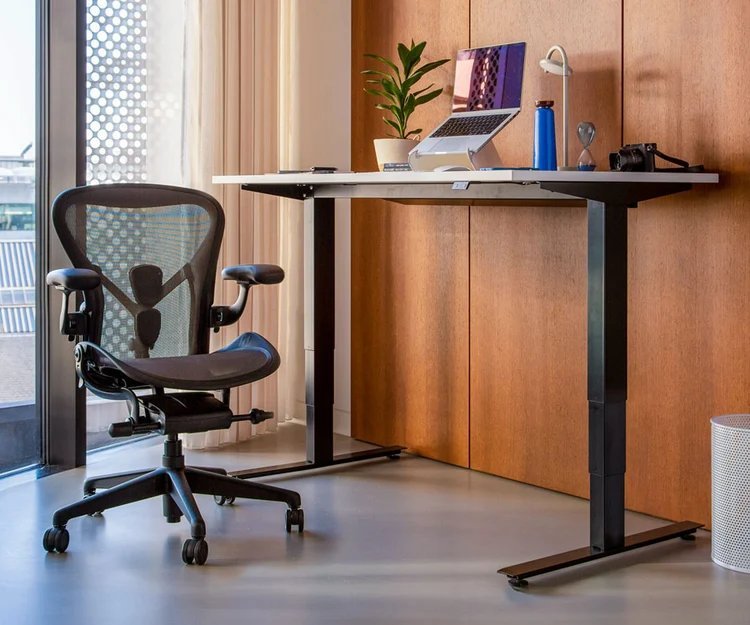
Standing desks have gone from Silicon Valley status symbol to standard office furniture in barely a decade. The promise is seductive: burn more calories, fix your posture, dodge the “sitting is the new smoking” headlines. But are standing desks actually good for your back, or have we just swapped one set of problems for another?
I’ve used one on and off for three years, and my honest verdict is: they’re a useful tool used badly by most people. Here’s what the evidence says and how to get the benefits without the new aches.
Standing Desks: Are They Good for Your Back?
The evidence is cautiously positive but hardly miraculous. Several studies have found that alternating between sitting and standing reduces self-reported back and neck pain compared with sitting all day — one well-known trial found a roughly 30% reduction in upper back and neck pain over a few weeks. That sounds impressive until you note the effect is modest in absolute terms and the studies are mostly short-term.
On calorie burning, temper your expectations: standing burns perhaps 8–15 extra calories per hour versus sitting. Over a full workday that might total 100–150 calories — the equivalent of a banana. Nobody is losing weight via standing desk alone.
The cardiovascular claims are similarly nuanced. Standing still for hours isn’t exercise; prolonged static standing carries its own risks, including leg swelling, varicose veins and — ironically — lower back fatigue. The real enemy was never sitting per se; it’s immobility. A standing desk you stand at motionless for six hours has simply replaced one static posture with another.
How to Use a Standing Desk Properly
If you’ve got one (or you’re considering it), the difference between benefit and new problems is all in the setup and rhythm.
Get the ergonomics right
- Screen at eye level: the same rule as sitting — top of screen at or just below eye level. Most people set standing desks too low and crane down.
- Elbows at 90 degrees: keyboard and mouse at elbow height with relaxed shoulders. Shrug-test: if your shoulders are up by your ears, the desk is too high.
- Stand tall, not rigid: weight even on both feet, knees soft (not locked), pelvis neutral. Locking your knees and thrusting your hips forward is the standing equivalent of slouching.
- Wear decent shoes or stand on a mat: hard floors plus unsupportive footwear equals sore feet within the hour. An anti-fatigue mat genuinely helps.
- Screen distance: still an arm’s length. People tend to lean toward the screen when standing — resist it.
Follow a sit-stand rhythm
The research sweet spot is roughly 15–30 minutes standing per hour, or a ratio of about 1:2 to 1:3 standing to sitting. A practical pattern: sit for 45 minutes, stand for 15. Set a timer — without one, you’ll either forget to stand or forget to sit down again, and both extremes cause trouble.
Build up gradually. If you’re new to standing, start with 10–15 minute bouts a few times a day and add time over two to three weeks. Jumping straight to hours of standing is how people develop aching feet, tight calves and sore lower backs — then declare standing desks useless.
The Problems Nobody Warns You About
Honest account of what can go wrong: foot and leg fatigue is the most common complaint — solved by mats, shoes and gradual build-up. Lower back ache from standing with poor posture (usually an arched lower back from weak core engagement) — solved by the posture cues above and not overdoing duration. Varicose vein concerns for those predisposed — movement breaks and compression socks help. And productivity dips during the adjustment period — fine motor tasks can feel clumsier standing at first; sit for precision work while you adapt.
None of these are reasons to avoid standing desks. They’re reasons to use them intelligently rather than treating “standing” as morally superior to “sitting”.
Cheaper Alternatives That Work Just as Well
Before spending £200–£600 on a full desk, consider: a laptop riser on a high counter for standing email sessions; walking meetings for one-to-ones; standing for phone calls as a default rule; or a desk converter (£80–£150) that sits on your existing desk. Combined with the posture basics in our guide to improving posture at a desk all day, these deliver most of the benefit for a fraction of the cost.
And if back pain is your main motivation, remember that movement variety beats any single position. Our guide to exercising safely with lower back pain covers the strength work that actually bulletproofs your back long-term — no furniture purchase required.
For persistent back issues, the NHS guidance on back pain remains the best free starting point, and a physio assessment beats any desk upgrade.
Beyond Standing: Active Sitting and Other Options
If a full standing desk doesn’t appeal (cost, space, or you just like your chair), the middle ground is bigger than you think:
- Active sitting: wobble cushions (£15–£25) or kneeling chairs introduce micro-movement into sitting — your core works subtly to stabilise, and you naturally shift position. The evidence is thinner than for sit-stand desks, but users report less stiffness. They’re cheap experiments.
- Perch stools: halfway between sitting and standing — a leaning stool used with a raised desk. Popular in studios and workshops; odd at first, natural within days.
- Under-desk cycles and ellipticals: pedal gently while you work. Modest calorie burn, but the constant leg movement prevents the stiffness of static sitting. Best for passive tasks (calls, reading); tricky for precision mouse work.
- Walking pads: slim treadmills (£200–£400) that slide under a standing desk. Walk at 2–3 km/h while doing emails and calls — genuinely transformative for daily step counts. Noisy on video calls, so plan around them.
The real hierarchy
Ranked by benefit for back health: regular movement breaks (free, highest impact) > walking pad or active workstation > sit-stand desk used properly > fancy ergonomic chair > any static setup. Notice the pattern: movement beats furniture at every level. Buy the desk if you want it — but never let equipment replace the habit of getting up. The cheapest intervention (standing up every 30 minutes) outperforms the most expensive chair ever made.
The practical takeaway: standing desks help backs modestly — but only with correct height, good shoes or a mat, and a sit-stand rhythm of roughly 15–30 minutes per hour. They’re a movement tool, not a miracle. The real win is breaking up static time, however you do it.