How to Care for Curly Hair: Complete Beginner’s Guide
How to care for curly hair: complete beginner’s guide to washing, conditioning and styling curls — everything a curl newbie needs for defined, healthy hair.
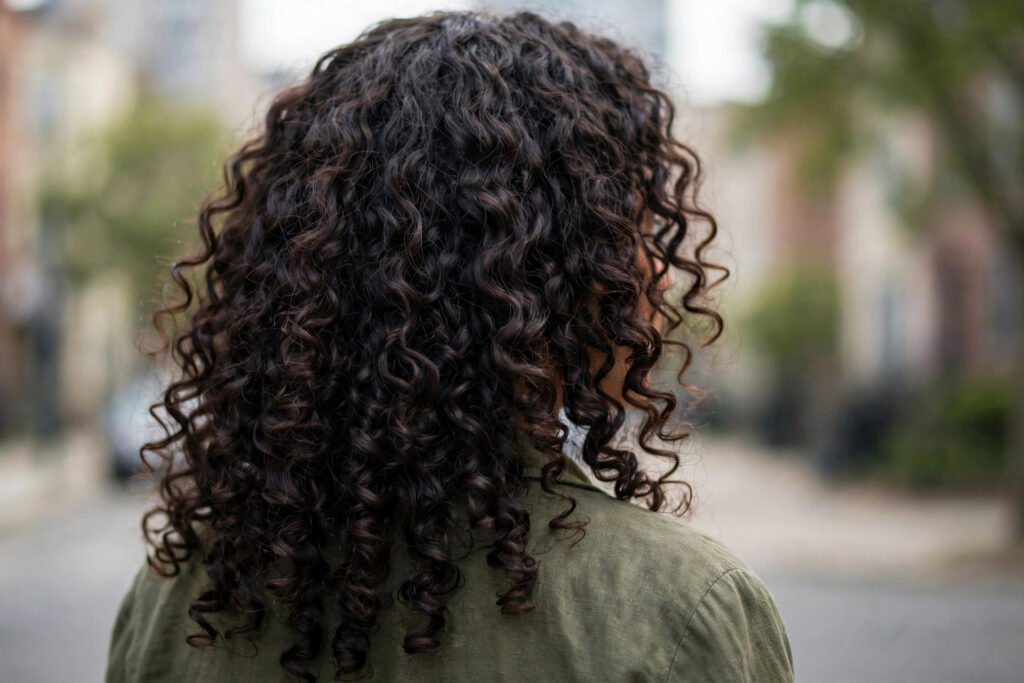
Curly hair has its own physics. What works for straight hair — daily brushing, sulfates, rough towel-drying — is actively destructive to curls, which is why so many curly-haired beginners spend years fighting frizz they are accidentally creating. The good news: curly hair is not difficult, it is just different. Once you understand what curls actually need — moisture, gentle handling, and minimal disturbance — the routine is simpler than you think. This is the complete beginner’s guide.
First, know your curl pattern (roughly)
The 2A-to-4C typing system describes curl tightness, from loose waves (2) through curls (3) to coils (4). It is a useful starting point for choosing products, not a rigid identity — most heads have two or three patterns. In general, looser curls need lighter products and can handle more washing; tighter curls and coils need richer moisture and less frequent washing. Do not obsess over your exact number; “my curls are loose and fine” or “tight and thick” is enough to guide choices.
Washing: less often, more gently
Curly hair’s natural oils travel slowly down a spiralled shaft, so the ends run dry while the scalp gets oily. Washing two to three times a week suits most curl types; very tight coils may go weekly. Use a sulfate-free shampoo focused on the scalp — the lengths get clean enough from the rinse running through. Every few washes, clarify with a stronger shampoo to remove product build-up, which is the hidden cause of limp, dull curls.
Conditioner is non-negotiable and should be generous: apply to soaking-wet hair, detangle with fingers or a wide-tooth comb (never a brush on dry curls), and rinse partially — leaving a little in adds moisture. Deep condition every one to two weeks, especially for thicker or colour-treated curls.
The styling routine that defines curls
Style on soaking-wet hair — this is the step beginners miss. Water is a curl’s best styling product; it clumps curls into defined spirals. Apply a leave-in conditioner, then a hold product (gel or mousse) using “praying hands” (smoothing palms down the hair) followed by scrunching upward. Then do not touch it. Touching wet curls breaks up clumps and creates frizz; the cast will feel crunchy when dry and you scrunch that out at the end (“scrunch the crunch”) for soft, defined curls.
Dry by diffusing on low heat or air-drying. Regular towel-drying roughs up the cuticle — swap to a microfibre towel or an old cotton T-shirt and plop or scrunch instead. It sounds fussy; it takes two minutes and transforms results.
Sleep and refresh: the second-day secret
Night-time is where curl routines live or die. The “pineapple” — a loose high ponytail on top of the head — or a satin bonnet or satin pillowcase reduces friction that causes frizz and flattened curls. In the morning, refresh with a light mist of water mixed with a little leave-in, scrunch, and go. Most curlies find days two and three look better than day one once the refresh technique clicks.
Ingredients: what helps and what harms
Helpful: glycerin and aloe (humectants that draw in moisture), shea butter and natural oils (sealants for thicker curls), hydrolysed proteins (strength, in moderation). Harmful for most curlies: sulfates (stripping), silicones that are not water-soluble (build-up that blocks moisture — check for ingredients ending in “-cone” without “PEG”), and drying alcohols. You do not need to memorise chemistry; the practical rule is that if your curls feel coated, straw-like or limp despite conditioning, you likely have build-up and need to clarify. Which? reviews hair products independently, useful when choosing between the endless curl creams — and if you are experiencing actual hair loss rather than breakage, the NHS hair loss guidance explains when to seek medical advice.
Choosing products is easier when you also understand the rest of your look — for instance, colours that suit your skin tone matter as much as products that suit your curl type when you are building a coherent style.
Common beginner mistakes
Brushing dry curls (creates a frizz halo — detangle only when wet and conditioned). Using too much product (weighs curls down; start with less than you think). Washing daily with harsh shampoo. Towel-drying roughly. Expecting day-one perfection — there is a genuine learning curve of a few weeks while you find your products and technique. And comparing your wash day to someone else’s: curl patterns, density and porosity differ enormously, so your best curls will not look like anyone else’s.
Hair health also connects to the bigger picture: good sleep supports everything from skin to hair growth, and chronic stress shows up in shedding — the routine works best as part of a rested life, not a stressed one.
Protective styles and seasonal care
When curls need a break — during busy weeks, harsh weather or just for variety — protective styles tuck the fragile ends away. Loose braids, twists, buns and pineapple updos all shield ends from friction and the elements. The rules: never tight (tension causes traction alopecia and breakage at the hairline), never for too long without maintenance (two to four weeks, with scalp care in between), and always moisturised underneath — dry hair in a protective style still breaks. Silk or satin scrunchies beat elastic bands, which snap hairs.
Seasons change what curls need. Winter’s indoor heating and cold air are brutally drying: switch to richer leave-ins, deep condition weekly, and protect hair under hats (satin-lined, since wool roughs up the cuticle). Summer brings humidity — which can be a curl’s best friend or worst enemy depending on your products. Humectant-heavy products in high humidity can over-moisturise and frizz; anti-humectant stylers with light oils seal better. Chlorine and salt water dry curls fast, so wet hair with clean water and apply leave-in before swimming (saturated hair absorbs less pool water), and rinse immediately after. Adjust the routine with the calendar and your curls will thank you year-round.
Conclusion
Caring for curly hair comes down to a short list: wash gently and less often, condition generously, style soaking wet with leave-in and gel, do not touch it while it dries, and protect it at night with satin. Give the routine a month of consistent practice before judging it. Your curls were never the problem — the straight-hair routine was.
Frequently Asked Questions
How often should I wash curly hair?
Most curl types do well with two to three washes a week; tighter coils can go weekly. Adjust to your scalp — itchiness or build-up means wash more often, not less.
Why is my curly hair so frizzy?
The usual culprits are dryness, brushing dry curls, rough towel-drying, touching hair while it dries, and product build-up. Moisture, gentle handling and clarifying solve most frizz.
Should I brush curly hair?
Only when wet and saturated with conditioner, using fingers or a wide-tooth comb. Never brush dry curls unless you are going for volume and do not mind frizz.
What is the “curly girl method”?
A popular routine avoiding sulfates, silicones and heat, emphasising conditioning and gentle styling. It works well for many, but you can take its principles without following it rigidly.
How long until my curls look good?
Expect a learning curve of three to six weeks to dial in products and technique. Hair damaged by years of straight-hair routines may need a few months — and sometimes a restorative cut — to show its true pattern.