How to Cover Dark Circles Without Looking Cakey
Cover dark circles without caking: identify your circle type, colour correction, thin-layer concealer technique, setting without powder overload and long-term fixes.
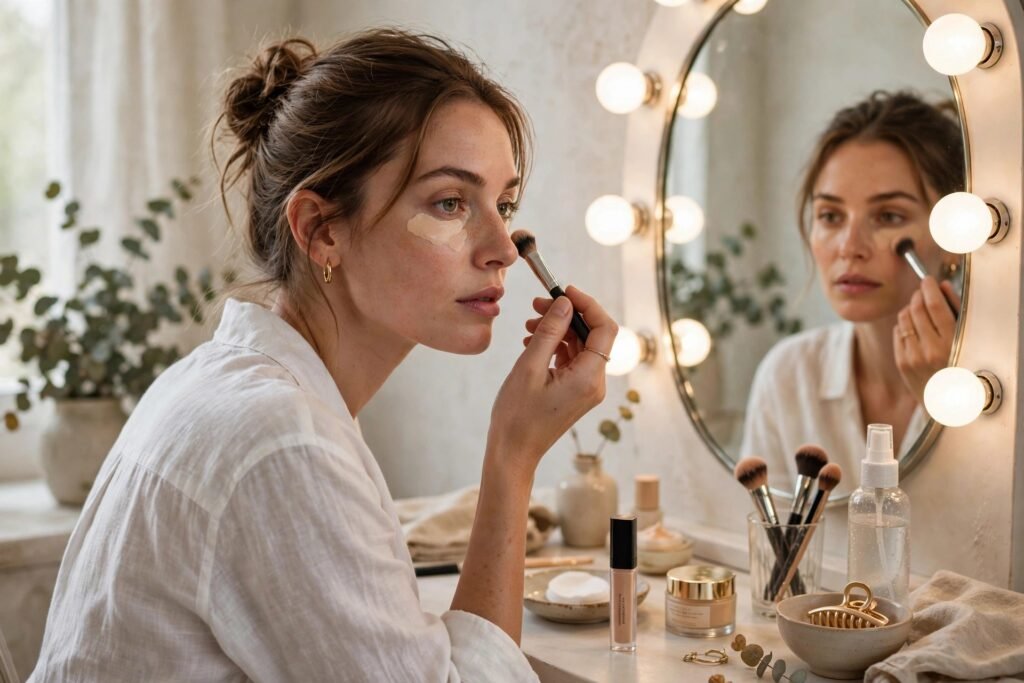
Dark circles are the great betrayers — you slept seven hours, you feel fine, but your under-eyes announce an all-nighter to the world. Covering them seems simple until the concealer creases, cakes, and by 2pm looks worse than the circles did. The difference between flawless and cakey isn’t the product’s price — it’s preparation, placement and restraint. Here’s the professional method for covering dark circles so they disappear, not relocate into your fine lines.
First: Know What You’re Covering
“Dark circles” has three distinct causes, and each needs different handling:
- Pigmentation (brownish tone): genetic or sun-related melanin. Responds to colour correction (peach/salmon tones neutralise brown) and brightening skincare (vitamin C, niacinamide) over time.
- Vascular (bluish/purple tone): thin skin showing blood vessels beneath — worse with paleness, tiredness and ageing. Responds to peach correctors and adequate sleep; fillers are the only dramatic fix, and that’s a medical decision.
- Structural (shadows from hollows/tear troughs): the shadow cast by under-eye hollows, worse in overhead lighting. Makeup can only soften this — strategic highlighting of the surrounding area minimises the contrast.
Most people have a mix. Identify yours in natural daylight (not bathroom fluorescents) before buying anything. And address the foundations: chronic dark circles worsen with poor sleep, dehydration, allergies and sun exposure. Our sleep guide tackles the biggest lever, and the NHS notes that persistent dark circles with other symptoms warrant a GP check (anaemia and thyroid issues can show here).
Prep: The 90% Nobody Does
Cakey concealer is almost always a prep failure, not a product failure. The under-eye area is the thinnest skin on your face — it needs:
- Hydration: a lightweight eye cream, applied 5 minutes before makeup to absorb fully. Dry under-eyes drink concealer and leave pigment sitting in creases. Hyaluronic acid serums work beautifully here.
- De-puffing: cold spoons, chilled eye masks or simply splashing cold water constricts vessels and reduces morning puffiness that concealer can’t hide.
- Primer (optional but powerful): a hydrating — never mattifying — primer smooths the canvas. Skip silicone-heavy primers under eyes; they pill with concealer.
- Less is the whole game: the number-one rule. Under-eyes need a fraction of the product people apply. You can always add; removing caked concealer means starting over.
Good skin prep underpins everything — consistent skincare keeps the canvas healthy long-term. And the finishing touches matter too: building your look around affordable sustainable fashion brands completes a polished routine.
Colour Correction: The Pro Secret
Before concealer, neutralise the discolouration — this is what lets you use less concealer, which is what prevents caking:
- Peach/salmon corrector for blue/purple circles (fair to medium skin).
- Orange corrector for deep discolouration on deeper skin tones.
- Yellow corrector for mild dullness and brightening.
Apply a whisper-thin layer only where the discolouration is darkest — usually the inner corner and the shadowed trough — not across the whole under-eye. Pat (never rub) with a fingertip or damp sponge. The corrector should make the area look slightly odd on its own; the concealer on top unifies it. This two-step approach uses half the product of concealer alone, which is the entire anti-cake strategy.
Concealer: Placement and Technique
- Choose one shade lighter than your foundation — maximum. Two shades lighter creates the reverse-raccoon glow that photographs terribly. For deeper skin tones, match closely and rely on the corrector for brightening.
- Creamy, hydrating formulas — avoid matte, full-coverage, long-wear concealers under eyes; they’re designed for spots, not thin skin. Serum-concealers and radiant finishes are made for this job.
- Placement: the triangle method is outdated. Instead, apply small dots along the darkest area (inner corner through the trough), then blend outward and slightly upward. Don’t take concealer right up to the lash line or onto the outer corner where crow’s feet live — product migrates into lines within hours.
- Blend with a damp sponge using bouncing motions, or a fluffy brush. Fingers work too — warmth helps melt product — but use a light touch.
- Build in thin layers: one thin layer, assess, then a second only where needed. Three thin layers beat one thick one every time.
Setting Without Caking: The Delicate Balance
Setting prevents creasing, but powder is where cakey happens. The method:
- Minimal powder, applied precisely: a tiny amount of finely-milled translucent powder, pressed (not swept) only where concealer was applied, with a small fluffy brush. Tap off excess — then tap again.
- Baking is overkill for daily wear: heavy baking belongs to stage makeup and photography, not offices and school runs. It dehydrates the area and emphasises texture within hours.
- Setting spray instead: a hydrating setting spray melds layers together and removes any powdery finish — the single best anti-cake product in existence.
- Blot, don’t reapply: midday touch-ups should be blotting papers first, then the tiniest concealer pat only if needed. Layering fresh concealer over settled concealer is how cake is built.
This fits into a full routine seamlessly — a streamlined morning sequence keeps everything wearable day to day. The British Beauty Council offers guidance on product standards and ingredients worth knowing.
Long-Term: Reducing Circles Themselves
Makeup manages; habits reduce. The evidence-backed reducers: consistent 7–9 hour sleep, daily SPF (sun darkens pigmentation), managing allergies (rubbing worsens everything), staying hydrated, vitamin C and niacinamide serums for pigmentation, retinoids for skin thickness (introduced slowly, never too close to the lash line), and cold compresses for vascular puffiness. Manage expectations honestly: genetics and bone structure set the baseline, and no cream erases hereditary hollows. The goal is improvement, not elimination — and good technique makes the remainder invisible. Give any new routine 6–8 weeks before judging; skin turnover is slow, and impatience is the enemy of every skincare regimen.
Conclusion
Covering dark circles without caking comes down to: identifying your circle type, hydrating prep, colour correction before concealer, creamy formulas one shade up, thin layered application placed precisely, minimal pressed powder, and setting spray to finish. Less product, better placed, on better-prepped skin — that’s the entire professional secret. Your under-eyes will look like you, on an excellent day’s sleep, and nobody will ever know why. Master this once and the morning mirror becomes a much friendlier place.
Frequently Asked Questions
Why does my concealer always look cakey under my eyes?
Almost always too much product on under-prepped skin. Hydrate with eye cream first, use a colour corrector so you need less concealer, apply thin layers, and set with minimal powder plus setting spray.
What colour corrector should I use for dark circles?
Peach/salmon for blue-purple circles on fair to medium skin; orange for deeper discolouration on deeper skin tones; yellow for mild dullness. Apply thinly only where darkest, before concealer.
Should concealer be lighter than foundation?
One shade lighter maximum for brightening. Two+ shades lighter creates an ashy, obvious mask — especially in photos. Deeper skin tones should match closely and rely on correctors for brightness.
How do I stop concealer creasing under my eyes?
Hydrate well, use thin layers, avoid taking product into fine lines at the outer corner, set lightly with pressed translucent powder, and finish with hydrating setting spray. Blot midday rather than reapplying layers.
Can dark circles be reduced without makeup?
Partially: 7–9 hours sleep, daily SPF, allergy management, hydration, vitamin C/niacinamide for pigmentation, and cold compresses for puffiness all help. Genetics and bone structure set limits — technique covers the rest.