How Do Electric Cars Charge So Fast Now?
How do electric cars charge so fast now? Battery chemistry, 800-volt architecture and rapid chargers explained — plus what still limits charging speeds.
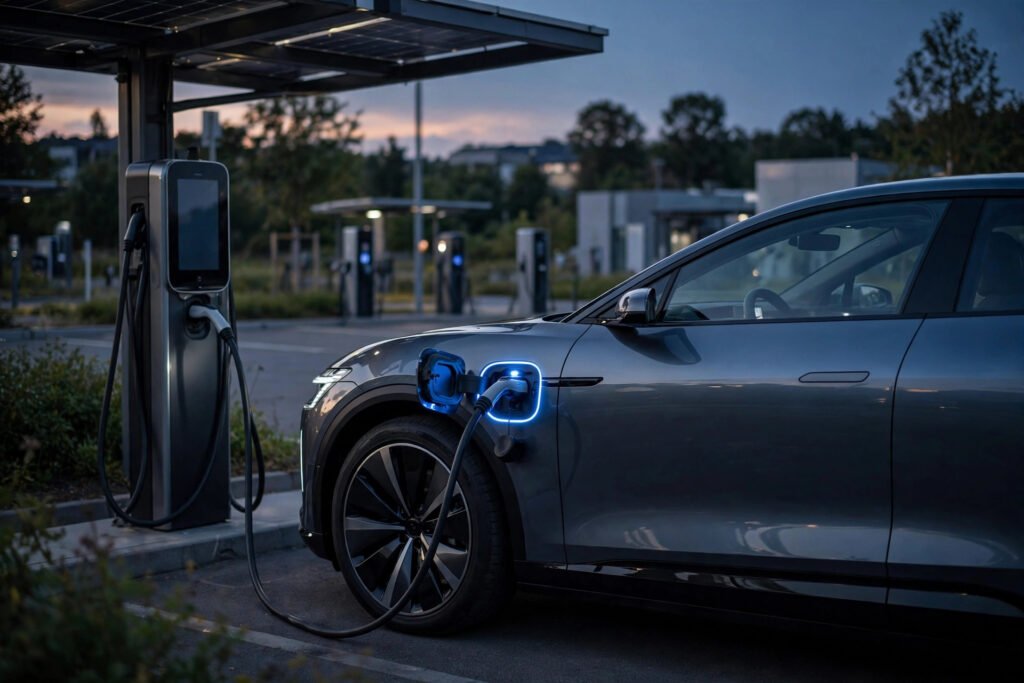
Ten years ago, “fast” electric car charging meant an hour tethered to a post for 80 miles of range. Today, some EVs add 200 miles in under 20 minutes, and 350kW chargers are spreading across Britain’s motorways. Drivers upgrading from petrol often ask how this is possible — and whether such speed damages the battery. The answer involves clever chemistry, serious electrical engineering, and thermal management that would impress a Formula 1 team. Here is how electric cars charge so fast now.
The basics: it is all about power
Charging speed is power, measured in kilowatts: a 7kW home charger trickles, a 150kW rapid charger floods. Energy delivered equals power multiplied by time, so doubling the power roughly halves the charging time — up to the car’s limit. Modern EVs accept 150–350kW because every part of the chain was redesigned for it: thicker cables, liquid-cooled connectors, and battery packs built to swallow enormous currents. The UK’s rapid charging network is expanding along motorways and A-roads, increasingly offering 150kW+ speeds that make genuine electric road-tripping practical.
800-volt architecture: the real breakthrough
The key enabler is voltage. Power equals voltage times current, and current is the problem: high current means thick, heavy cables and intense heat. By moving from 400-volt to 800-volt battery systems (pioneered by Porsche, Hyundai-Kia and now spreading), cars deliver the same power at half the current — halving heat losses and allowing thinner, lighter wiring. It is the same reason the National Grid transmits at hundreds of thousands of volts. 800V cars like the Hyundai Ioniq 5 and Porsche Taycan sustain 200kW+ charging far longer into the charge curve, which is what actually shortens journey stops.
The charging curve: why the last 20 per cent is slow
EVs do not charge at full speed throughout. A typical session rockets to 80 per cent quickly, then tapers — the final stretch can take as long as the first 80 per cent. This is chemistry protecting itself: as the battery fills, lithium ions have fewer empty spaces in the graphite anode, and forcing them in fast risks lithium plating — metallic lithium depositing on the anode, permanently reducing capacity and, in extremes, creating safety risks. Battery management systems therefore taper current as charge rises. The practical lesson: on road trips, charge to 80 per cent and go — the last 20 per cent is for overnight charging at home.
Thermal management: the unsung hero
Fast charging generates serious heat, and heat is the enemy of battery longevity. Modern EVs precondition the battery — warming or cooling it to the ideal 20–30°C window — automatically when you navigate to a rapid charger. Liquid cooling circuits pull heat from the cells during the session, and some cars even use heat pumps to scavenge waste heat for cabin warming. This thermal choreography is why a 2026 EV can fast-charge repeatedly on a long journey with minimal degradation, where early EVs visibly suffered. Battery warranties (typically 8 years/100,000 miles) reflect manufacturers’ confidence.
Does fast charging damage the battery?
Occasional rapid charging is fine; exclusive fast charging does accelerate degradation modestly versus mostly home charging — studies suggest single-digit percentage differences over years, not catastrophic damage. The battery management system is the guardian: it limits speed when the battery is too cold, too hot, too full or too empty. Best practice is simple: use rapid chargers for journeys, charge at home routinely, avoid sitting at 100 per cent for long periods, and let the car precondition before fast charging. Follow that and the battery will likely outlast your ownership. And as cars grow more software-defined, diagnostics are changing too — AI can now help diagnose car problems before a garage visit, a useful companion to understanding your EV’s tech. If your electric road trips cross borders, what to know before driving in France covers the practicalities, including charger compatibility.
What is coming next
Solid-state batteries promise faster charging still, with higher energy density and better safety — Toyota, Samsung and others target late-decade production. Megawatt charging is coming for lorries. And ever-faster 400kW+ passenger charging will keep shrinking stops. But the honest truth: for most drivers, the revolution already happened — a 20-minute stop every few hours is already within the natural rhythm of long journeys. Zapmap’s live UK charger map shows just how dense the rapid network has become, and motoring organisations like the RAC publish practical guidance on making the most of it.
Charging etiquette and costs: the practical side
Fast charging mastered, the practical questions remain: what does it cost, and what are the unwritten rules? Public rapid charging in the UK typically costs 60–85p per kWh in 2026 — meaning a full charge of a 60kWh battery runs £36–£51, roughly comparable to petrol per mile for an average car, though still far cheaper than petrol when you charge at home (often under 10p per kWh overnight). Contactless payment is now standard, and roaming apps aggregate networks, but prices vary wildly — check before you plug in.
Etiquette matters as chargers get busier: do not charge past 80 per cent when others are waiting (the taper makes those last miles slow and selfish), never park in a charging bay without charging, and move your car promptly when done — many networks now levy overstay fees. Report broken chargers in the app; reliability has improved hugely but dead units still waste everyone’s time. For regular long journeys, a home charger remains the single best investment — waking to a “full tank” every morning changes the ownership experience completely, and off-peak tariffs make it the cheapest motoring available. The technology will keep improving, but the fundamentals in this guide will serve you well for years.
Conclusion
Electric cars charge so fast now because of 800-volt architectures that cut heat losses, battery management that tapers current to protect chemistry, and thermal preconditioning that keeps cells in their happy zone. Charge to 80 per cent on the road, save the last 20 per cent for home, and fast charging becomes simply part of the journey — not a constraint on it.
Frequently Asked Questions
How fast can electric cars charge in 2026?
The fastest mainstream EVs peak at 250–350kW, adding around 200 miles in 15–20 minutes under ideal conditions. Most EVs charge at 100–200kW, which still means 10–80 per cent in 20–35 minutes.
Why does EV charging slow down after 80 per cent?
To protect the battery: as charge rises, forcing lithium ions in quickly risks plating that permanently reduces capacity. The car tapers current to keep charging safe.
Does rapid charging damage EV batteries?
Occasional use is fine. Exclusive fast charging causes modestly faster degradation over years, but battery management systems protect against serious harm. Mixing home and rapid charging is the ideal pattern.
What is 800-volt charging?
A higher-voltage battery architecture that delivers the same charging power at half the current, reducing heat and allowing thinner cables — the key technology behind the fastest-charging EVs.
Should I charge to 100 per cent?
Only when you need the range. For daily use, 80 per cent reduces battery stress; save 100 per cent for long trips, and do not leave the car sitting full for long periods.