What to Pack for Your First Year at a UK University
what to pack for your first year at a UK university: the definitive checklist covering documents, bedroom, kitchen, study setup and the things everyone forgets.
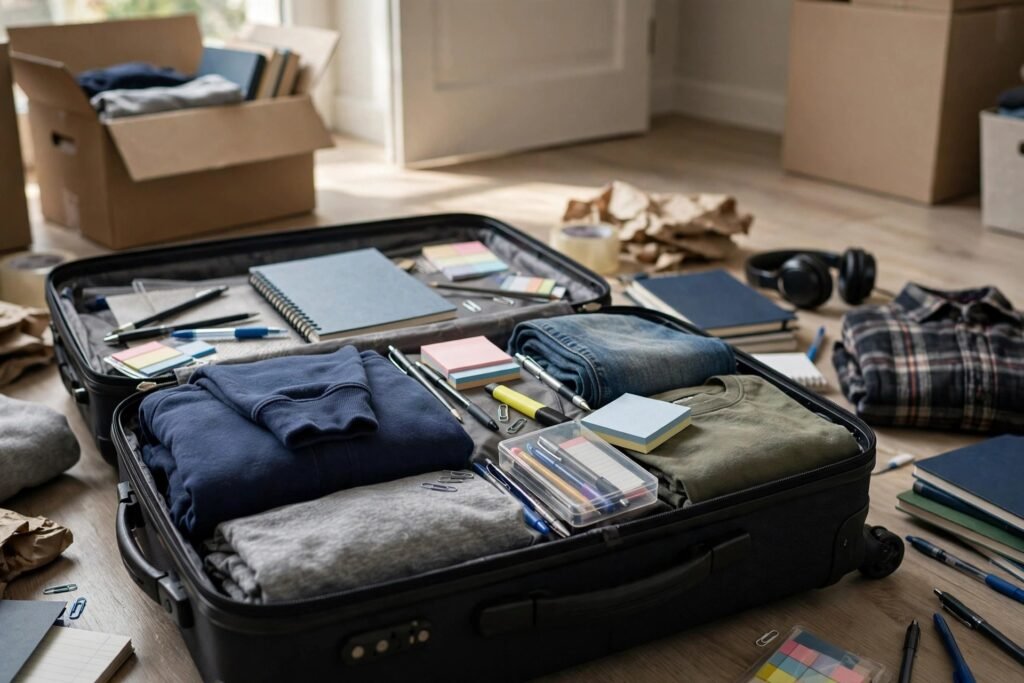
Every September, student bedrooms across Britain fill with the same tragic tableau: three saucepans, a toastie maker still boxed, seventeen mugs, and no extension lead. First-year packing fails follow predictable patterns — too much kitchenware, too little paperwork, and the wrong bedding entirely. Whether you’re heading to halls or a shared house, here’s the definitive list refined from thousands of student experiences.
Documents: The Boring Stuff That Matters Most
Pack a folder (physical, not just phone photos) containing: your accommodation contract and payment confirmations, student finance letters, ID (passport and driving licence — you’ll need photo ID constantly in freshers’ week), NHS details and any prescriptions, bank account details, and insurance documents. Photograph everything and store copies in cloud storage too. The students queuing at the accommodation office in tears are always the ones who “thought it was in the email.”
Sort these before you go: register with a GP near your university (do it in freshers’ week, not when you’re ill), set up or redirect your bank account, and check your student finance status on GOV.UK so your maintenance loan actually arrives. Nothing sours freshers’ week like a missing loan payment.
Bedroom: Get the Sleep Setup Right
University beds are universally uncomfortable — narrow, with mattresses best described as “functional.” Your sleep quality determines your entire first term, so invest here:
Mattress topper. The single highest-impact purchase. A £30–£50 memory foam topper transforms a prison-grade mattress into something sleepable. Buy before you arrive if possible; they sell out in university towns every September.
Bedding. Duvet (10.5 tog for autumn arrival), two sets of sheets and duvet covers (laundry happens less often than planned), and pillows — halls provide these but they’re typically thin and ancient. Bring your own pillow from home; familiar sleep cues help enormously in the first lonely weeks.
What not to bring: excessive decorative cushions (no space), a full-length mirror (walls often can’t take fixings — check), and candles or fairy lights with plug-in transformers (most halls ban anything with a heating element or that breaches fire regulations; battery fairy lights are usually fine).
Shared Spaces: Kitchen, Bathroom and Cleaning
If you’re in catered halls, you need almost nothing — check what’s provided. For self-catered halls or shared houses, the golden rule is coordinate with flatmates beforehand. Accommodation Facebook/WhatsApp groups exist precisely for this: one person brings the toaster, another the kettle, someone else the chopping boards. Uncoordinated flats end up with six kettles and no colander.
A sensible personal kit: one good knife, one chopping board, one saucepan, one frying pan, a wooden spoon, a spatula, plates/bowls/mugs/cutlery for one (plus one spare for guests), a baking tray, a colander, food storage boxes, tea towels, and washing-up liquid. That’s it. The toastie maker, the smoothie blender, the waffle iron — leave them. Nobody uses them after October, and they consume precious cupboard space.
Food basics for day one: tea/coffee, milk (buy on arrival), pasta, rice, tinned tomatoes, cooking oil, salt, pepper, and snacks. You’ll do a proper shop once you’ve found the local supermarket — and saving money on groceries becomes a survival skill fast.
Bathroom and cleaning: the unsexy essentials
Towels (two bath towels minimum — one is always damp), toiletries, flip-flops for shared showers (non-negotiable — communal shower floors are grim), a laundry basket, and laundry detergent. Cleaning supplies for shared houses: agree a rota in week one and buy communal supplies jointly — the flat where nobody buys toilet paper becomes a war zone by November. A basic toolkit (screwdriver set, hammer) earns you eternal flatmate gratitude.
Study Setup: Protect Your Grades From Day One
A laptop is essential — check your course’s software requirements before buying, since some degrees need serious processing power. Our guide to Chromebook versus laptop for students settles the cheapest debate in student tech. Add: an extension lead with surge protection (halls have never enough sockets), a desk lamp (overhead lighting is universally terrible), noise-cancelling earbuds or headphones (shared living is loud), and stationery basics — though most work is digital now, a notebook for lectures suits many learners.
Back up everything from day one. Laptops die, get stolen or get beer spilled on them with metronomic regularity in student housing. Cloud backup is free and takes ten minutes to set up. The student crying in the library in March lost their dissertation to a dead hard drive; don’t be them.
International Students: The Extra Checklist
If you’re arriving from abroad, add these to the list: visa and immigration documents (keep copies separate from originals), a UK SIM card (order before arrival or buy at the airport — you’ll need data immediately for maps and messaging), a power adapter for UK three-pin sockets (bring two — you’ll lose one), proof of funds for opening a bank account (many banks require specific documents from international students), and warm clothing regardless of when you arrive (British weather humbles everyone — students from warmer climates consistently underestimate the cold). Register with the university’s international office during freshers’ week; they handle everything from police registration to homesickness support. And check your visa’s work conditions before accepting any part-time job — the 20-hour term-time limit is strictly enforced.
Clothes: Less Than You Think
Wardrobes in halls are small and you’ll do laundry weekly (fortnightly if honest). Pack for the actual weather — you’ll arrive in September warmth but need winter gear by November, so either bring it or plan a home trip. Essentials: everyday clothes for two weeks, one smart outfit (presentations, interviews, formal halls), gym kit if you’ll exercise, a proper winter coat, waterproof jacket, and comfortable walking shoes — you’ll walk far more than expected. Leave the “just in case” outfits; dressing well on a student budget is about fewer, better-chosen pieces.
The Things Everyone Forgets
Doorstop (the fastest way to meet flatmates — prop your door open in freshers’ week), earplugs and eye mask (halls are noisy at 3am), a small first-aid kit with painkillers and plasters, Blu Tack and command strips for decorating (check wall rules), a hot water bottle (student housing heating is unreliable), photos and home comforts for the inevitable homesickness, and fancy dress — freshers’ week involves at least one costume event, and the campus shop charges extortionate prices.
The Bottom Line
Pack documents, sleep setup and kitchen coordination first; everything else is replaceable. You will forget something — everyone does — and university towns have shops precisely because of this. The goal isn’t perfect preparation; it’s arriving with the essentials sorted so freshers’ week is about meeting people, not emergency shopping trips. And for managing money once you’re there, MoneyHelper’s student budgeting guidance helps the maintenance loan stretch further. And whatever doesn’t fit in the car probably didn’t need to come.
Frequently Asked Questions
Should I buy everything before I go or when I arrive?
Buy the critical stuff beforehand (mattress topper, bedding, documents folder, laptop) and coordinate kitchenware with flatmates via group chats. Buy bulky consumables (cleaning supplies, food basics) after arrival — every university town has supermarkets competing for student custom with discounts.
What do universities provide in halls?
Varies enormously — check your specific accommodation’s inventory. Most provide a bed, mattress, desk, chair, wardrobe and sometimes basic kitchen equipment. Most don’t provide bedding, kitchenware, cleaning supplies or a mattress topper worth the name. Never assume; check the list.
How do I get my stuff there without a car?
Trains with luggage, courier services for boxes sent ahead, or supermarket delivery slots booked for arrival day (order bedding and bulky items online for delivery to your halls — many accommodation offices accept parcels before arrival). Vacuum-pack bags compress clothes remarkably.
What should I definitely leave at home?
Anything irreplaceable or high-value (it may get damaged or taken), excessive kitchen gadgets, your entire book collection (use the library), printers (the library prints cheaply), and more clothes than fit in the wardrobe. If in doubt, leave it — you can fetch things on the first home visit.