Best Sunscreens for Daily Use Under Makeup UK
The best sunscreens for daily use under makeup UK: what makes SPF work under foundation, top formulas by skin type, application technique and troubleshooting.
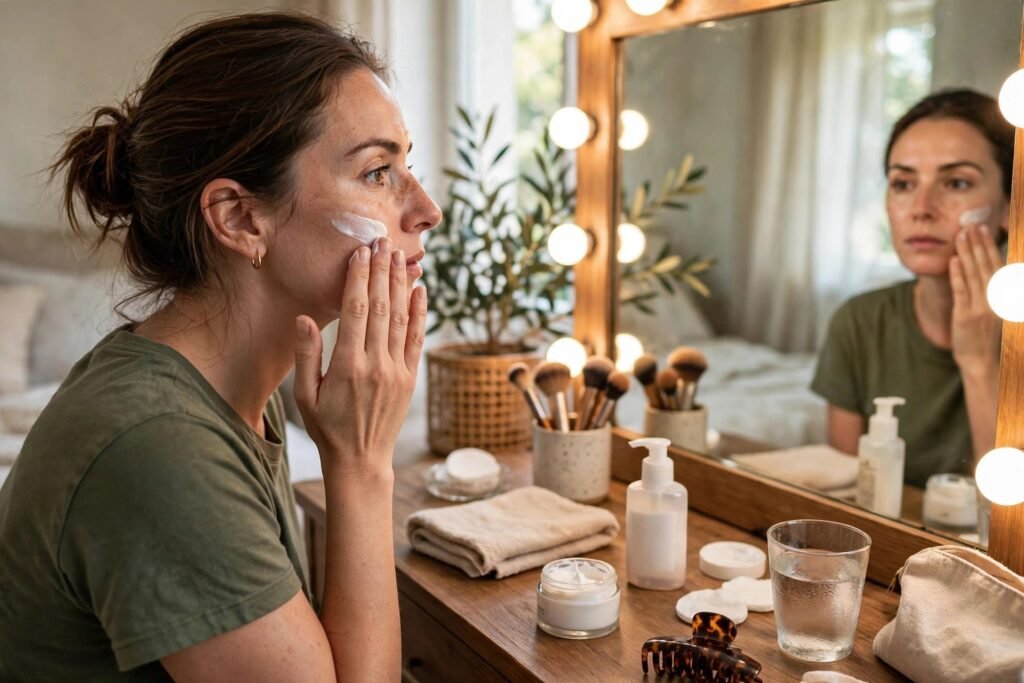
Sunscreen is the single most effective anti-ageing product in existence — more proven than any serum, retinoid or facial. Dermatologists are unanimous: daily UV protection prevents the photoageing responsible for up to 80% of visible skin ageing. Yet most people skip it because traditional sunscreens sit badly under makeup — pilling, greasiness, white cast, sliding foundation. The good news: a new generation of sunscreens is designed specifically to work under makeup. Here’s how to choose.
Why Daily Sunscreen Matters (Even in Britain)
Britain’s cloudy reputation breeds complacency, but UV damage is cumulative and clouds block only a fraction of UV rays. UVA — the ageing ray — penetrates cloud and glass, damaging skin every day of the year. The result of skipping protection isn’t just wrinkles: UV exposure is the primary cause of most skin cancers, and Britain’s skin cancer rates have risen sharply. Our guide to protecting skin from sun damage covers the full picture — but the headline is simple: daily SPF is non-negotiable. The NHS sun safety guidance confirms dermatologists’ advice on daily protection, whatever the weather.
What Makes a Sunscreen Work Under Makeup
Four properties separate makeup-friendly sunscreens from the beach stuff:
1. Cosmetic elegance. The formula must dry down to a non-greasy, non-tacky finish — ideally slightly mattifying or naturally skin-like. Heavy, shiny sunscreens cause foundation to slide and separate within hours.
2. No pilling. Pilling (the little balls that form when products interact) is the top complaint. It happens when sunscreen formulas clash with moisturisers or primers beneath, or foundations above. Silicone-based sunscreens tend to pill less; testing your specific combination is essential.
3. No white cast. Mineral sunscreens (zinc oxide, titanium dioxide) can leave a visible cast, particularly on deeper skin tones. Modern micronised and tinted mineral formulas minimise this; chemical (organic) filters generally avoid it entirely. If you have medium-deep skin, prioritise chemical or tinted formulas.
4. Primer-like behaviour. The best makeup sunscreens double as primers — smoothing, slightly gripping, creating an ideal base. This is the category to shop in: “SPF moisturisers,” “SPF primers,” and sunscreens marketed for daily facial use.
The Best Formulas for Daily Use Under Makeup
Lightweight fluid sunscreens
The Korean and Japanese approach — ultra-light, watery textures that vanish into skin. Brands like Beauty of Joseon, Skin1004 and Biore have cult followings for good reason: SPF 50+, PA++++ protection in textures lighter than most moisturisers. They layer beautifully under makeup and suit oily and combination skin particularly well. Available from UK retailers like Boots, Superdrug and specialist K-beauty stores.
SPF moisturisers and primers
Western brands now offer excellent hybrids: moisturisers with SPF 30–50 that function as your morning moisturiser and primer in one. Look for oil-free or gel textures if you’re oily; richer creams suit dry skin. The key advantage: one step instead of two, which means you’ll actually use it daily. Consistency beats perfection — the best sunscreen is the one you’ll wear.
Tinted SPF products
Tinted moisturisers and BB creams with SPF 30+ can replace both sunscreen and light foundation for everyday wear. Ensure the SPF rating is genuine (check it’s tested, not just claimed) and apply enough — most people under-apply tinted products, getting a fraction of the labelled protection. When in doubt, layer untinted sunscreen beneath.
Mineral options for sensitive skin
If chemical filters irritate your skin, modern mineral sunscreens from brands like La Roche-Posay, SVR and Colorescience offer elegant, tinted formulations far removed from the chalky zinc of the past. They’re also the reef-safe choice for holidays. Test for cast on your skin tone before committing.
Application: The Technique That Makes It Work
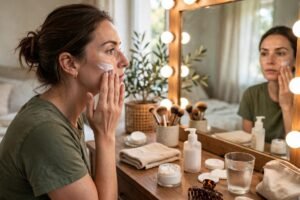
Amount: the “two finger” rule — a line of sunscreen along your index and middle fingers — approximates the 1/4 teaspoon needed for face and neck. Most people apply a quarter of the required amount, getting a quarter of the protection.
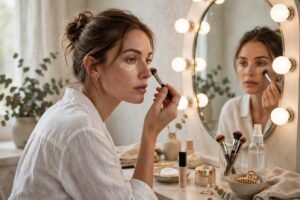
Order: skincare first (cleanser, treatments, moisturiser if needed), sunscreen next, then makeup. Wait 2–3 minutes between sunscreen and foundation to let it set — this single habit eliminates most pilling and sliding.
Reapplication: the awkward truth — sunscreen needs reapplying every two hours of sun exposure. Over makeup, use SPF mists, powder SPFs or cushion compacts for top-ups. They’re less perfect than initial application but vastly better than nothing. For mostly indoor days, morning application suffices for incidental exposure.
What to Avoid
Don’t rely on makeup with SPF alone — you’d need seven times the normal foundation amount for the labelled protection. Don’t mix sunscreens with incompatible bases without testing (silicone-heavy primers over water-based sunscreens pill notoriously). And don’t assume “once in the morning” covers a day outdoors — it doesn’t. The British Association of Dermatologists provides evidence-based guidance on sunscreen use and skin cancer prevention worth reading alongside any product choice.
Troubleshooting: When Sunscreen and Makeup Fight
Pilling: the most common complaint. Causes: applying foundation too soon (wait the full 2–3 minutes), incompatible formulas (test new combinations on your jawline first), or too much product (thin, even layers beat thick ones). Fix: switch to a silicone-based sunscreen if you use silicone primers, or simplify — fewer layers pill less. Sliding/separating by midday: usually excess oil — try a mattifying sunscreen formula, set with a light translucent powder, or blot (don’t rub) with blotting papers at lunchtime. Flashback in photos: some mineral SPFs (particularly un-tinted zinc) reflect camera flash, causing a white cast in photos. If you’re frequently photographed, favour chemical or tinted formulas. Eye stinging: chemical filters migrating into eyes — apply carefully around the orbital bone, consider a mineral formula for the eye area, and avoid rubbing. Most sunscreen-makeup conflicts have solutions; the answer is adjusting the combination, not abandoning the SPF.
The Bottom Line
The best sunscreen for under makeup is a lightweight SPF 50 fluid or SPF moisturiser-primer hybrid that dries down cleanly, doesn’t pill with your specific base products, and leaves no cast on your skin tone — applied in proper amounts, given minutes to set before foundation. Find your formula, make it as automatic as brushing your teeth, and you’ve done more for your skin’s future than any £80 serum. Future you — with fewer wrinkles and lower skin cancer risk — says thanks. And once your base is protected, knowing what colours suit your skin helps you choose makeup that works with your protected glow.
Frequently Asked Questions
Can I just use a moisturiser with SPF 15?
SPF 15 blocks about 93% of UVB versus 98% for SPF 50 — and most people under-apply moisturisers, getting far less. Dermatologists recommend SPF 30 minimum for daily use, SPF 50 for extended exposure. SPF 15 is better than nothing but meaningfully less protective.
Does sunscreen expire?
Yes — typically 12 months after opening (check the PAO symbol). Expired sunscreen loses efficacy unpredictably. If it’s been in a hot car or is years old, replace it. Sun protection isn’t the place for thrift.
Chemical vs mineral sunscreen — which is better?
Both protect effectively when properly formulated. Chemical filters generally offer more elegant textures (better under makeup); mineral filters suit sensitive skin and are reef-safe. The “chemicals are dangerous” narrative is largely unproven — regulatory bodies worldwide consider approved filters safe. Choose based on your skin’s tolerance and cosmetic preference.
Do I need sunscreen if my foundation has SPF?
As a supplement, yes; as your sole protection, no. You’d need to apply far more foundation than anyone does to achieve the labelled SPF. Think of SPF makeup as a bonus top-up, not your primary defence.