Best Vitamin C Serums for Dull Skin UK
The best vitamin C serums for dull skin UK: L-ascorbic acid vs derivatives, what to check on labels, budget to premium picks, routines and how to use them.
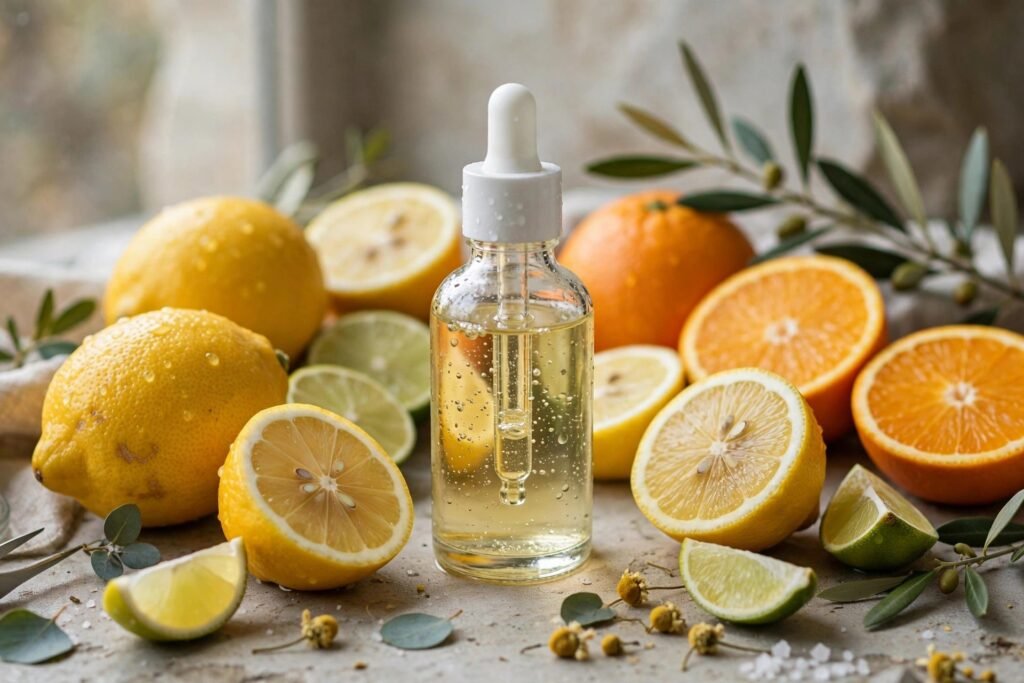
Vitamin C serums promise brighter, more even, more youthful skin — and unlike many skincare claims, this one has genuine science behind it. L-ascorbic acid is among the most researched skincare ingredients, with evidence for brightening, collagen support and antioxidant protection. But the market is chaos: hundreds of serums from £5 to £80, wildly different formulations, and marketing that obscures what actually matters. For dull, tired-looking skin in Britain’s grey climate, here’s how to choose wisely.
What Vitamin C Actually Does (And Doesn’t Do)
The evidence-based benefits: brightening (inhibits melanin production, fading dark spots and post-inflammatory marks), antioxidant protection (neutralises free radicals from UV and pollution — which is why vitamin C pairs so well with daily sunscreen), and collagen synthesis support (vitamin C is a cofactor in collagen production, helping maintain firmness).
What it doesn’t do: erase deep wrinkles (nothing topical truly does), work overnight (visible brightening takes 4–12 weeks), or suit everyone — around 10–15% of users find L-ascorbic acid irritating. Set expectations at “brighter, more even, healthier-looking” and you’ll be delighted; expect “ten years younger in a fortnight” and you’ll be disappointed.
The Forms: Not All Vitamin C Is Equal
L-ascorbic acid (pure vitamin C). The most researched, most potent form — and the most temperamental. Effective at 10–20% concentration, pH below 3.5, but unstable (oxidises on exposure to light/air, turning dark orange when degraded) and potentially irritating. The gold standard for results; the diva of formulations. Choose dark/opaque airless packaging and use within 3 months of opening.
Derivative forms (SAP, MAP, ascorbyl glucoside, THD ascorbate). More stable, gentler, less researched. Sodium ascorbyl phosphate (SAP) is excellent for acne-prone skin (anti-inflammatory, well-tolerated); tetrahexyldecyl ascorbate (THD) is oil-soluble and penetrates well. If pure L-ascorbic acid irritates you, derivatives deliver meaningful benefits with far less drama.
The practical rule: beginners and sensitive skin should start with derivatives; experienced users chasing maximum brightening should try L-ascorbic acid. Neither choice is wrong — the best vitamin C is the one your skin tolerates consistently.
What to Look For on the Label
Concentration: 10–20% for L-ascorbic acid (more isn’t better — above 20% increases irritation without proven added benefit); 5–10% for derivatives. Suspiciously cheap serums often contain token amounts — check the ingredients list position, not just the marketing.
Supporting ingredients: vitamin E (tocopherol) and ferulic acid dramatically boost vitamin C’s efficacy and stability — the famous CE Ferulic combination doubles photoprotection. Look for these companions; their presence signals a serious formulation.
Packaging: dark, opaque, airless pump or sealed dropper. Clear bottles and jar packaging mean the vitamin C is oxidising on the shelf — you’re buying expensive orange water. If your serum arrives already dark orange/brown, it’s degraded; return it.
pH: for L-ascorbic acid, effective formulas sit at pH 2.5–3.5. Brands rarely state pH — another reason to favour reputable manufacturers over mystery Amazon sellers.
Standout Options at Different Budgets
Budget (£5–£12): The Ordinary and Revolution offer genuine L-ascorbic acid and derivative serums at remarkable prices. Formulations are basic but honest — the active ingredient is real, the packaging adequate. Perfect for testing whether your skin likes vitamin C before investing more.
Mid-range (£15–£35): La Roche-Posay, Vichy, Geek & Gorgeous and Mad Hippie offer better stabilisation, nicer textures and supporting ingredients. This is the sweet spot for most buyers — serious formulations without luxury markups. Boots and Superdrug stock several excellent options.
Premium (£40–£80+): SkinCeuticals C E Ferulic is the benchmark the industry is judged against — superbly formulated, extensively tested, and priced accordingly. Whether it’s worth 5× the mid-range options is personal; the performance gap is real but diminishing. Consider it if you’ve tried cheaper options and want the reference standard.
Regardless of budget, buy from authorised retailers — counterfeit skincare is a genuine problem on marketplaces, and fake vitamin C serums are worse than useless. The British Beauty Council campaigns on product safety and authenticity in the beauty supply chain, while the British Association of Dermatologists provides evidence-based guidance on skincare ingredients.
How to Use It (Technique Matters)
When: morning, after cleansing and before moisturiser and sunscreen. Vitamin C’s antioxidant protection complements sunscreen — together they’re significantly more protective than either alone.
How much: 3–4 drops for the face, pressed (not rubbed) into slightly damp skin. More isn’t better.
Introduction: start 2–3 times weekly, building to daily over 2–3 weeks. Mild tingling initially is normal; persistent stinging, redness or breakouts mean the formula’s too strong — drop frequency or switch to a derivative.
Combinations: avoid layering with strong acids (AHAs/BHAs) or retinoids in the same routine initially — alternate mornings/evenings instead. Niacinamide and vitamin C, once thought incompatible, are fine together in modern formulations.
Building a Full Brightening Routine
Vitamin C works best as part of a coordinated routine, not a lone hero. Morning: gentle cleanser → vitamin C serum → moisturiser → sunscreen (SPF 30–50). The sunscreen is non-negotiable — UV exposure actively undoes vitamin C’s brightening work, so skipping SPF while using vitamin C is self-sabotage. Evening (2–3 nights weekly): cleanser → AHA exfoliant (glycolic or lactic acid) → moisturiser. Chemical exfoliation removes the dull surface layer, allowing vitamin C to penetrate better and accelerating the fading of dark spots — but introduce acids gradually and never on the same night you start them. Weekly: a hydrating mask supports the barrier, since brightening actives can be drying. The supporting cast: niacinamide (regulates pigmentation and strengthens the barrier — pairs beautifully with vitamin C), alpha arbutin (targets stubborn dark spots), and tranexamic acid (the dermatologist favourite for melasma). You don’t need all of them — vitamin C plus sunscreen plus one additional brightener is a complete strategy. More products mean more irritation risk, not more results. And knowing which colours suit your skin helps you choose makeup that complements your brightening results rather than fighting them.
The Bottom Line
For dull skin, a well-formulated vitamin C serum — 10–20% L-ascorbic acid or an effective derivative, with vitamin E and ferulic acid, in proper packaging, used every morning under sunscreen — is one of the highest-evidence interventions in skincare. Start with a budget option to test tolerance, upgrade if you love the results, give it 8–12 weeks, and photograph your progress — gradual brightening is easy to miss day-to-day but obvious in comparison shots. And remember: vitamin C without daily sunscreen is like an umbrella you never open. Our guide to protecting skin from sun damage covers the full protection picture.
Frequently Asked Questions
How long does it take to see results from vitamin C?
Brightening typically becomes visible at 4–8 weeks of consistent daily use, with full effects at 12 weeks. Collagen-support benefits accrue over months. If you see no change after 12 weeks of proper use, the formulation may be degraded or unsuitable — reassess rather than persisting indefinitely.
Why has my vitamin C serum turned orange?
Oxidation — the L-ascorbic acid has degraded on exposure to light, air or heat. Light yellow is normal; dark orange or brown means it’s lost potency and may irritate. Store in a cool, dark place, use within 3 months of opening, and favour airless pump packaging.
Can I use vitamin C with retinol?
Yes, but separate them — vitamin C in the morning, retinol at night. Using both in the same routine increases irritation risk without added benefit. This morning/evening split is the dermatologist-standard approach.
Is vitamin C safe during pregnancy?
Topical vitamin C is generally considered safe during pregnancy (unlike retinoids, which must be avoided). As with any skincare in pregnancy, mention it to your midwife or GP if you have concerns, and favour simpler formulations.