How to Support Your Child Through SATs Without Pressure
Supporting your child through SATs? What the tests really mean, pressure-free home support, handling wobbles, the SATs-week playbook and results-day reactions.
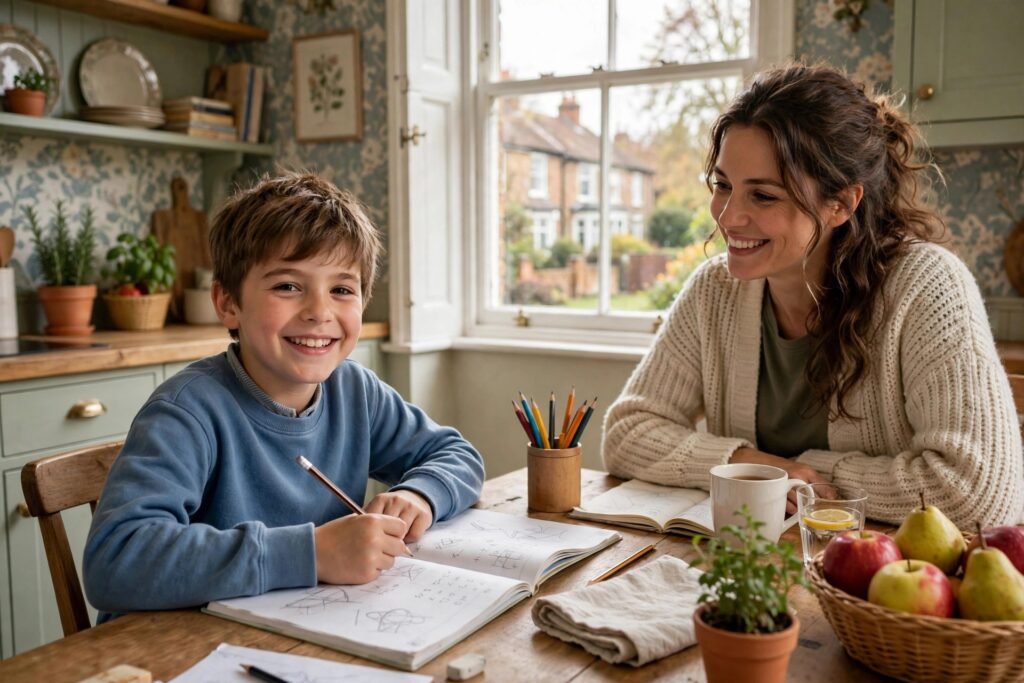
May arrives, and with it the peculiar British ritual of SATs: ten- and eleven-year-olds sitting formal exams in a school hall, while parents oscillate between “it’s just primary school” and quiet panic. The Key Stage 2 SATs matter — they inform secondary school setting and they’re a milestone — but they are not, despite what playground chat suggests, a verdict on your child’s intelligence or future. Here’s how to support your child through SATs with encouragement instead of pressure, and come out the other side with confidence intact.
What SATs Actually Are (and Aren’t)
Let’s demystify. In Year 6 (age 10–11), children sit SATs in reading, maths, and grammar/punctuation/spelling, usually over four days in mid-May. Results come as scaled scores: 100 is the “expected standard,” above 100 is “greater depth.” Writing is teacher-assessed, not tested.
What they’re for: helping secondary schools set classes and measuring school performance. What they’re not: a pass/fail judgment, a predictor of GCSE grades, or anything universities or employers will ever see. Secondary schools re-test and re-set constantly in Year 7 — SATs are one data point among many. Keeping this perspective yourself is step one, because children absorb parental anxiety like blotting paper. The official guidance lives on GOV.UK’s national curriculum test pages, if you want the source of truth rather than the WhatsApp group.
The Pressure Problem: Where It Comes From
Children rarely invent SATs anxiety alone. It comes from three sources: overhearing adult conversations about “important exams,” school cultures that (often unintentionally) transmit urgency, and comparison with peers. A child who hears “you need to get greater depth” every evening for a month internalises that love is conditional on a scaled score — even when parents mean no such thing.
The reframe that works: SATs are a chance to show what you know, not a trial to survive. Language matters enormously. “Try your best” beats “you need to do well.” “I’m proud of how hard you’ve worked” beats “I hope you get 110.” And crucially: never, ever discuss other children’s expected results in front of your own. Comparison is pressure’s fuel.
Practical Support That Actually Helps
Keep routines boringly normal
The weeks before SATs are not the time for dramatic changes. Regular bedtimes (non-negotiable — tired brains underperform measurably), normal meals, normal weekend activities. A child whose whole life reorganises around May learns that SATs are terrifying. A child whose life continues normally learns they’re manageable. Our sleep guide covers the mechanics if bedtimes are a battleground.
Little-and-often revision, not cramming
Schools provide plenty of preparation; home should be light-touch. Fifteen to twenty minutes of gentle practice — a few arithmetic questions, some spellings, reading together — a few times a week is plenty. If the school sends practice papers, do them calmly and mark them kindly: the goal is familiarity with format, not perfection. Never introduce new stressful material the night before.
Use BBC Bitesize, not panic-buying workbooks
BBC Bitesize has excellent free KS2 SATs revision — games, videos and quizzes that feel like play. One targeted resource used willingly beats a stack of workbooks that becomes a battleground.
Handling the Emotional Wobbles
Even well-supported children wobble. Tears over practice papers, stomach aches on test mornings, “I’m going to fail” spirals — all normal, all manageable:
- Validate, then redirect: “It makes sense to feel nervous — it shows you care. Let’s do something fun for a bit.” Never dismiss (“don’t be silly”) or catastrophise alongside them.
- Teach the reset: slow breathing, a drink of water, moving to the next question. These are life skills disguised as exam technique.
- Separate worth from scores: explicitly, repeatedly: “These tests measure what you remember about some maths and English on four days in May. They don’t measure how kind, funny, creative or brilliant you are.”
- Watch your own face: on results day, your reaction teaches them what the numbers mean. Delight in effort, perspective on scores.
If anxiety is severe or persistent beyond SATs, talking to a GP is sensible — early support works best. The Education Endowment Foundation also publishes evidence on what genuinely supports primary-age learning.
SATs Week Itself: The Parent’s Playbook
Morning: calm, unhurried, good breakfast, early arrival. No last-minute quizzing — it only injects doubt. A hug and “show them what you know” is the entire pep talk needed.
After school: no post-mortems. Don’t ask how it went beyond a casual check-in; dissecting papers poisons the next day’s tests. Plan something enjoyable each afternoon — park, baking, a film. The week should feel like a normal week with slightly odd mornings.
Between tests: early nights, familiar food, zero extra revision after the first day. The preparation is done; now it’s about rest and confidence.
After it’s over: celebrate properly. Not for scores — for effort and for getting through it. A small ritual (a meal out, a day trip) marks the achievement and teaches that hard things end and get acknowledged.
The Bigger Picture to Keep
Here’s what nobody says at the school gate: in five years, nobody — not your child, not their secondary school, not any employer — will care about these scores. What lasts is what SATs season teaches: how to prepare for something hard, how to manage nerves, and whether home felt like a safe base while doing it. A child who comes through SATs feeling supported has learned something far more valuable than greater depth in fractions.
Build the reading habit alongside — a cosy reading corner does more for long-term literacy than any test prep — and keep perspective yours first. Calm parents raise calm test-takers.
Results Day: Getting Your Reaction Right
When results arrive in July, remember your child has been waiting anxiously — your face in the first five seconds teaches them what these numbers mean. Lead with pride in the effort, keep perspective on the scores, and never compare with siblings or classmates. Whatever the results, frame the summer ahead as the real prize: secondary school is a fresh start where SATs quickly fade into background data. A child who feels proud of their effort walks into Year 7 confident; a child who feels judged walks in anxious. You choose which.
Conclusion
Supporting your child through SATs without pressure means: understanding what the tests really are, watching your language, keeping life normal, offering light-touch practice, banning post-test autopsies, and celebrating effort over scores. The tests last four days; your child’s relationship with challenge lasts a lifetime. Make May feel safe, and the scores will take care of themselves.
Frequently Asked Questions
Do SATs results really matter?
They help secondary schools with initial setting and measure school performance, but they’re not pass/fail, don’t predict GCSEs reliably, and are never seen by universities or employers. Important, not life-defining.
How can I help my child revise for SATs without pressuring them?
Keep it light: 15–20 minutes of gentle practice a few times a week, use fun resources like BBC Bitesize, praise effort over correctness, and keep routines normal. Let the school handle the heavy preparation.
What should I do if my child is anxious about SATs?
Validate the feeling, teach simple resets (breathing, moving on), explicitly separate their worth from scores, keep life normal, and avoid post-test interrogations. Seek school or GP support if anxiety is severe.
When do Year 6 SATs take place?
Usually over four days in mid-May. Reading, maths and grammar/punctuation/spelling are tested; writing is teacher-assessed. Results arrive as scaled scores, with 100 marking the expected standard.
Should I get a tutor for SATs?
Usually unnecessary — schools prepare children thoroughly, and light home support suffices. If you do consider tutoring, keep it gentle and short-term; intensive tutoring for SATs often adds pressure without proportional benefit.