How to Keep Rabbits Happy and Healthy Indoors
How to keep rabbits happy and healthy indoors: housing, diet, enrichment and bonding tips for house rabbits, plus the mistakes that make indoor bunnies miserable.
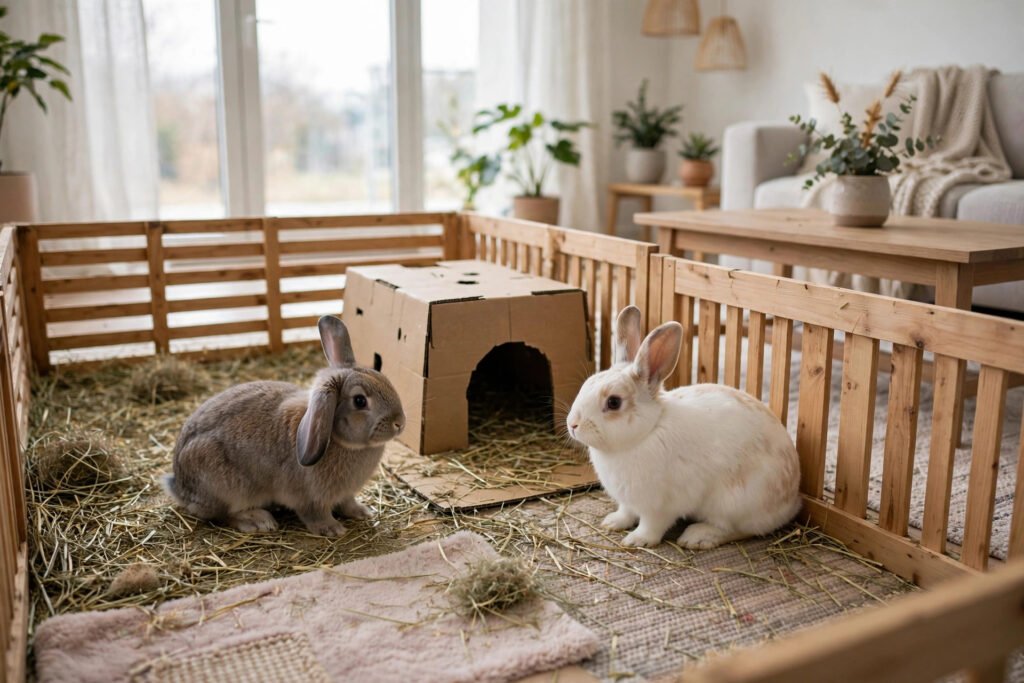
Rabbits are not low-maintenance starter pets, whatever the pet shop implied. In the wild they live in complex social warrens, graze for hours, and run, binky and dig daily. A hutch at the bottom of the garden meets almost none of those needs — which is why rabbit welfare organisations now recommend house rabbits: living indoors, litter trained, with space to behave like rabbits. Done well, an indoor rabbit is affectionate, entertaining and litter-trained within weeks. Done badly, it is a chewed sofa and a miserable bunny. Here is how to do it well.
Space: think pen, not cage
The old rule of thumb — a hutch plus run — has been replaced by something better. The Rabbit Welfare Association recommends permanent access to at least 3 metres by 2 metres of space, with room to hop, stretch fully, stand on hind legs and sprint. Indoors, that means a large puppy pen or a rabbit-proofed room, not a cage the rabbit “comes out of sometimes”. A spare room, a sectioned-off living room corner, or a hallway pen all work. The bigger the territory, the calmer and healthier the rabbit.
Flooring matters: rabbits slip on laminate and wood, which strains their joints. Cover hard floors with rugs, vet bed or interlocking foam mats. Provide a covered hide — a cardboard box with two entrances is perfect — because even confident rabbits need a bolt-hole.
Diet: hay, hay and more hay
A rabbit’s diet should be around 85 per cent good-quality hay — timothy, meadow or orchard hay, available at all times. Hay keeps the endlessly growing teeth worn down and the gut moving; without it, rabbits develop dental disease and deadly gut stasis. Add a small daily portion of leafy greens (romaine, coriander, parsley, spring greens — introduce new foods gradually), a tablespoon or two of high-fibre pellets per day, and fresh water in a bowl, which rabbits drink from more naturally than from a bottle. Fruit and carrot are treats, not staples, despite every cartoon ever drawn.
Litter training actually works
Rabbits naturally choose toilet corners, which makes training straightforward. Place a large litter tray (a cat tray works) in the corner the rabbit has already chosen, fill it with paper-based litter and a generous handful of hay — rabbits like to munch while they go. Spaying or neutering dramatically improves litter habits and is essential anyway for health and behaviour. Most rabbits are reliably trained within a few weeks. Clean the tray daily; rabbits are fastidious and a dirty tray invites them to choose your rug instead.
Rabbit-proofing: assume everything is chewable
A rabbit’s teeth never stop growing, and cables look like roots to them. This is not optional DIY: cable protectors or trunking on every wire at rabbit height, houseplants moved out of reach (many are toxic — lilies, ivy and philodendron among them), and wooden furniture legs wrapped or accepted as casualties. Provide legal chewing alternatives: apple and willow sticks, cardboard boxes, untreated wicker baskets and hay-filled toilet roll tubes. A bored rabbit with nothing to chew will redecorate; a rabbit with options mostly will not. If you rent, this protection work doubles as deposit protection — the same mindset as making a rented flat feel like home without losing your deposit applies, just with more cable trunking.
Company: rabbits need rabbits
This is the welfare point most owners miss. Rabbits are social animals; a lone rabbit, however loved by its humans, is a lonely rabbit. Welfare organisations recommend keeping rabbits in compatible neutered pairs or groups. A bonded pair grooms each other, plays together and is visibly happier than any single rabbit. If you already have one rabbit, rescues across the UK will help you find a compatible partner and even assist with bonding. The RSPCA’s rabbit care guidance sets out companionship, space and diet standards clearly.
Enrichment: a bored rabbit is a destructive rabbit
Scatter feeding (hiding pellets in hay or around the pen), cardboard castles to demolish, tunnels to charge through, and a daily dig box filled with soil or shredded paper all let rabbits do rabbit things. Rotate toys weekly to keep novelty alive. And spend floor time with them: lie on the rug with a book and let the rabbit investigate you. Rabbits bond on their own terms, and nothing builds trust like being a calm, treat-dispensing landscape.
Health basics for indoor rabbits
Register with a rabbit-savvy vet — not all practices see many rabbits. Annual vaccinations against RVHD1, RVHD2 and myxomatosis are essential even for indoor rabbits, since the viruses travel on hay, clothing and insects. Watch for the emergency signs: a rabbit that stops eating or pooing, sits hunched and grinds its teeth, or feels cold to the touch needs a vet immediately — gut stasis can kill within hours. Check the bottom daily in warm weather; flystrike is as dangerous indoors as out if a rabbit has a dirty rear. The Blue Cross pet advice library covers rabbit health emergencies in plain language worth bookmarking.
Keep the indoor environment clean but not sterile-smelling: strong air fresheners and scented cleaners irritate rabbit airways. And on the practical side, indoor rabbits moult spectacularly twice a year — which is when advice on keeping a pet-friendly home clean earns its keep.
Bonding with your indoor rabbit
Rabbits do not bond like dogs — there is no instant devotion. Trust is earned slowly, on the rabbit’s terms, and the process is one of the most rewarding parts of keeping house rabbits. Start by simply being present: sit or lie on the floor in the pen with a book, letting the rabbit approach and investigate you. Do not reach out to grab; let them sniff your hands, climb on you, and discover you are boring and safe. Offer high-value treats — a tiny piece of banana, a sprig of coriander — from your hand, so your presence predicts good things.
Learn to read rabbit body language and you will be fluent in weeks. A rabbit that flops onto its side beside you is showing profound trust. Gentle tooth-purring (soft grinding) while being stroked means contentment — loud grinding means pain, an important distinction. Nudging your hand means “pet me”; turning away means “not now”. Binkies — joyful leaps and twists — are pure happiness. Respect their signals and they will seek you out more, not less. Most house rabbits become genuinely affectionate within one to three months: following owners around, demanding head rubs, and flopping against legs. The patience it takes is the point — a rabbit’s trust, once earned, is completely genuine.
Conclusion
Happy indoor rabbits need four things: room to run, unlimited hay, a bonded companion, and things to chew and explore. Provide those and you get a litter-trained, affectionate animal with a personality far bigger than their size suggests. Rabbits ask more thought than their reputation suggests — but they repay it many times over.
Frequently Asked Questions
Can rabbits really live indoors full time?
Yes — house rabbits are increasingly the recommended option by welfare organisations. They need a large pen or rabbit-proofed room, litter training, and the same diet and companionship as outdoor rabbits.
Do rabbits need to live in pairs?
Ideally, yes. Rabbits are social and a neutered bonded pair is far happier than a lone rabbit. Rescues can help match and bond a companion for a single rabbit.
How do I litter train my rabbit?
Put a large tray with paper-based litter and hay in the corner your rabbit already uses, clean it daily, and get your rabbit neutered — hormones are the main cause of stray droppings and spraying.
What should I do if my rabbit stops eating?
Treat it as an emergency. A rabbit that has not eaten or pooed for several hours may have gut stasis, which can be fatal quickly. Contact a rabbit-savvy vet immediately, including out of hours.
Are house rabbits expensive to keep?
Setup costs (pen, litter, hay rack, vet bed) run to perhaps £100–£200, then ongoing hay, greens, litter and insurance. The biggest cost risk is vet bills, which is why insurance or a dedicated savings pot is wise.