How to Pick Sunglasses That Suit Your Face Shape
Round, oval, square or heart? The sunglasses shapes that flatter each face shape, plus fit tips most people miss.
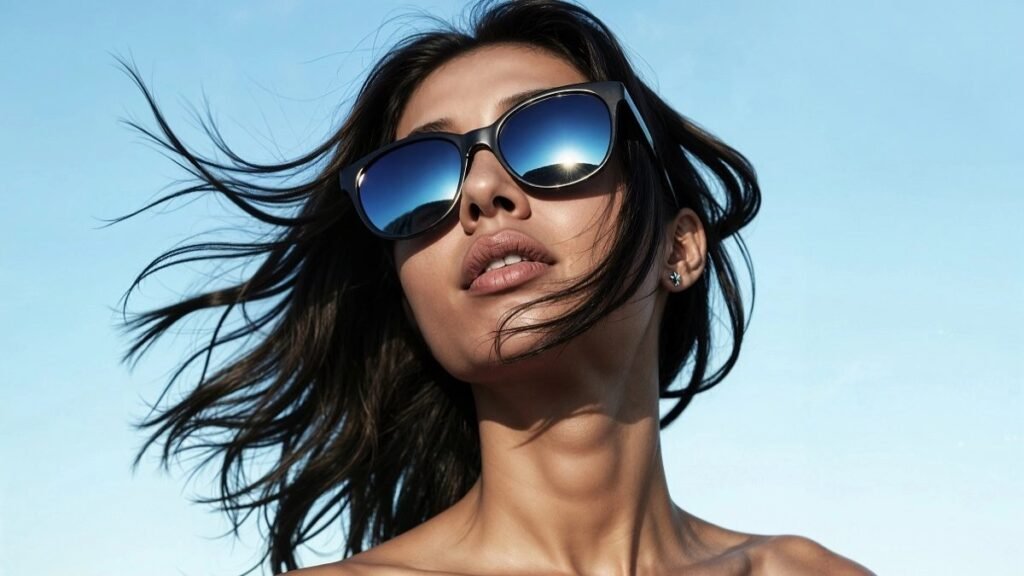
Sunglasses are the hardest-working accessory you own — worn on your face, in every photo, defining your look. Yet most people buy them by grabbing whatever’s trendy, then wonder why they look off. Learning to pick sunglasses that suit your face shape transforms them from an afterthought into your best feature.
The principle is the same as with jewellery: contrast your face shape. Angular frames soften round faces; rounded frames soften square faces. You’re creating balance, not echo.
Sunglasses for Your Face Shape
Round face — go angular
Rectangular, square and wayfarer styles add definition to soft curves. Angular cat-eyes work beautifully. Avoid small round frames — they echo the face shape. (The same contrast principle applies to jewellery for round faces.)
Oval face — the lucky ones
Oval faces suit almost everything — the task is proportion, not shape. Avoid frames wider than your face (they overwhelm) and tiny frames (they look lost). Wayfarers, aviators, round frames, cat-eyes — experiment freely.
Square face — soften with curves
Round, oval and aviator styles soften a strong jawline. Rimless and thin metal frames reduce visual weight. Avoid boxy, angular frames that emphasise squareness.
Heart face — balance the forehead
Wider forehead, narrower chin: bottom-heavy frames (aviators, wayfarers) and round styles balance the proportions. Avoid top-heavy styles and tiny frames that emphasise forehead width.
Long/oblong face — add width
Oversized styles, wide frames and decorative temples add horizontal emphasis. Avoid small, narrow frames that elongate further.
Beyond Shape: The Fit Details That Matter More
- The brow line: frames should roughly follow your brow line — not sit far above or below it. This single detail separates “right” from “off” more than shape matching.
- Cheek clearance: frames shouldn’t touch your cheeks when you smile. If they do, they’re too big or the bridge fit is wrong.
- Bridge fit: the most overlooked element. Low bridges (common in Asian and some African face shapes) need adjustable nose pads or low-bridge-fit designs; standard bridges suit higher nose bridges. Bad bridge fit = constant slipping = unworn sunglasses.
- Temple length: arms should reach your ears without pressing. Too short and they perch precariously; too long and they slide.
- Coverage: the sun comes from above and the sides too — larger frames and wraparound styles protect better. Fashion frames that leave gaps are sunglasses as jewellery, not eye protection.
The UV rating: non-negotiable
Look for UV400 (blocks 99–100% of UVA/UVB) or a CE mark with category 3 for bright sunlight. Price doesn’t indicate protection — £10 supermarket sunglasses with UV400 protect as well as £300 designer pairs. What designer buys you is build quality and optics, not safety. Never wear tinted lenses without UV protection — dark lenses dilate your pupils, letting in more UV. This matters for eye health, not just comfort — see our guide to protecting against sun damage for the full picture.
Lens Colours and Polarisation
- Grey: true colour, all-round use. The safe default.
- Brown/amber: enhances contrast — great for driving and variable light.
- Green: good contrast with minimal colour distortion (the classic Ray-Ban G-15).
- Polarised: cuts glare from water, roads and snow — transformative for driving, watersports and bright days. Worth the premium if you’re outdoors a lot.
- Mirrored: fashion-forward, reduces visible light — fine functionally, bold aesthetically.
For independent testing of popular models, Which? sunglasses buying advice evaluates protection and build quality.
Prescription Sunglasses: Seeing Clearly in the Sun
If you wear glasses, squinting through summer isn’t mandatory — but prescription sunglasses need thought:
- Prescription sunglasses vs clip-ons vs transitions: dedicated prescription sunglasses offer the best optics and style choice; clip-ons are cheap but clunky; photochromic (transition) lenses are convenient but don’t darken fully behind windscreens (UV-triggered) and are slow to adapt.
- High-street vs independent opticians: high-street chains (Specsavers, Boots) do prescription sunglasses from ~£50; independents offer better frame choice and lens expertise at higher prices. Online (Glasses Direct, etc.) is cheapest but you can’t try on — order free home trials.
- Lens considerations: high prescriptions need flatter frame fronts (extreme wraps distort); polarised prescription lenses are available and worth it for drivers; thinner lens materials (high-index) keep strong prescriptions wearable.
- The backup pair: keep cheap non-prescription UV400 sunglasses as backup — for the beach, the festival, the situations where losing £200 prescription shades would ruin the day.
- Fit is critical: prescription sunglasses must fit precisely — slipping changes the optical centre. Get them fitted in person, and use the adjustments (most opticians adjust free).
Caring for Sunglasses: Make Them Last
Good sunglasses deserve better than the bottom of a tote bag. Always use the case: hard case, every time — 90% of sunglass damage is “I just put them down for a second”. Clean properly: microfibre cloth + lens spray (or lukewarm water + tiny drop of washing-up liquid). Never: t-shirt, tissue, or breath-fogging (all scratch coatings over time). Don’t leave them in hot cars: heat warps frames and bubbles lens coatings — the dashboard in July destroys sunglasses. Tighten regularly: screws loosen with wear — a tiny eyeglass screwdriver (£3) or free adjustments at any optician. Know when to replace lenses: scratched lenses aren’t just cosmetic — scratches scatter light and reduce protection. Many opticians reglaze existing frames (£30–£80), which is cheaper and more sustainable than new frames. Two-pair strategy: one good pair (cared for, for daily life) + one cheap pair (for the beach, festivals, and situations where loss is likely). The cheap pair saves the good pair — that’s its entire job.
The two-second fit test: shake your head gently — well-fitted sunglasses stay put. If they slide, the bridge or temples need adjusting (most opticians do this free). Sunglasses that constantly slip end up unworn, however flattering the shape.
The practical takeaway: contrast your face shape (angular for round, round for square), prioritise bridge fit and cheek clearance, insist on UV400, and consider polarised for driving and water. Try on in natural light, smile-test for cheek clearance, and never buy dark lenses without verified UV protection.