How to Make Old Clothes Look New Again
Before you bin it, revive it. 12 clever tricks, from de-pilling to dyeing, that make tired clothes look brand new.
That jumper’s gone bobbly, those jeans have a worn knee, the white shirt is more grey. Before you bin them, consider: most “tired” clothes aren’t worn out — they’re just neglected. Learning to make old clothes look new again saves serious money, keeps favourites in rotation, and is the single most sustainable fashion habit you can adopt.
I’ve revived clothes I was certain were finished — a de-pilled cashmere jumper that looked new, black jeans restored to black, a stained shirt saved by dye. The techniques below are ordered from easiest to most committed.
12 Tricks to Make Old Clothes Look New Again
1. De-pill everything
Pilling makes clothes look old faster than anything else. An electric fabric shaver (£8–£15) or cashmere comb transforms bobbly knitwear in minutes. Work gently, one direction, on a flat surface. The before-and-after is genuinely shocking — this one trick alone revives half the “tired” jumpers in Britain.
2. Dye it darker
Faded black jeans, a greyed white shirt, a stained light top — fabric dye (£4–£6, Dylon) gives them a second life. Black dye restores black jeans to box-fresh; navy dye rescues faded denim; dyeing a stained light garment dark hides the stain entirely. Follow the instructions precisely (salt, temperature, timing) and dye in the washing machine for even results.
3. Whiten the whites
Grey whites aren’t clean whites. Soak in oxygen bleach (sodium percarbonate — not chlorine bleach) for a few hours before washing, wash with a whitening detergent, and dry in sunlight (natural bleaching). White vinegar in the rinse softens and brightens. Grey t-shirts come back remarkably well.
4. Remove stains properly
Most “ruined” clothes are just stained clothes. Treat stains by type: grease (washing-up liquid), blood (cold water + salt, never hot), wine (white wine or salt immediately, then oxygen bleach), yellowing (bicarbonate paste). Our white trainer stain guide covers the chemistry that applies to all fabrics.
5. Fix the fit
Clothes often look “old” because the fit has gone — stretched necklines, baggy knees, loose waistbands. A tailor fixes these for £10–£25: taking in waists, hemming, tapering. Our tailor guide covers costs. Fit restoration is the highest-ROI clothing spend there is.
6. Replace buttons and hardware
Cheap-looking buttons make coats and shirts look cheap. Replacing them with quality buttons (£3–£8 for a set) elevates the whole garment — it’s the oldest stylist trick in the book. Same for baggy elastic (replace the drawstring), worn laces (new laces, £3, transform trainers), and missing belt loops.
7. Steam, don’t just iron
Wrinkles read as “old and uncared for”. A handheld steamer (£20–£30) is faster and gentler than ironing, works on hanging clothes, and refreshes fabrics between washes. Steamed clothes look newer — it’s that simple.
8. Mend visibly (or invisibly)
Small holes, loose hems, missing buttons — ten minutes with a needle, or a local repair service (£10–£20). Visible mending (sashiko-style stitching) turns repairs into design features; it’s a whole aesthetic now.
9. Refresh the shape
Stretched-out knitwear often responds to a careful wash and reshape (see our wool jumper care guide). Baggy t-shirt necklines can be tightened with a quick stitch. Jeans with saggy knees recover with a hot wash (if the fabric allows).
10. Restyle, don’t replace
Sometimes clothes look tired because you’re tired of the styling. Crop it, layer it differently, tuck it, belt it, wear it with new combinations. A garment styled three new ways feels like three new garments. Our pattern mixing guide and oversized blazer guide are restyling masterclasses.
11. Condition leather and suede
Leather jackets, bags and shoes look ancient when dry and scratched, new when conditioned. Leather cream (£8), suede brush, protector spray — thirty minutes of care transforms them. Patent gets petroleum jelly on scratches; suede gets a proper brush and eraser.
12. Know when to let go
Not everything is salvageable: structurally failed elastic, deeply set stains on light fabrics, worn-through seats and knees, and anything that costs more to fix than replace. Letting go cleanly (textile recycling, not landfill) is part of the system too.
The Maintenance Mindset
Revival is great; prevention is better. Wash less, wash cold, air dry, store properly (our handbag storage and wardrobe organisation guides cover the systems), and address small issues before they become terminal. The sustainable fashion guide puts it all in the bigger picture.
MoneyHelper’s saving tips quantify what maintenance saves — it’s more than you’d think.
Easy Upcycling Projects: From Tired to Treasured
Beyond revival lies transformation — turning clothes into different clothes:
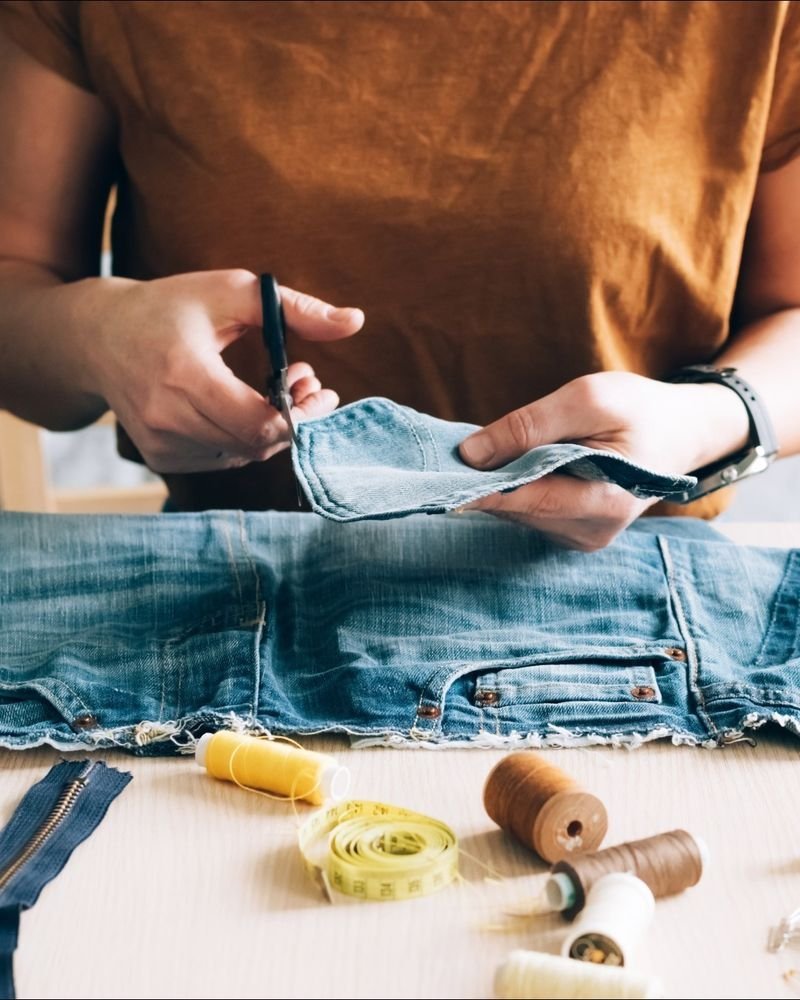
- Jeans to shorts: the classic — cut, fray the edges, done. Measure twice, cut once; you can always take more off.
- Oversized shirt to fitted: take in the sides, crop the length, or tie-dye it. Men’s shirts become women’s overshirts with zero alteration.
- Dress to skirt: a tired dress with a good skirt portion becomes a great skirt — cut at the waist, add elastic or a waistband.
- Jumper to cushion covers: felted or shrunken wool jumpers make beautiful cushion covers — the accident becomes the feature.
- T-shirts to tote bags: no-sew versions exist (cut and tie) — genuinely useful bags from shirts too worn to wear.
- Scarves to tops: large square scarves become halter tops, headscarves, bag accessories — the silk scarf is the most versatile item you own.
When to upcycle vs revive
Revive when the garment’s form is good but its condition is tired (de-pill, dye, tailor). Upcycle when the form is the problem (wrong size, dated shape, damaged beyond invisible repair) but the fabric is good. And know when to stop: some clothes have given their all — textile recycling (H&M garment collection, charity textile banks) keeps them out of landfill. The hierarchy: wear, repair, revive, upcycle, recycle — in that order, every time.
Shoe Revival: The Forgotten Category
Clothes get revived; shoes get binned — but most tired shoes are rescuable. Leather shoes: clean, condition, polish — the full treatment (£10 in products) transforms cracked, dull leather. Heel tips replaced at a cobbler (£8–£15) make worn heels safe and quiet. Suede: suede brush + eraser + protector spray — the trilogy that revives nap and colour. Trainers: the full cleaning protocol in our white trainer guide (the chemistry works on all colours). Smell: bicarbonate overnight, then air — persistent odour means the insoles are done; replace them (£5–£10) rather than the shoes. When to let go: worn-through soles, collapsed structure, or repair costs exceeding replacement value. A good cobbler (find one via recommendation, not just proximity) extends shoe life by years — resoling quality shoes (£30–£50) is the best value in footwear.
The practical takeaway: de-pill, dye, whiten, stain-treat, tailor, replace hardware, steam, mend, condition. Work through the list before binning anything — most “old” clothes are just neglected clothes, and revival beats replacement on cost, sustainability and sentiment every time.