How to Make Your Own Plant Feed From Kitchen Scraps
How to make your own plant feed from kitchen scraps: banana peels, eggshells, coffee grounds and nettle teas turned into free garden nutrition. Begin today.
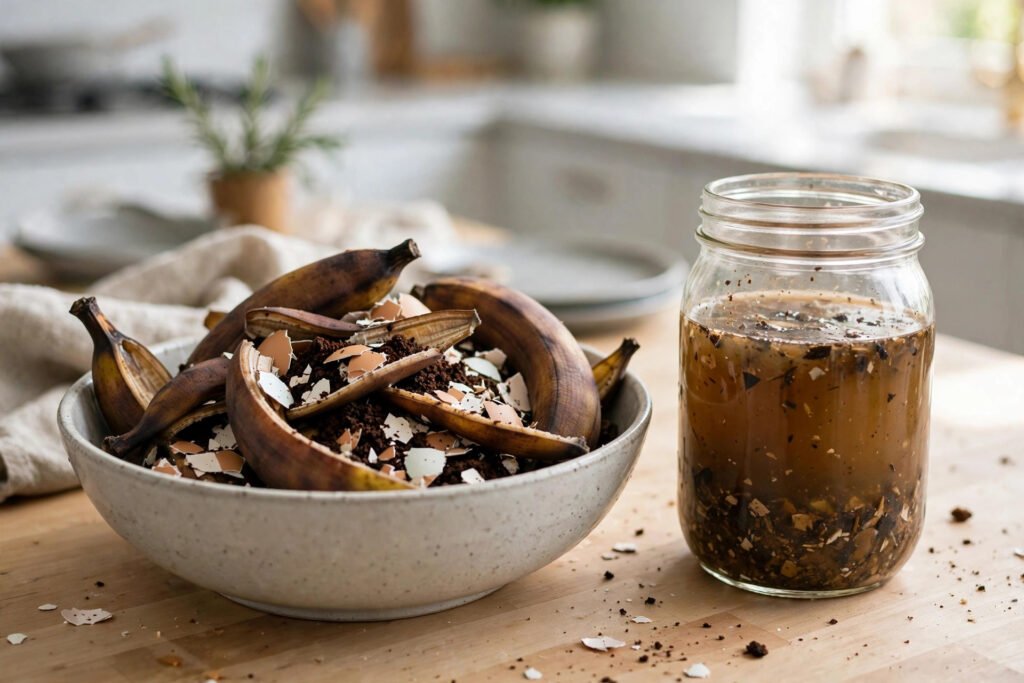
Every week, the average British household throws away food that could be feeding the garden instead. Banana skins, eggshells, coffee grounds, vegetable peelings — all of it contains the nitrogen, potassium, calcium and trace minerals plants crave. Commercial fertilisers cost money, come in plastic bottles and carry a manufacturing footprint; kitchen-scrap feeds are free, endlessly renewable and surprisingly effective. This guide shows you how to make your own plant feed from kitchen scraps, with recipes for different plants and the science of why they work.
We will cover the key nutrients in common scraps, banana-peel fertiliser, eggshell calcium, coffee grounds done right, nettle and comfrey teas, and the scraps to keep out of your feeds.
What your scraps actually contain
Plants need three primary nutrients — nitrogen (N) for leafy growth, phosphorus (P) for roots and flowers, potassium (K) for fruit and disease resistance — plus calcium, magnesium and trace elements. Kitchen scraps map neatly onto these: banana peels are rich in potassium and phosphorus, eggshells are almost pure calcium carbonate, coffee grounds provide nitrogen, and vegetable peelings contribute a broad spectrum of micronutrients as they break down.
The honest caveat: homemade feeds are gentler and less precisely dosed than commercial fertilisers. That is a feature, not a bug — they feed soil biology as well as plants, and they will not burn roots the way over-applied chemical feeds can. Think of them as part of a feeding programme alongside good compost, not a total replacement for it. For the composting foundations, reducing food waste in a family kitchen covers the waste hierarchy, and preparing garden soil for planting vegetables explains how feeds fit into overall soil fertility.
Banana peel fertiliser: potassium for flowers and fruit
Banana peels are the superstar scrap: high in potassium and phosphorus, the nutrients that drive flowering and fruiting. The simplest method: chop peels into small pieces and bury them 5cm deep around roses, tomatoes and flowering plants — they break down in weeks. For a liquid feed, soak three to four chopped peels in a litre of water for 48 hours, strain, and dilute 1:1 with water before applying.
Dried banana peel powder is the concentrated option: dry peels in a low oven or dehydrator until crisp, grind to powder, and sprinkle a tablespoon around plants monthly. Tomatoes, peppers, roses and fruiting houseplants respond visibly. One caution: use organic or well-washed peels, since conventional bananas can carry pesticide residues on the skin — a consideration the Garden Organic charity discusses in its guidance on safe homemade feeds.
Eggshells: slow-release calcium
Blossom end rot on tomatoes, stunted root tips, weak stems — all classic calcium deficiency, and eggshells are the free fix. Rinse shells, bake at 150°C for ten minutes to sterilise and crisp them, then grind to a fine powder in a blender or pestle. Fine grinding matters: coarse shell fragments take years to break down, while powder becomes available within a season.
Work a tablespoon of powder into the planting hole for tomatoes, peppers and brassicas, or sprinkle around established plants and water in. Eggshells also gently raise pH, useful in acidic soils. As a bonus, a ring of crushed (not powdered) shells around seedlings provides mild slug deterrence — two jobs from one scrap. Store powder in a jar; a household’s annual eggshell output fertilises a surprising area.
Coffee grounds: nitrogen, with caveats
Used coffee grounds contain around 2% nitrogen plus useful phosphorus, potassium and magnesium — genuine fertiliser value. But the internet mythology needs correcting: grounds are only mildly acidic (used grounds are near-neutral, pH 6.5–6.8), so they will not dramatically acidify soil, and they should be composted or used sparingly rather than dumped thickly, where they can form a water-repellent crust.
Best uses: mix a thin layer into compost (grounds are a “green” nitrogen source that heats heaps beautifully), sprinkle lightly around acid-loving plants like blueberries and roses, or add to wormeries — worms adore them. Espresso-heavy households produce enough to matter: a daily cafetière’s worth, spread across beds through the year, is meaningful free nitrogen. Many cafés give away spent grounds free; ask your local — Love Food Hate Waste champions exactly this kind of waste-to-resource thinking.
Nettle and comfrey teas: the heavy artillery
For serious liquid feeding, nothing homemade beats nettle and comfrey teas. Nettles (harvested before flowering, with gloves) steeped in water for two to three weeks produce a nitrogen-rich feed for leafy growth. Comfrey leaves — the legendary dynamic accumulator, pulling potassium and minerals from deep soil — make a superb flowering and fruiting feed. Stuff a bucket with leaves, weigh down, cover with water, and wait; the result smells appalling and works magnificently.
Strain and dilute to weak-tea colour (roughly 1:10) before use — undiluted, these teas can scorch. Apply fortnightly through the growing season. Comfrey deserves a permanent corner of the garden: the sterile ‘Bocking 14’ variety never seeds and can be cut four or five times a year. A dedicated comfrey patch is, pound for pound, the highest-value fertiliser factory a home gardener can own.
Scraps to keep out
Not everything belongs in plant feeds. Meat, dairy and cooked food attract rats and should go nowhere near open feeds (bokashi systems excepted). Onion and citrus in large quantities can deter worms in wormeries. Glossy or heavily printed cardboard as mulch can leach inks. And never use water from boiled vegetables salted for cooking — salt damages soil structure. When in doubt, compost questionable scraps first; a hot compost heap neutralises most concerns.
Feeding schedule: when and how much
Homemade feeds are gentle, but timing still matters. Start liquid feeding when plants are actively growing — typically April through September — applying diluted teas fortnightly. Solid feeds like eggshell powder and dried banana peel go on monthly through the season, scratched lightly into the soil surface. Ease off in autumn as growth slows; feeding dormant plants wastes nutrients and can encourage soft growth vulnerable to frost. Container plants, which exhaust their compost fastest, benefit most from the regular fortnightly routine, while established border perennials often thrive on just the spring and midsummer applications.
Conclusion
Making plant feed from kitchen scraps turns waste into growth: banana peels for potassium, eggshells for calcium, coffee grounds for nitrogen, and nettle or comfrey teas for heavy-duty liquid feeding. Start with one recipe, watch your plants respond, and you will never look at a peel the same way again.
Frequently Asked Questions
Can banana peels really fertilise plants?
Yes — they are rich in potassium and phosphorus, which support flowering and fruiting. Chop and bury them, soak them for liquid feed, or dry and grind them into powder for a concentrated slow-release fertiliser.
How do I use eggshells in the garden?
Rinse, bake until crisp, and grind to a fine powder. Work a tablespoon into planting holes for tomatoes and brassicas to prevent calcium deficiency. Coarse crushed shells also mildly deter slugs.
Are coffee grounds good for plants?
Yes, in moderation. They provide nitrogen (around 2%) and are near-neutral in pH once used. Mix thinly into compost or sprinkle lightly around plants; avoid thick layers, which can repel water.
What is comfrey tea and how do I make it?
A potent homemade liquid fertiliser: steep comfrey leaves in water for 2–3 weeks, strain, and dilute to weak-tea colour (about 1:10) before applying fortnightly. The sterile ‘Bocking 14’ variety is best for gardens as it does not self-seed.