How to Make Authentic Fish and Chips at Home
How to make authentic fish and chips at home: the right fish, crispy batter secrets, twice-cooked chips and proper chippy condiments.
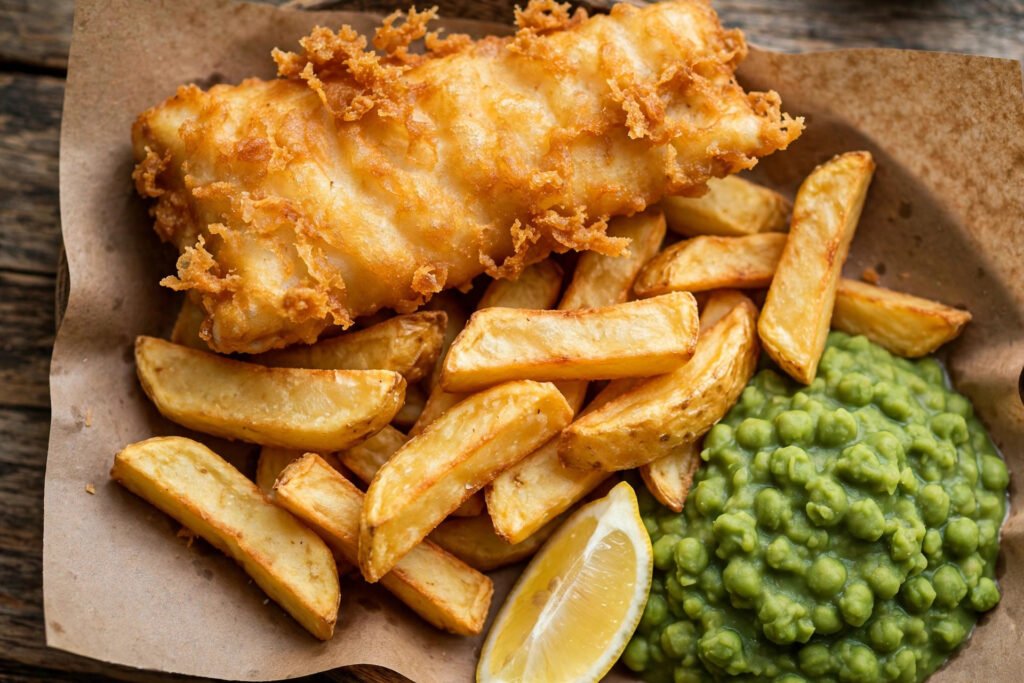
Making authentic fish and chips at home is a rite of passage for British cooks, and I’ll tell you upfront: your first attempt probably won’t match the chippy. Mine certainly didn’t — pale batter, soggy chips, a kitchen that smelled of oil for three days. But chip-shop quality is achievable at home once you understand the handful of things that actually matter: the right fish, a cold batter, hot oil, and chips cooked twice. Here’s the full method, refined over many Friday nights.
The Fish: What the Chippy Uses
The traditional chip-shop fish is cod or haddock — cod in the south, haddock in the north (and Scotland, where it’s practically a point of national pride). Both work beautifully; haddock has a slightly sweeter, more delicate flavour, cod is meatier. Buy thick fillets, about 170–200g each, from a fishmonger if you can — supermarket fish is fine, but a good fishmonger will tell you what’s freshest today. Pollock and hake are excellent, cheaper, more sustainable alternatives that fry just as well.
Prep matters: pat the fillets completely dry with kitchen paper (water is the enemy of crisp batter), season with salt and pepper, and let them come to room temperature for 15–20 minutes before frying. Cold fish drops the oil temperature and gives you greasy batter.
The Batter: Cold, Thin, and Simple
Great chip-shop batter has exactly four ingredients: plain flour, cold liquid, salt, and sometimes a leavening agent. The secrets are temperature and restraint. Use ice-cold sparkling water or cold lager — the cold inhibits gluten development (tender, not chewy) and the bubbles add lightness. Some swear by a teaspoon of baking powder; others insist on a 50/50 mix of flour and cornflour for extra crunch. My recipe: 120g plain flour, 60g cornflour, a teaspoon of baking powder, half a teaspoon of salt, and 250ml of ice-cold lager or sparkling water, whisked until just combined. Lumps are fine — overmixing develops gluten and makes the batter heavy.
Keep the batter cold until the moment of frying. I rest the bowl over ice if the kitchen’s warm. Dip each fillet, let the excess drip off for a few seconds, and lower it into the oil away from you. The batter should puff and set within seconds, turning pale gold.
Authentic Fish and Chips: The Oil and the Fry
Chip shops traditionally use beef dripping or vegetable oil at around 180–185°C. At home, a neutral oil with a high smoke point — sunflower or groundnut — in a deep, heavy pan is the practical choice. You need enough oil for the fish to float (about 8–10cm deep), and a thermometer is genuinely worth it: too cool and the batter absorbs oil and goes soggy; too hot and it browns before the fish cooks through.
Fry for 6–8 minutes until deep golden and crisp, turning once. Don’t crowd the pan — fry in batches if needed, because overloading crashes the oil temperature. Drain on a wire rack, not kitchen paper (paper traps steam underneath and softens the base). Season with salt and a proper malt vinegar immediately, while it’s hot.
Safety note, and I mean it: a pan of hot oil demands respect. Never fill more than a third full, never leave it unattended, keep children and pets out of the kitchen, and if it ever catches fire, turn off the heat and smother it with a damp tea towel or lid — never water. If deep-frying makes you nervous, a shallower fry in 3–4cm of oil works for smaller fillets, turning once.
Twice-Cooked Chips: The Non-Negotiable Step
This is what separates real chips from sad oven wedges. Use Maris Piper or King Edward potatoes, cut into thick chips (about 1.5cm — chippy chips are chunky), and rinse off the surface starch in cold water, then dry thoroughly.
- First fry (the blanch): 140–150°C for 6–8 minutes. The chips should be soft and pale, not coloured. Drain and cool — they can wait an hour like this.
- Second fry (the crisp): heat the oil to 185–190°C and fry for 3–4 minutes until deep golden and audibly crisp.
The first fry cooks the interior to fluffy; the second creates the glassy crust. It’s the same principle behind great roast potatoes, and it’s the reason chip-shop chips shatter while home chips bend. Drain, salt generously, and serve immediately — chips wait for no one.
The Condiments and the Full Experience
Salt and malt vinegar are mandatory — apply the vinegar first so the salt sticks. Beyond that, the great British condiment debate: mushy peas (the northern essential), curry sauce (the midlands and northern staple), gravy (Yorkshire and beyond), pickled onions, a pickled egg for the traditionalists. Tartare sauce is more restaurant than chippy, but nobody will object. And it must be eaten from paper — or at least served on a tray with the paper — because some rituals are non-negotiable.
A proper brew alongside is essential, and if your tea game needs work, our guide to brewing the perfect cup of tea has you covered. And since you’ll have oil to deal with afterwards: let it cool completely, strain it into a bottle, and most councils accept used cooking oil at recycling centres — never pour it down the sink.
A Lighter Take for Weeknights
The full deep-fried works is a weekend project; for a Tuesday, there’s a lighter version that scratches the same itch. Coat fillets of haddock or pollock in seasoned flour, then egg, then panko breadcrumbs mixed with a little lemon zest, and bake at 220°C for 12–15 minutes on a hot oiled tray until golden and crisp. Serve with oven chips (parboiled, roughed up, roasted in hot oil) and a quick homemade tartare — chopped gherkins, capers, mayo and lemon. It’s not the chippy, and it doesn’t pretend to be, but it’s genuinely delicious, a fraction of the faff, and something you can make on a school night. Save the deep-fryer version for Fridays, when the ritual — the batter, the paper, the vinegar — is half the pleasure. Both versions deserve the same respect for the fish: buy the best you can, treat it gently, and eat it immediately.
The takeaway: dry fish, ice-cold batter, hot oil, twice-cooked chips, and everything served immediately. Get those five right and Friday night at home starts giving the chippy a run for its money. If you’re handling frozen fish for the week, our guide to defrosting safely covers the same principles for fish. For the official line on eating fish as part of a balanced diet, the NHS fish and shellfish guidance is worth a read.