What Is the Best Way to Defrost Chicken Safely?
The best way to defrost chicken safely: fridge, cold water and microwave methods compared, plus the mistakes that risk food poisoning.
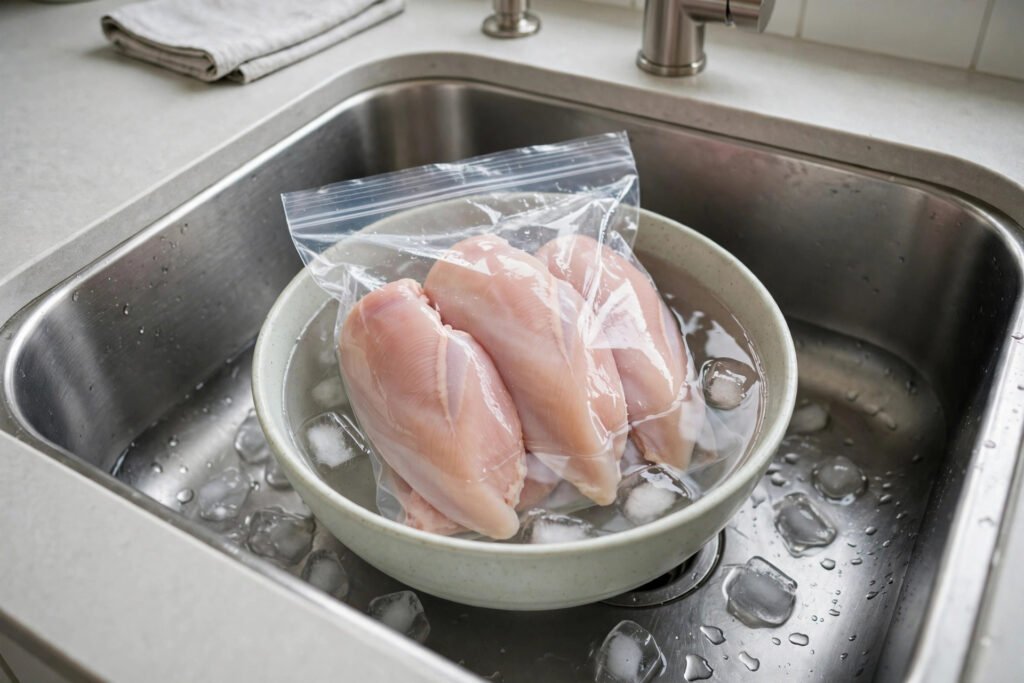
Knowing how to defrost chicken safely matters more than most kitchen skills, because getting it wrong can genuinely make you ill. Raw chicken can carry campylobacter and salmonella, and those bacteria multiply fast at room temperature — doubling every 20 minutes in the “danger zone” between 8°C and 60°C. I’ll be honest: I used to leave chicken on the counter all day like my mum did, and I got away with it for years. Then I read the actual food science and changed my habits overnight. Here’s what the experts say, translated into practical kitchen reality.
Method 1: In the Fridge (Safest, Plan Ahead)
This is the gold standard — the method the Food Standards Agency recommends. Move the frozen chicken from the freezer to the fridge, placing it on a plate or in a container to catch drips (raw chicken juice on ready-to-eat food is a classic cross-contamination route). A whole chicken needs roughly 24 hours per 2kg; chicken breasts or thighs need 12–24 hours depending on thickness. Once defrosted, cook within 24 hours.
The downside is obvious: it requires planning. The fix is habit — when you use chicken from the fridge for tonight’s dinner, move tomorrow’s portion from freezer to fridge at the same time. I do this while the kettle boils for my evening tea and it takes ten seconds. Fridge-defrosted chicken is also the most forgiving: if your plans change, it keeps safely for a day, unlike the other methods which demand immediate cooking.
Method 2: In Cold Water (Fastest Safe Option)
Forgot to plan? The cold-water method defrosts chicken in 1–3 hours. Seal the chicken in a leak-proof bag (squeeze out the air), submerge it in a bowl of cold tap water — never warm or hot, which heats the outer layers into the danger zone while the centre stays frozen — and change the water every 30 minutes so it stays cold. A pack of breasts takes about an hour; a whole chicken two to three.
Two rules: cook it immediately after defrosting (the surface has spent time at temperatures where bacteria grow, so don’t put it back in the fridge for tomorrow), and don’t leave it sitting in the water beyond the defrost time. Set a timer. This method is a lifesaver, but it needs your attention in a way the fridge method doesn’t.
Method 3: In the Microwave (Fastest, With Caveats)
The defrost setting works in 10–20 minutes, but it defrosts unevenly — the thin edges can start cooking while the centre stays icy. That’s not just a texture issue; partially cooked spots are a food-safety grey area. If you microwave-defrost, cook the chicken immediately, with no gap. Don’t microwave-defrost a whole bird — the unevenness is too extreme. Breasts, thighs and mince are fine. And honestly? For mince, I often just cook it from frozen in the pan, breaking it up as it thaws — perfectly safe since it goes straight to a high heat.
What Is the Best Way to Defrost Chicken Safely? The Comparison
- Fridge: safest, most forgiving, needs 12–48 hours of planning. Best for whole birds and planned meals.
- Cold water: safe if done right, 1–3 hours, needs attention and immediate cooking. Best for forgotten-to-defrost weeknights.
- Microwave: fastest, least even, cook immediately. Best for small portions in a genuine hurry.
- Cooking from frozen: actually safe for many cuts (the oven or pan takes it straight through the danger zone fast) — just add about 50% to the cooking time and check the temperature. Not suitable for whole birds in most home ovens.
Mistakes That Risk Food Poisoning
- Defrosting on the counter: the classic error. The outside sits in the danger zone for hours while the inside thaws. Just don’t.
- Using warm or hot water: feels faster, and it is — at growing bacteria. Cold water only.
- Refreezing raw defrosted chicken: don’t. You can cook defrosted chicken and then freeze the cooked dish — that’s fine and a great batch-cooking strategy — but raw-to-frozen-to-raw-to-frozen is asking for trouble.
- Ignoring the drip: defrosting chicken on the top shelf where juices drip onto salad below is how cross-contamination happens. Bottom shelf, always, in a container.
- Trusting the “it smells fine” test: harmful bacteria don’t always smell. If in doubt about time or temperature, throw it out. A £4 pack of thighs isn’t worth a week of food poisoning.
How to Tell It’s Fully Defrosted and Cooked
Defrosted chicken should be pliable with no icy core — press the thickest part; if you feel hardness or ice crystals, give it longer. When cooking, the only reliable test is temperature: 75°C at the thickest point (the FSA’s recommendation), or check that the juices run clear and there’s no pink meat. A £10 probe thermometer is one of the best kitchen investments you’ll ever make — it takes the guesswork out of chicken, turkey and pork forever. Speaking of which, the same principles apply when you cook a turkey without drying it out at Christmas.
Defrosting Other Foods: The Same Rules Apply
Chicken gets the attention, but the principles cover everything in your freezer. Mince and stewing meat: fridge overnight, or sealed in cold water for an hour or two — and mince can go straight into a hot pan from frozen, broken up as it thaws. Fish: fridge overnight is best; cold water works for fillets in under an hour. Never defrost seafood at room temperature — it spoils faster than meat. Bread and baked goods: the exception to every rule — room temperature is fine, since the risk profile is completely different. Vegetables: most can go straight into cooking from frozen; no defrosting needed. Leftovers and batch-cooked meals: fridge overnight, then reheat until steaming throughout — only ever reheat once. The common thread is simple: keep cold food cold until you’re ready to cook it properly, and when in doubt, the fridge is always the safe answer. These habits matter most when you’re batch cooking for the freezer, where defrosting is a weekly routine rather than an occasional event.
The takeaway: fridge when you can plan, cold water when you can’t, microwave only for small portions you’ll cook straight away — and never, ever the countertop. The Food Standards Agency’s defrosting guidance is the authoritative reference if you want the full detail.