How to Maintain Your Car Between Services
How to maintain your car between services: monthly checks on oil, tyres, coolant and brakes that prevent breakdowns and big garage bills. Start with this guide.
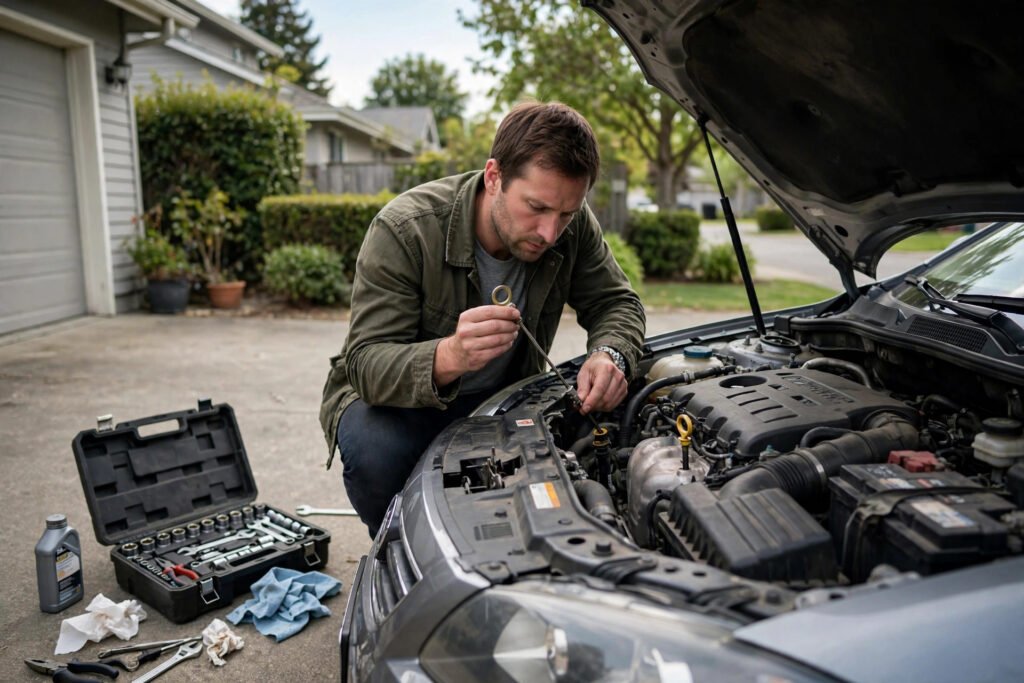
Your car just passed its service, and the garage handed back the keys with a clean bill of health. Job done for another year, right? Not quite. A lot can happen in twelve months and 10,000 miles — and the drivers who never lift the bonnet between services are the ones stranded on hard shoulders wondering what that noise was. The good news: maintaining your car between services takes minutes a month, needs no mechanical skill, and prevents most breakdowns. This guide shows you how.
We will cover the monthly under-bonnet checks, tyres and brakes, lights and wipers, seasonal care, and knowing when something needs a professional.
The monthly under-bonnet routine (ten minutes)
Once a month — pick a memorable date, like the 1st — run through the fluids. Engine oil: with the engine cold and on level ground, pull the dipstick, wipe, reinsert, and check the level sits between the min and max marks; top up with the correct grade (check your handbook — wrong oil causes real damage). Coolant: check the expansion tank level against its markings, never open a hot radiator cap. Brake fluid: the reservoir should sit between min and max; a dropping level can signal worn pads or a leak — get it checked. Windscreen washer fluid: top up with proper screenwash, not just water (which freezes and smears).
While you are there, glance at belts for cracking, hoses for bulging or leaks, and the battery terminals for corrosion (a wire brush and petroleum jelly fix white crusty build-up). None of this requires tools beyond a rag and the correct top-up fluids — keep a litre of the right oil and a bottle of screenwash in the boot. These checks catch the slow failures — the weeping hose, the creeping oil consumption — months before they become roadside emergencies. GOV.UK‘s MOT guidance explains what testers check annually; your monthly routine covers what happens between.
Tyres: the four patches that matter most
Your tyres are the only contact with the road — four postcard-sized patches carrying everything. Check pressures monthly (the correct figures are in the door jamb or handbook, not the tyre sidewall), ideally when cold; under-inflation alone increases fuel consumption, wears edges and risks blowouts. The legal minimum tread depth in the UK is 1.6mm across the central three-quarters, but grip — especially in wet — degrades well before that; many experts recommend replacing at 3mm.
Use the 20p test: insert a 20p coin into the tread; if the outer band is visible, tread is below legal limit. Inspect for cuts, bulges and embedded objects — a bulge in the sidewall means structural damage and needs immediate replacement. Check the spare (or the inflation kit’s expiry date — the sealant goo expires). Uneven wear patterns tell stories: worn edges suggest under-inflation, centre wear suggests over-inflation, one-sided wear suggests alignment issues. Rotate tyres if your handbook recommends it, and remember winter tyres or all-seasons if you regularly face harsh conditions.
Brakes, lights and wipers: the safety trio
Brakes announce problems if you listen: squealing can mean worn pads, grinding means metal-on-metal (stop driving and get it checked immediately), a spongy pedal suggests air or moisture in the hydraulics, and vibration under braking often means warped discs. You cannot inspect pads properly without removing wheels, but many cars have wear indicators — and any change in braking feel deserves prompt professional attention, not a wait-and-see approach.
Lights: monthly, walk around the car with someone operating each light — headlights (dipped and main), indicators, brake lights, reverse, fog lights, number plate light. Replace blown bulbs promptly; it is usually a five-minute job with the handbook’s guidance, and driving with faulty lights risks fines and MOT failure. Wipers: replace blades yearly or when they streak — a £15 pair transforms wet-weather visibility. Top up screenwash with proper fluid containing antifreeze properties for winter. The RAC publishes excellent seasonal checklists for drivers.
Seasonal care: winter and summer
Winter is the hard season. Before the cold: check antifreeze strength (your garage can test it), ensure the battery is healthy (most fail in the first cold snap — if it is 4+ years old and cranking slowly, replace pre-emptively), keep washer fluid winter-rated, and carry a winter kit: de-icer, scraper, blanket, torch, phone charger, and snacks for the worst case. Tyre pressures drop in cold — recheck monthly.
Summer brings different stresses: cooling systems work hardest (watch the temperature gauge in traffic), air conditioning needs occasional use year-round to keep seals healthy (run it monthly even in winter), and hot tarmac accelerates tyre wear. Before long holiday drives, do the full check plus a look at the service schedule — a service due in 500 miles should happen before, not after, a 1,000-mile trip. Seasonal awareness prevents the classic failures: dead batteries in January, overheating in August. The same scheduled-maintenance mindset applies at home — how much a boiler service costs in the UK shows the parallel logic for heating.
When to call a professional
DIY maintenance has boundaries, and knowing them is part of good car care. See a garage promptly for: any dashboard warning light that stays on (especially red ones — oil pressure, coolant temperature, brake warnings mean stop driving), changes in handling, steering or braking feel, new noises (knocks, whines, grinding), fluid leaks leaving spots on the drive, and anything involving brakes, steering or suspension beyond visual checks. Modern cars are complex — whether AI can help diagnose car problems before a garage visit explores new diagnostic aids, but they complement rather than replace professional assessment.
Build a garage relationship before you need one urgently: a trusted independent garage (check reviews, ask neighbours) is worth more than any amount of DIY. Keep service records meticulously — stamped history protects resale value enormously. And never ignore a problem hoping it resolves; cars do not heal, they deteriorate, and the £80 fix ignored becomes the £800 failure.
Conclusion
Maintaining your car between services is a ten-minute monthly habit: fluids under the bonnet, tyre pressures and tread, brakes, lights and wipers, plus seasonal preparation. Do it, and you will catch problems when they are cheap, pass MOTs without drama, and spend far less time on hard shoulders.
Frequently Asked Questions
How often should I check my car’s oil?
Monthly, with the engine cold on level ground, using the dipstick. Top up with the exact grade specified in your handbook — wrong oil can cause engine damage.
What is the legal tyre tread depth in the UK?
1.6mm across the central three-quarters of the tread. Use the 20p test: if the coin’s outer band is visible in the tread, it is below the limit. Many experts recommend replacing at 3mm for wet grip.
What should be in a car’s winter emergency kit?
De-icer, ice scraper, blanket, torch, phone charger, high-vis vest, snacks and water. Keep washer fluid winter-rated and check the battery before cold weather — most failures happen in the first cold snap.
When should I take my car to a garage between services?
For any persistent dashboard warning light (especially red), changes in braking/steering/handling, new noises, fluid leaks, or anything involving brakes, steering or suspension. Do not wait and hope — cars do not heal.