How to Cook Rice Perfectly Every Time
How to cook rice perfectly every time: absorption, pilaf and boiling methods, the right water ratios and how to avoid mushy or crunchy rice.
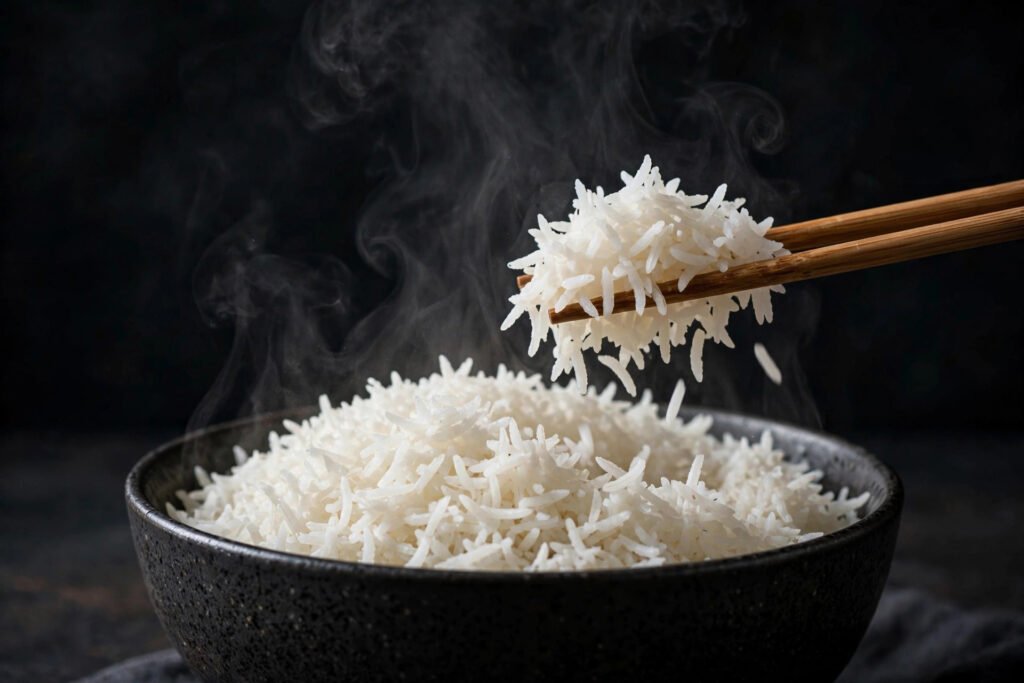
Learning to cook rice perfectly every time feels like it should be trivial — it’s just rice and water, after all. Yet mushy, gloopy rice and crunchy, undercooked rice haunt home kitchens everywhere, mine included for longer than I’d care to admit. The truth is that perfect rice isn’t about luck; it’s about matching the method to the rice type and then leaving it alone. Rice fails when it’s fussed over. Here’s how to get fluffy, separate grains without a rice cooker.
Know Your Rice: Different Grains, Different Rules
The UK’s most common rices behave differently, and using one method for all of them is the root of most rice misery:
- Long-grain (basmati, jasmine): the fluffy, separate-grain rices. The absorption method below is perfect for these.
- Easy-cook/converted long-grain: parboiled before milling, so it’s nearly impossible to overcook. Forgiving but less fragrant.
- Short-grain (arborio, sushi rice, paella rice): high starch, meant to be creamy or sticky. Never rinse these — you want the starch.
- Brown rice: the bran layer needs more water and much more time (35–45 minutes). Nutty and chewy when done right.
- Wild rice: not actually rice; needs long simmering and is usually mixed with other grains.
The Absorption Method (for Basmati and Jasmine)
This is the restaurant method and, once learned, it’s foolproof. The ratio is the whole secret: 1 part rice to 1.5 parts water by volume for basmati (jasmine likes a touch more, about 1:1.75 — it’s thirstier). Here’s the process:
- Rinse the rice in cold water, swishing with your hand, until the water runs mostly clear — usually 3–4 rinses. This washes off surface starch that causes gumminess. Drain well.
- Optional but wonderful: soak basmati for 20–30 minutes. The grains hydrate evenly and cook up noticeably longer and fluffier. Drain before cooking.
- Combine rice, water and salt in a heavy-based pan with a tight-fitting lid. A pinch of salt and a teaspoon of oil or butter.
- Bring to a boil, then immediately drop to the lowest heat and clamp the lid on. Cook for 12 minutes (basmati) or 12–14 (jasmine). Do not lift the lid. The steam is doing the work.
- Rest, still lidded, off the heat for 10 minutes. This is the step everyone skips and the step that matters most — the grains finish steaming and firm up.
- Fluff with a fork (never a spoon, which mashes) and serve.
The first time I followed this exactly — especially the resting — I actually laughed at how good it was. Restaurant rice, from my own pan.
How to Cook Rice Perfectly: The Boiling Method
For easy-cook long-grain or when you’re cooking a big batch, the pasta method is brilliantly low-stress: boil the rice in plenty of salted water like pasta, drain when tender (10–12 minutes for white, longer for brown), and let it steam in the colander for a few minutes. You sacrifice a little fragrance and precision, but it’s nearly impossible to mess up — no ratios, no timing anxiety. This is my method for rice that’ll be fried later or served under a wet curry, where absolute perfection matters less.
For brown rice specifically: use the absorption method with a 1:2.25 ratio and 35–40 minutes on low heat, plus the 10-minute rest. It’s chewier and nuttier — a different pleasure, not a lesser one.
The Pilaf Method (for Maximum Flavour)
If you want rice that’s a dish in itself: sauté the rinsed rice in butter or oil with diced onion, garlic and spices (cumin seeds, cardamom, a cinnamon stick) for 2–3 minutes until the grains turn translucent at the edges and smell nutty. Then add hot stock (1:1.5 ratio) and proceed as per the absorption method. The toasting step adds extraordinary depth — this is the difference between rice as a side and rice as the point. Brilliant under a batch-cooked curry or alongside our budget bean chilli.
Troubleshooting and Food Safety
- Mushy rice: too much water, lid lifted during cooking, or skipped the rest. Measure properly next time.
- Crunchy/hard grains: not enough water or heat too high (water boiled away before the rice cooked). Add a splash of hot water and steam 5 more minutes.
- Stuck to the pan: heat was too high, or the pan is too thin. A heavy base and the lowest flame fix this.
- Bland: salt the water. Rice needs more salt than you think.
The safety bit matters: cooked rice can harbour Bacillus cereus, whose spores survive cooking and multiply if rice sits warm. Cool leftover rice quickly (within an hour — spread it on a tray), refrigerate, and use within 24 hours. When reheating, make sure it’s steaming hot throughout, and only reheat once. Never leave cooked rice at room temperature for hours. The Food Standards Agency’s guidance on reheating rice covers this in full.
Rice Cookers: Are They Worth It?
I’ll be honest: for years I considered rice cookers a single-use gadget for people with too much kitchen. Then I used one, and I understood. A decent rice cooker (£25–£40 for a basic model) produces perfect rice with zero attention — rinse, add water to the line, press the button, walk away. It switches to ‘keep warm’ automatically, so the rice waits for you instead of the other way round, and it frees the hob entirely. For households that eat rice several times a week, it’s genuinely life-changing; for once-a-month rice eaters, the pan method above is fine. The cheap models cook white rice beautifully — you only need the fuzzy-logic expensive ones if you’re deep into sushi rice or congee. One tip whatever you use: the keep-warm function is for an hour or two, not all day. Rice left warming for six hours goes mushy and enters the food-safety grey zone, so portion leftovers into the fridge within the hour as the safety section describes.
The takeaway: rinse, measure (1:1.5 for basmati), lid on, low heat, don’t peek, rest ten minutes, fluff with a fork. Six rules, and crunchy-mushy rice becomes a distant memory.