How to Choose the Right Size Radiator for a Room
How to choose the right size radiator for a room — BTU calculations made simple, what affects heat needs, and the mistakes that leave rooms cold.
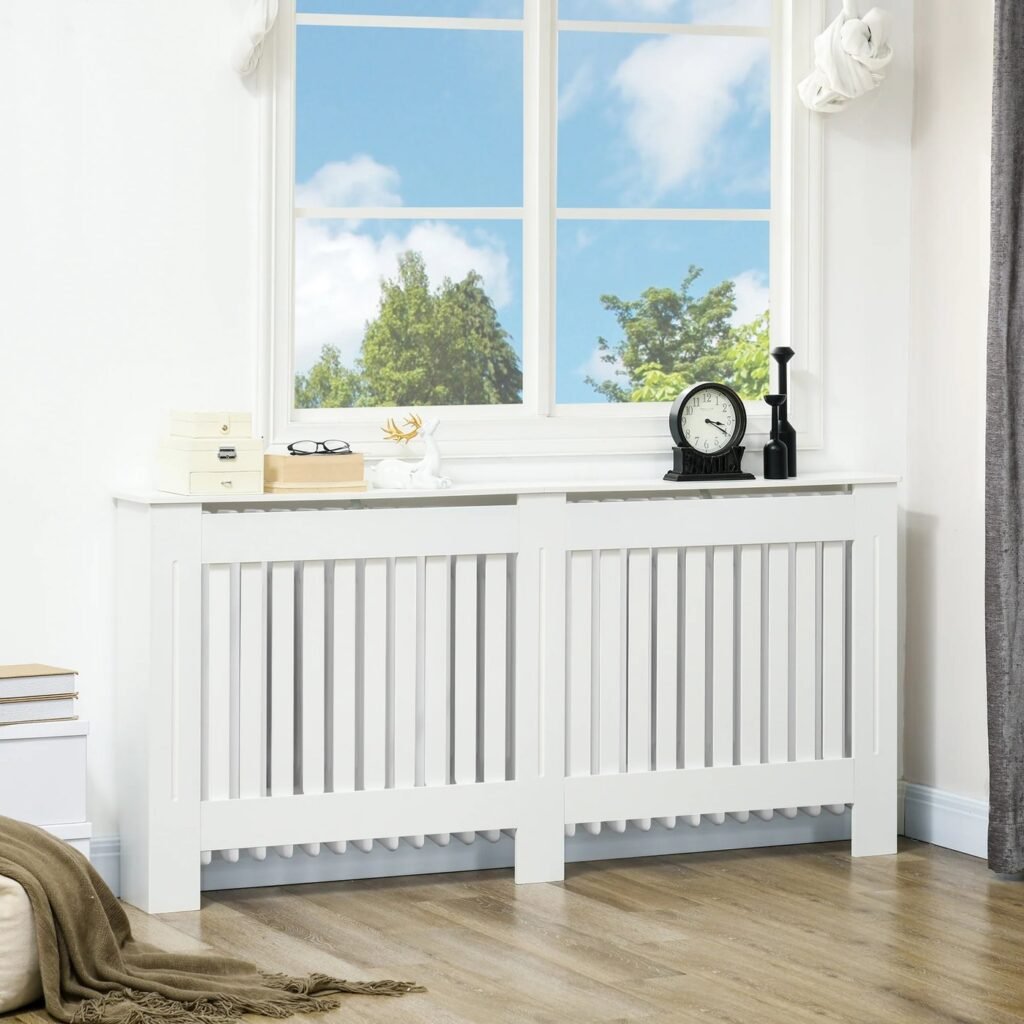
A radiator that’s too small leaves you cold all winter no matter how high the thermostat goes. A radiator that’s too big wastes money, looks absurd and — with modern condensing boilers and heat pumps — can actually make the system less efficient. Sizing sounds technical, but it’s really just matching the radiator’s heat output to the room’s heat loss.
Here’s how to choose the right size radiator for a room without an engineering degree: the simple calculation, the factors that adjust it, and the mistakes that leave rooms chilly.
The BTU calculation, simplified
Radiator output is measured in BTUs (British Thermal Units) per hour, or watts (1 watt ≈ 3.41 BTU). The quick method: measure the room’s volume in cubic metres (length × width × height), then multiply by 50 watts for a living room, 40 for a bedroom, 60 for a bathroom — these factors account for typical desired temperatures. A 4×5m living room with 2.4m ceilings is 48m³, so 48 × 50 = 2,400W, which is about 8,200 BTU (1 watt ≈ 3.41 BTU, so convert if the radiator is rated in BTU rather than watts).
Online BTU calculators do this in 30 seconds and most are accurate enough for standard rooms — input your dimensions, window type, wall type and they produce a number. Use two calculators and average them; if they disagree wildly, your room has unusual features (see below). The result is the total output needed — which can come from one large radiator or two smaller ones.
- Volume (m³) × 50W for living rooms, × 40W bedrooms, × 60W bathrooms.
- 1 watt ≈ 3.41 BTU — check which unit your radiator uses.
- Cross-check with two online calculators; average the results.
How to choose the right size radiator for a room: the adjustments
The basic calculation assumes an average room. Adjust up 10–20% for: north-facing rooms, large windows or patio doors, poor insulation, high ceilings, rooms above unheated spaces (garages), and exposed locations. Adjust down 10% for: well-insulated modern rooms, south-facing with good solar gain, small windows. Two external walls instead of one? Add 15%.
Bathrooms need special treatment: they need higher temperatures and the radiator often doubles as a towel warmer, so size generously and consider a heated towel rail with sufficient output rather than a decorative one that’s all looks and no heat. Hallways and landings: size for the space but remember heat migrates — an undersized hall radiator matters less if the living room door stays open.
- Add 10–20% for: north-facing, big glazing, poor insulation, high ceilings.
- Two external walls: add 15%. Bathrooms: size generously.
- Subtract 10% for well-insulated modern rooms with solar gain.
Radiator types and real-world output
Not all radiators deliver their rated output in real homes. Ratings assume specific water temperatures (usually 75°C flow) — but modern condensing boilers run most efficiently at 55–60°C flow, and heat pumps at 35–45°C. At lower flow temperatures, a radiator’s output drops significantly: a radiator rated 2,000W at 75°C might deliver only 1,200W at 55°C. This is the single most misunderstood fact in radiator sizing.
The practical consequence: if you’re running a condensing boiler efficiently or planning a heat pump, oversize radiators by 30–50% beyond the basic calculation. Bigger radiators with lower water temperatures heat more efficiently and more comfortably (gentle, even heat rather than scorching blasts). Double-panel convector radiators (Type 22) are the workhorse choice — good output per pound. Designer radiators look superb but often cost 3–5× more per watt; check the actual output figures, not just the dimensions.
- Rated output assumes 75°C flow — condensing boilers and heat pumps run cooler.
- Oversize 30–50% for low-temperature systems; it’s more efficient.
- Type 22 double convectors: best output per pound. Check designer rads’ real wattage.
Placement and practicalities
The traditional spot — under the window — exists for a reason: it counteracts the cold downdraught from the glass and the rising warm air creates circulation. It’s still the best position in most rooms. What to avoid: behind heavy curtains (traps the heat), inside fitted furniture (same problem), or on a wall where the sofa will sit directly against it.
Pipework matters: if you’re replacing like-for-like in the same position, it’s a straightforward swap (£150–300 fitted). Moving a radiator to a new position means new pipework — £200–500 depending on access — so factor that into the ‘bigger radiator on a different wall’ plan. And check your boiler can handle the total: adding lots of output across the house may need a system check. Our guide to bleeding radiators keeps whatever you install performing at its best, and boiler servicing keeps the heat source healthy.
- Under the window remains the best position — counteracts cold downdraught.
- Keep radiators clear of curtains and furniture that trap heat.
- Like-for-like swap: £150–300 fitted; new position adds £200–500 pipework.
Common sizing mistakes
Mistake one: sizing by the old radiator’s dimensions. The old one might have been wrong for 30 years — that’s why the room was always cold. Size from the room, not from the predecessor. Mistake two: forgetting the delta-T — comparing radiator outputs rated at different temperature standards. Always compare at the same delta (ΔT50 is the modern standard).
Mistake three: one giant radiator instead of two smaller ones in large or L-shaped rooms — two heat sources give far more even warmth. Mistake four: ignoring the future — if you’re insulating the loft or getting new windows next year, the heat requirement drops; size for the improved house if the work is imminent. And mistake five: valves — always fit thermostatic radiator valves (TRVs, £15–25 each) so each room controls itself; they’re legally required on new installations and they pay for themselves in a single winter.
- Size from the room, not from the old radiator’s dimensions.
- Compare outputs at the same ΔT rating (ΔT50 standard).
- Fit TRVs (£15–25 each) — legally required on new installs, paid back in a winter.
Choosing the right radiator size is a 10-minute calculation that pays off for decades: measure the room, multiply by the right factor, adjust for the room’s quirks, and oversize a little for modern low-temperature heating. Get it right and the room is warm with the thermostat doing less work — which is the whole point. Cold rooms are usually a maths problem, not a boiler problem. The Energy Saving Trust’s heating advice is a reliable, hype-free source for system efficiency.