
How Much Does It Cost to Replace Guttering on a Semi-Detached House?
How much does it cost to replace guttering on a semi-detached house? uPVC, aluminium and cast iron prices, plus fascias, soffits and downpipes.
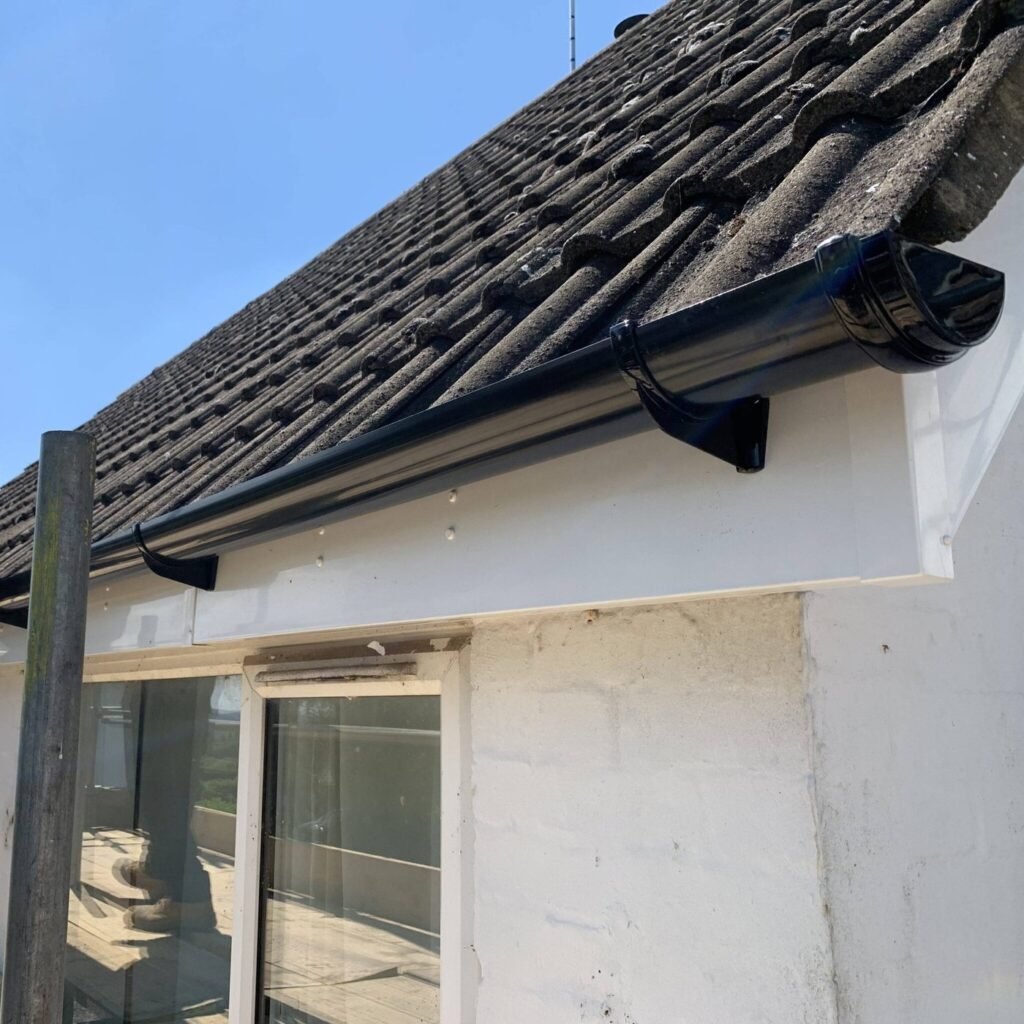
Guttering is the definition of unglamorous-but-critical: nobody admires it, everybody needs it, and when it fails, water goes where water shouldn’t — down walls, into foundations, and eventually into your house. On a semi-detached house, the guttering runs are straightforward and accessible, which keeps costs reasonable.
Here’s how much it costs to replace guttering on a semi-detached house, what the material options cost, and when to replace the fascias and soffits at the same time.
How much does it cost to replace guttering: the numbers
For a typical 3-bed semi-detached house, full guttering replacement in white uPVC (gutters, downpipes, brackets and fittings, both elevations) costs £800–1,500 fitted. Aluminium (seamless, longer-lasting, smarter looking): £1,500–2,800. Cast iron (for period properties): £3,000–6,000 — it’s the real deal for Victorian houses but it’s heavy, needs painting, and the labour is specialist.
Most semis need 15–25 metres of guttering plus 2–4 downpipes. Labour is typically a day’s work for two people (£400–600), materials £300–800 for uPVC. Scaffolding is rarely needed for guttering alone on a semi — ladders and tower scaffolds usually suffice — but if access is awkward (conservatory in the way, steep ground), budget £300–600 for a tower. Get the quote itemised: gutters, downpipes, fascias/soffits (if included), waste disposal.
- uPVC full replacement: £800–£1,500 fitted | Aluminium: £1,500–£2,800.
- Cast iron (period homes): £3,000–£6,000 — specialist labour.
- Usually one day’s work; scaffolding rarely needed on a semi.
Fascias and soffits: do them at the same time?
The fascias (the boards the gutters fix to) and soffits (the underside of the eaves) are almost always the same age as the guttering, and the scaffolding — sorry, ladders — are already there. Replacing fascias and soffits in uPVC at the same time typically adds £1,500–3,000 to the job for a semi, versus £2,500–4,500 as a standalone job later. The economics of combining are overwhelming.
Inspect first: if the existing timber fascias are sound (no rot, no flaking), capping them with uPVC boards (£800–1,500) is a legitimate cheaper option. If they’re rotten — probe with a screwdriver; soft, crumbly wood is done — full replacement is the only answer, because new gutters fixed to rotten fascias will fail. While they’re up there, ask them to check the felt at the eaves and the condition of the first row of tiles.
- Combine fascias/soffits with guttering: £1,500–£3,000 extra vs £2,500–£4,500 later.
- Sound timber can be capped (£800–£1,500); rotten timber must be replaced.
- New gutters on rotten fascias will fail — inspect with a screwdriver test.
Material choice: uPVC vs aluminium vs cast iron
uPVC is the default for good reason: cheap, maintenance-free, lasts 20–30 years, and white uPVC suits most modern and 20th-century houses. Downsides: it looks plasticky up close, it expands and contracts (fittings must allow movement or joints pop), and black/brown uPVC fades unevenly. Choose deep-flow profile for houses with large roof areas — standard half-round can overflow in heavy rain.
Aluminium is the upgrade pick: seamless runs (no leaking joints), slimmer and smarter looking, lasts 40+ years, available in any colour. It’s the choice for forever homes and design-conscious owners. Cast iron is for period properties where authenticity matters (and sometimes where conservation rules require it) — but budget for repainting every 5–7 years. For most semis, uPVC is the rational choice; aluminium is the satisfying one.
- uPVC: cheap, 20–30 years, maintenance-free — the rational default.
- Aluminium: seamless, 40+ years, any colour — the satisfying upgrade.
- Cast iron: period authenticity at 3–4× the price, plus repainting.
Cost to replace guttering on a semi-detached house: getting quotes
This is a competitive trade — get three quotes and they’ll cluster fairly tightly, which tells you the honest price. Be wary of anyone quoting without looking at the fascias (they’re guessing), and anyone pushing a full fascia replacement when capping would do (upsell). Ask whether the quote includes: all downpipes and fittings, waste disposal, making good, and a guarantee (5–10 years on workmanship is standard).
Timing: autumn is the worst time to book (everyone discovers gutter problems when the leaves fall) and the best time to need it done. Book gutter work for late summer if you can — better availability, better prices, and the system is ready before the autumn deluge. And check the simple stuff first: sometimes ‘failed guttering’ is just blocked guttering, and a £100–150 professional clean solves it. If you’re buying, our guide to buying a Victorian terrace covers what to look for up at the eaves.
- Three quotes; beware quotes given without inspecting the fascias.
- Confirm inclusions: downpipes, disposal, making good, guarantee.
- Book for late summer; sometimes a £100–150 clean is all it needs.
Maintenance: making it last
New guttering needs almost no maintenance, but ‘almost’ matters. Clear leaves and moss twice a year (late autumn after leaf-fall, and spring) — blocked gutters overflow exactly like failed ones, and the water damage is identical. Check brackets and joints annually; uPVC expands in summer and joints can work loose. Keep an eye on the downpipe shoes at ground level — if they’re discharging next to the wall instead of into a drain, you’re soaking the foundations.
The early warning signs of gutter failure: water pouring over the edge in rain (blockage or inadequate capacity), dripping joints (seals perished), gutters pulling away from the fascia (brackets failed or fascia rotten), and green algae streaks down the wall below (chronic overflow). Catch these early and it’s a repair (£50–200); ignore them and it’s penetrating damp, which our guide to damp causes and fixes covers in depressing detail.
- Clear gutters twice yearly: post-leaf-fall and spring.
- Watch for: overflow in rain, dripping joints, pulling away, wall algae streaks.
- Early repair £50–200; ignored overflow becomes penetrating damp.
Replacing guttering on a semi costs £800–1,500 in uPVC — one of the cheaper exterior jobs, and one of the highest-value. Combine it with fascias and soffits if they’re tired, choose aluminium if it’s your forever home, and maintain it twice a year. It’s not exciting. But neither is explaining to your insurer why the back wall is saturated. Which? has guidance on finding reliable guttering and roofing tradespeople.






1 thought on “How Much Does It Cost to Replace Guttering on a Semi-Detached House?”