
How Can Parents Talk to Children About AI?
How can parents talk to children about AI? Age-by-age guidance on deepfakes, homework honesty, privacy and raising critical young users.
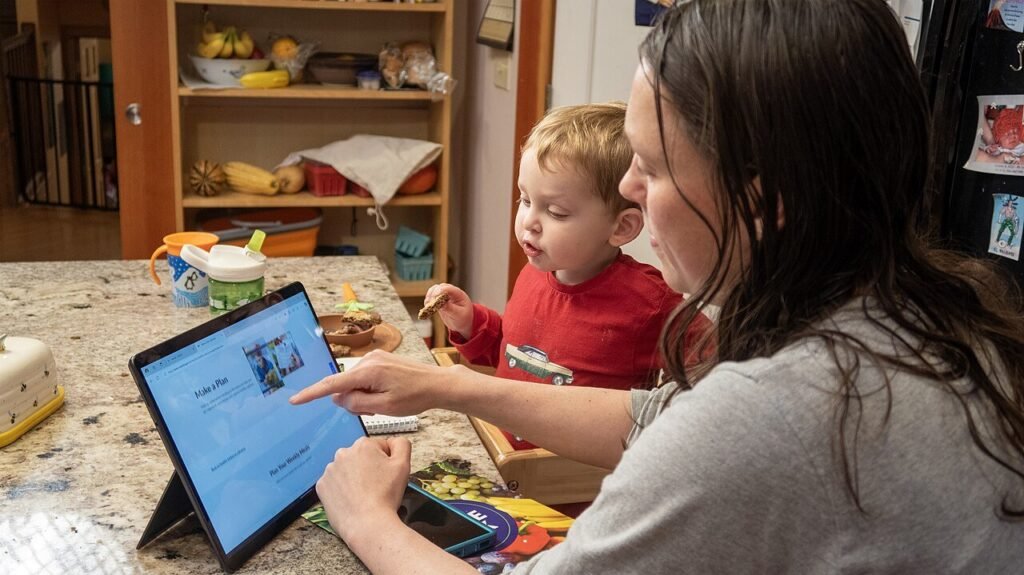
Your child is growing up in a world where homework can be done by a chatbot, photos can be faked in seconds, and “friends” online might not be human. Most parents feel unprepared for this — the technology moves faster than any parenting book. But how parents talk to children about AI doesn’t require technical expertise. It requires the same things good parenting always has: curiosity, honesty, and conversations that start early and never really stop. Here’s an age-by-age approach.
Start with the right framing: AI is a tool, not a person
Children naturally anthropomorphise — they say “please” to Alexa and believe the chatbot “knows” things. The foundational lesson, for every age, is: AI doesn’t think, feel or understand. It predicts. It generates the most likely next word, the most plausible image — without knowing what’s true. A child who grasps this one idea is equipped for almost everything below.
Use concrete demonstrations, not lectures. Ask a chatbot a question you know the answer to and watch it get something wrong. Generate an image of “a dog riding a bicycle” and laugh together at the seven legs. Experiencing AI’s fallibility beats being told about it.
Ages 5–8: simple rules and supervision
- Keep it concrete. “The tablet doesn’t really talk — clever people taught it to copy talking.”
- Supervise directly. Young children shouldn’t use AI tools unsupervised, full stop.
- Focus on kindness. Voice assistants and chatbots aren’t people, but practising polite interaction is still good manners.
- Watch together. Co-view AI-generated content (kids’ videos are full of it now) and chat about what’s real.
Ages 9–12: building critical thinking
This is the prime window — old enough to understand, young enough to listen:
- Teach the “says who?” habit. When they show you something online, ask where it came from and how they’d check it. Make verification a game, not a chore.
- Discuss homework honesty. Before the school crisis hits, talk about the difference between using AI to understand (fine, declare it) and using it to avoid thinking (cheating yourself). Our piece on whether schools should ban AI homework gives the school perspective.
- Introduce privacy. Explain that chatbots remember what you type — so no real names, school names, addresses or photos of themselves. Ever. See our guide to chatbot privacy.
- Talk about fake images. Show them AI-generated photos and practise spotting the tells (see how to tell if a photo was AI-edited). Kids love this as a detective game.
Ages 13+: honest conversations about the real risks
Teenagers need straight talk, not restrictions they’ll route around:
- Deepfakes and consent. AI “nudify” apps and fake imagery are a genuine safeguarding crisis in schools. Have the explicit conversation: creating or sharing fake intimate images of anyone is harmful, potentially criminal, and never a joke.
- Academic integrity. Universities use detection tools and take AI cheating seriously — a school habit can become a university disciplinary.
- AI relationships. Chatbot “companions” are marketed to lonely teens. Talk about what real friendship offers that a prediction engine can’t — and watch for emotional dependence.
- Their future. Frame AI as something to master, not fear: the teens who learn to direct AI tools will have an enormous advantage. Point them to skills for working alongside AI.
- Data and footprints. Everything they feed AI systems may persist. The Childnet resources on digital footprints are excellent here.
Conversation starters that actually work
Lectures don’t; curiosity does. Try:
- “Show me the coolest thing you’ve made with AI” (learn what they’re actually doing)
- “Do you think your teachers can tell when homework is AI-written?” (opens the honesty discussion)
- “If you could ask an AI anything and know the answer was true, what would you ask?” (reveals what matters to them)
- “Have you ever seen something online you later found out was fake?” (normalises scepticism)
Model the behaviour
Children copy what you do, not what you say. If you fact-check before sharing, declare when you’ve used AI for work, and put your phone away at dinner, the lessons land. If you share dubious viral content uncritically, no lecture will undo it. Our guide to spotting AI fake news is worth reading for yourself first.
Setting family AI rules that actually stick
Vague “be careful online” doesn’t work. Concrete, co-created rules do:
- Co-create, don’t dictate. Rules imposed top-down get routed around; rules discussed and agreed get followed. “What do you think is fair?” is the most powerful parenting question in tech.
- The privacy rule: no real names, school names, addresses, or photos of yourself or others into AI chatbots. Ever. Non-negotiable, all ages.
- The homework rule: AI for understanding is fine (and declare it); AI doing the work is cheating yourself. Align with the school’s policy so home and school agree.
- The image rule: never create or share fake images of real people. Discuss why — the harm to the person depicted — not just “because I said so”.
- The check-before-sharing rule: for the whole family, including parents. Model it yourself — children copy behaviour, not lectures.
- The come-to-me rule: if something AI-related worries, confuses or upsets them, they can tell you without punishment. This is the most important rule of all — it keeps the conversation open when it matters most.
- Review regularly. Tech changes fast; revisit the rules every six months. What worked at 10 needs updating at 13.
Keep the tone collaborative, not fearful. The goal is children who navigate AI confidently and critically — not children who are scared of it or (worse) skilled at hiding their use from you. For the school-side perspective to share with teachers, see our teachers’ guide and the homework debate.
The practical takeaway
You don’t need to understand neural networks to parent through the AI age. Teach one core idea (AI predicts, it doesn’t know), build the verification habit early, have the frank conversations about deepfakes and privacy before they’re needed, and stay curious about what your kids are actually doing with these tools. The goal isn’t to raise children who fear AI — it’s to raise children who use it wisely and see through it clearly. Organisations like Internet Matters offer free, practical resources if you want to go deeper.








1 thought on “How Can Parents Talk to Children About AI?”