Why Does Time Seem to Go Faster as You Age?
Why does time seem to go faster as you age? The psychology of time perception, memory and novelty — and proven, practical ways to slow your years down again.
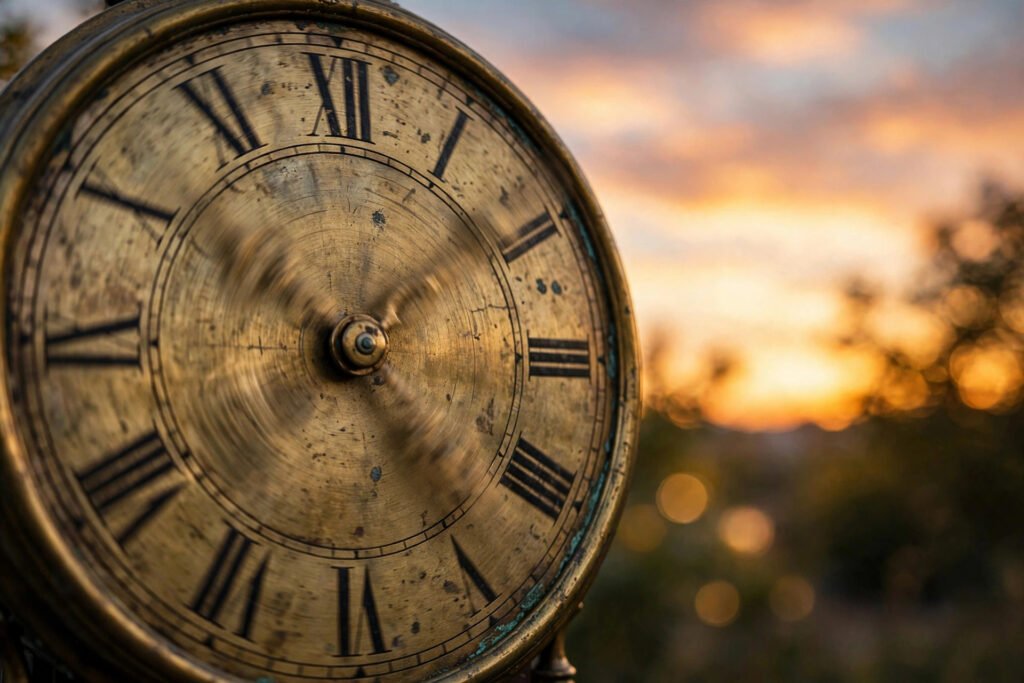
When you were ten, summer holidays stretched forever. Now a year vanishes in a blink. This is not just nostalgia — it is one of the most widely reported quirks of human psychology, and scientists have genuine explanations for it. Why does time seem to go faster as you age? The answer involves memory, attention, novelty and the strange way your brain constructs the feeling of time passing.
The memory explanation: time is measured in memories
The leading theory is beautifully simple: we judge how long a period felt by how many new memories we laid down during it. Childhood is dense with firsts — first day of school, first bike, first holiday — so in retrospect those years feel vast. Adult life, by contrast, is full of routine: the same commute, the same weeks, the same patterns. Routine lays down few distinct memories, so when you look back, the time seems to have contained little — and therefore to have been short. Psychologists call this the “reminiscence effect” in reverse: a year packed with novel experiences feels long in retrospect; a year of routine feels like it evaporated. This is why a two-week holiday in a new country feels longer in memory than two months of ordinary work.
Attention and the “proportional” theory
An older idea, dating back to the philosopher Paul Janet in the 19th century, suggests time feels proportional: at age ten, a year is a tenth of your life — enormous. At fifty, it is a fiftieth — a sliver. There is intuitive appeal here, though modern research favours the memory account. A related factor is attention: children attend to the present moment intensely, while adults spend much of life on autopilot, thinking about the past or future. Time you do not attend to is time you do not really experience — which may explain why mindfulness practices, training attention on the present, are consistently linked to a richer sense of time. The connection between attention and wellbeing runs deep; practices that restore attention, from genuinely restful sleep to unplugged weekends, also restore your sense of time’s texture.
The brain’s internal clock
Neuroscientists have identified plausible mechanisms. Dopamine systems involved in time perception change with age, and studies show older adults literally process temporal intervals differently — tending to underestimate durations. The brain’s “pacemaker” may effectively tick slower, making external time feel faster by comparison. There is also the chunking effect: the brain compresses familiar repeated experiences into single schematic memories (you remember “commuting” as one thing, not 200 separate journeys), which thins out the retrospective record. None of this is fully settled science, but the converging evidence points to memory density as the dominant factor. The British Psychological Society publishes accessible summaries of time-perception research, and the Science Museum Group explores the neuroscience of perception in its exhibitions.
Can you slow time down?
If the memory theory is right, the prescription is clear: manufacture novelty. Take different routes, learn new skills, travel to unfamiliar places, break routines deliberately. Novel experiences force the brain out of autopilot and into memory-encoding mode, thickening the retrospective record so time feels fuller. This is not just folk wisdom — studies of people who deliberately vary their routines report a measurably richer sense of elapsed time. Other levers: pay attention (mindfulness, single-tasking), keep a journal (externalising memories thickens them), and protect sleep, since memory consolidation happens largely during sleep. Even small novelties compound: a new café, a different walk, a conversation with a stranger.
There is a pleasing symmetry here with learning at any age — keeping a journal not only clarifies the present but literally lengthens your felt past by preserving the memories time-perception is built from.
Time perception in special states: flow, fear and boredom
Everyday routine is not the only thing that warps time — extreme states do it dramatically. In flow states (total absorption in a challenging task), hours vanish; retrospectively the period feels both instantaneous and rich, because attention was fully engaged. In fear, time dilates in the moment — the classic “everything moved in slow motion” during accidents. Researchers believe this is the brain laying down unusually dense memories under adrenaline, which then take longer to “replay”, creating the slow-motion illusion.
Boredom does the opposite trick: it stretches the present agonisingly (you keep checking the clock) while vanishing in retrospect (no memories were laid down). This is why the most boring meeting of your life feels endless at the time and nonexistent a month later. Meditation and psychedelic research both report profound time distortion, suggesting the brain’s time sense is far more constructed — and fragile — than it feels. The practical takeaway: if you want time to feel rich, seek engagement; if you want it to pass quickly in the moment, seek routine. You cannot control the clock, but you have more control over the experience of time than it feels like. There is a bittersweet corollary worth sitting with: the same mechanism means the years you most want to last — holidays, new love, your children’s early years — will feel shortest in retrospect unless you deliberately fill them with novelty and attention. The science of time perception is, quietly, a manual for savouring a life.
Conclusion
Time seems to go faster as you age mostly because routine lays down fewer memories, and we judge time’s length by memory density — amplified by proportional effects and changes in attention. The fix is gloriously actionable: seek novelty, pay attention, and record your days. You cannot slow the clock, but you can absolutely thicken your experience of the time it measures.
Frequently Asked Questions
Why did childhood summers feel so long?
Because they were dense with novel experiences and you attended to them fully. Your brain laid down rich memories, so in retrospect those summers feel vast compared to routine adult months.
Is it true that time speeds up proportionally with age?
The proportional theory (a year is 1/10 of life at ten, 1/50 at fifty) is intuitive but modern psychology favours the memory-density explanation: routine creates fewer memories, making time feel shorter in retrospect.
Can you actually make time feel slower?
Yes, to a degree: novel experiences, mindfulness, journaling and good sleep all increase memory density and present-moment attention, which makes periods feel longer and richer in retrospect.
Does the brain have an internal clock?
Neuroscientists believe timing involves dopamine-linked circuits that change with age. Older adults tend to process intervals differently, which may contribute to time feeling faster — though memory effects dominate.
Why does a boring meeting feel endless but the year flies?
Prospective time (in the moment) and retrospective time (looking back) work oppositely: boredom stretches the present because you watch the clock, but lays down no memories, so it vanishes in retrospect. Novelty does the reverse.
Why do holidays feel long at the time but short later?
Actually it is the opposite: holidays feel rich in the moment because of novelty, and long in retrospect because they laid down dense memories. Routine weeks feel fast in the moment (autopilot) and vanish in retrospect (no memories). The memory rule cuts both ways.
Does time go faster when you are having fun?
In the moment, yes — engagement and enjoyment make time fly prospectively. But fun, novel experiences lay down rich memories, so they feel substantial in retrospect. The years people treasure most rarely feel wasted.