
What to Check Before Buying a Victorian Terrace House
What to check before buying a Victorian terrace house — damp, roofs, electrics, subsidence and the survey that could save you thousands.
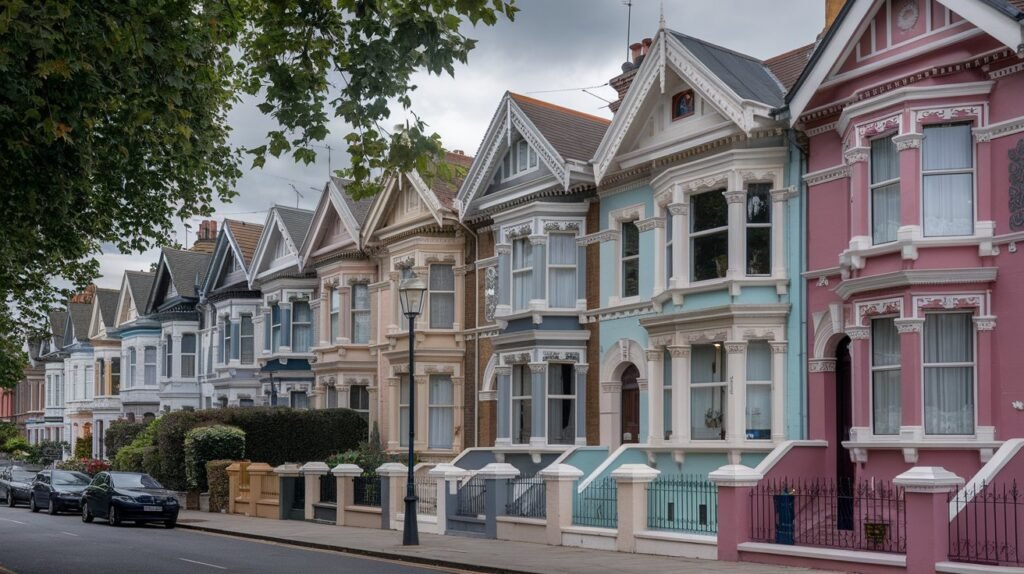
Victorian terraces are Britain’s most beloved houses: high ceilings, original fireplaces, bay windows, and streets with actual character. They’re also 120–150 years old, built to standards that would make a modern building inspector weep, and hiding problems that can cost tens of thousands if you don’t spot them before exchange.
I bought one. I love it. I also spent the first two years fixing things the survey mentioned in language I didn’t understand at the time. Here’s what to check before buying a Victorian terrace house — the checks that matter, what they cost to fix, and when to walk away.
What should you check before buying a Victorian terrace house: the survey
First, the survey. A basic mortgage valuation is not a survey — it tells the lender the house is worth the loan, nothing more. For a Victorian terrace, you want a full Building Survey (Level 3), £800–1,500 depending on region. Yes, it’s expensive. It routinely saves buyers five figures by finding the things below before you’re committed.
Read the whole survey, not just the summary — and crucially, get the surveyor on the phone to translate. ‘Evidence of historical movement’ and ‘damp-proof course bridged’ are sentences that mean very different things depending on context, and a ten-minute call turns jargon into a decision. If the survey flags structural issues, a structural engineer’s report (£500–800) is the next step, not panic.
- Get a Level 3 Building Survey (£800–1,500) — not just a mortgage valuation.
- Phone the surveyor to translate the jargon into decisions.
- Structural flags need an engineer’s report (£500–800), not panic.
Damp, roofs and the building envelope
Damp is the Victorian terrace’s signature issue. Check for: tidemarks and salt deposits at the bottom of ground-floor walls (possible bridging of the damp-proof course — often caused by raised external ground levels, a £500 fix, not the £5,000 injection the damp industry will suggest), black mould in upstairs corners (usually condensation — see our guide to damp causes and fixes), and the condition of gutters, downpipes and pointing — failed rainwater goods cause most penetrating damp.
The roof: ask when it was last done, look for slipped or missing slates from the street, and check the loft for daylight through the roof and damp timbers. A full re-roof on a terrace costs £6,000–10,000 — the single biggest ticket item after structural work. Chimneys deserve their own look: crumbling stacks and failed flashing are leak factories, and repointing a stack costs £800–1,500.
Electrics, plumbing and heating
Assume the electrics need work until proven otherwise. Ask the age of the consumer unit and wiring; rubber-insulated cable (pre-1960s) means a full rewire. Our guide to rewiring costs puts a 3-bed at £4,500–7,500 — budget it if the EICR (get one done before exchange, £150–300) shows C1/C2 faults throughout.
Plumbing: Victorian terraces often still have lead supply pipes (replacement £1,000–2,000, and worth doing for health reasons), ancient boilers in odd places, and bathrooms added as afterthoughts with creative pipework. Check the boiler’s age and service history — a 20-year-old boiler is a £2,500–3,500 replacement waiting to happen. Run every tap, flush every toilet, and ask to see the boiler fire up.
- Assume rewire needed until an EICR proves otherwise (£4.5k–£7.5k if so).
- Lead supply pipes: budget £1k–£2k for replacement.
- Check boiler age and service history — 20 years old means replacement soon.
Structure, subsidence and the neighbours
Terraces move together — that’s normal. What matters is differential movement: cracks wider than 5mm, diagonal cracks around doors and windows, doors that stick in one part of the house. Hairline plaster cracks are cosmetic; stepped cracks in brickwork need an engineer. Check whether the street has a history of subsidence (ask neighbours, check insurance claims history) — some Victorian streets on clay soil are notorious, and subsidence history affects insurance for decades.
Don’t forget the party walls. Terraces share walls, and the Party Wall Act applies to structural work, extensions and even some internal alterations. Ask about disputes with neighbours — and meet them if you can. You’ll share walls, drains and possibly a roof valley with these people; a difficult neighbour in a terrace affects your daily life in a way detached-house buyers never experience.
- Hairline cracks: cosmetic. Stepped brick cracks 5mm+: engineer.
- Check the street’s subsidence and insurance history.
- Meet the neighbours — you share walls, drains and daily life.
The practical checks everyone forgets
Broadband speed (check the actual postcode, not the provider’s optimism), mobile signal in every room, and parking — residents’ permits, actual availability at 7pm, not 11am. Check flood risk on the government’s flood maps (some Victorian streets near rivers are high-risk, which affects insurance). Look at the EPC: most Victorian terraces are D or E, and improving to C (likely required for rentals by 2030) means insulation, heating upgrades and potentially £10,000+ of work.
Finally, check what’s been done without permission: loft conversions without building regs, removed chimney breasts without support, extensions without approval. Your solicitor’s searches should catch these, but ask directly too — retrospective regularisation is expensive, and illegal structural work can affect your insurance and mortgage. And for the windows, draught-proofing the original sashes is almost always better value than replacement.
- Check real broadband speeds, mobile signal and evening parking.
- Flood risk and EPC rating affect insurance and future costs.
- Verify permissions for conversions, extensions and chimney breast removals.
A Victorian terrace is a wonderful house to own — solid bones, beautiful proportions, and streets people actually want to live on. But buy with your eyes open: Level 3 survey, EICR, honest budgeting for roof/wiring/heating, and a clear-eyed look at damp, structure and neighbours. The buyers who get burned are the ones who fell in love with the fireplace and skipped the survey. Don’t be them. One final piece of advice: budget for the surprises. Every Victorian terrace hides something — the chimney breast removed without support, the extension built without approval, wiring from three different decades. A ten to fifteen per cent contingency on the renovation budget is not pessimism, it is realism, and it separates buyers who thrive in period homes from those who end up resenting them. Go in with eyes open, survey in hand and contingency in the bank, and you will own one of Britain’s most characterful, solid and lovable houses. The quirks are the point — just make sure they are charming quirks rather than expensive ones. Historic England’s advice for owners of older homes is essential reading before you alter anything significant.








9 thoughts on “What to Check Before Buying a Victorian Terrace House”