How to Clean Grout Between Bathroom Tiles
How to clean grout between bathroom tiles — the methods that actually work, from baking soda to steam, plus how to keep it clean longer.

Grout is the part of the bathroom nobody thinks about until it turns the colour of weak tea. Those pale lines between your tiles are porous, they trap soap scum and limescale, and in damp bathrooms they grow mould with enthusiasm. The tiles still look fine; the grout makes the whole room look tired.
Here’s how to clean grout between bathroom tiles properly — the methods ranked by effectiveness, what to avoid, and how to keep it looking fresh so you’re not doing this every three months.
Start with the gentlest method that works
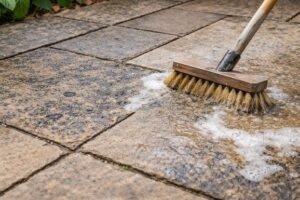
Always start mild and escalate — aggressive chemicals on grout that’s just a bit dull is overkill and can damage the grout itself. Method one: hot water, washing-up liquid and a stiff brush (an old toothbrush for spot work, a grout brush — £5 — for the real job). Scrub along the grout lines, not across the tiles. For lightly discoloured grout, this plus elbow grease is often enough.
Method two: baking soda paste. Mix baking soda with a little water into a toothpaste consistency, apply to the grout lines, leave 10–15 minutes, scrub with the brush, rinse. The mild abrasion lifts soap scum and surface staining without harming the grout. For most bathrooms cleaned every few months, you never need to go further than this.
- Start with hot water + washing-up liquid + a stiff grout brush.
- Escalate to baking soda paste for stubborn soap scum.
- Always scrub along the grout lines, and start mild — harsh first is overkill.
For stained and mouldy grout: the stronger options
For grout with real staining or black mould spots, step up to a dedicated grout cleaner or a bleach-based bathroom spray. Apply, leave for the time stated (usually 5–10 minutes — longer isn’t better, it just risks damage), scrub, rinse thoroughly. For mould specifically, a mould remover with fungicide works better than general cleaners because it kills the spores, not just bleaches the colour.
The nuclear option for filthy grout is a steam cleaner (£40–80 for a handheld). Steam blasts grime out of porous grout with zero chemicals and it’s weirdly satisfying — genuinely one of the most effective methods. Just keep the steam moving and don’t hold it on one spot, which can soften old grout. A note of caution: avoid neat bleach on coloured grout (it fades the colour unevenly) and avoid acidic cleaners (vinegar, limescale removers) on natural stone tiles — the acid etches the stone.
- Mould needs a fungicidal mould remover, not just bleach.
- Steam cleaners (£40–80) are the most effective chemical-free option.
- No neat bleach on coloured grout; no acids on natural stone tiles.
How to clean grout between bathroom tiles: the floor
Floor grout is the hardest — it takes foot traffic, hair dye, fake tan and everything the shower throws at it. For floor tiles, mop first to remove surface dirt (scrubbing muddy grout just makes muddy paste), then use the baking soda method or a grout cleaner with a long-handled stiff brush — your knees will thank you.
For large floor areas, an oscillating multi-tool with a grout brush attachment (£15 attachment) speeds things enormously. And if the floor grout is permanently stained no matter what you do, grout colourant (£15–20 a bottle) paints the grout lines a fresh uniform colour and seals them — it’s essentially grout makeup, and on tired floors it’s transformative. Just clean thoroughly first; colourant over dirt looks worse, not better.
When cleaning isn’t enough: repair and regrout
Sometimes grout is beyond cleaning: crumbling, cracked, missing chunks, or stained so deep that the discolouration is structural. Patch-repair small areas by raking out the damaged grout with a grout rake (£8) and reapplying fresh grout — match the colour as closely as you can, and seal it after curing.
For shower areas where grout repeatedly fails, consider epoxy grout for the repair — it’s waterproof, stain-proof and mould-proof, though harder to apply than cement grout. And if the whole bathroom’s grout is shot, a full regrout (£300–600 professionally for a typical bathroom) is cheaper than retiling and makes the room look new. While you’re at it, check the silicone seals — blackened, peeling silicone around baths and showers needs replacing, not cleaning.
- Crumbling or missing grout needs raking out and replacing, not cleaning.
- Epoxy grout for showers: waterproof and mould-proof, harder to apply.
- Blackened silicone needs replacing — cleaning won’t save it.
Keeping it clean: prevention
The secret to grout that stays clean is boring: ventilation and sealing. Run the extractor fan during every shower and for 20 minutes after (a humidistat fan does this automatically — £30–50, the best bathroom upgrade there is). Squeegee shower walls after use — 30 seconds that halves soap scum. And seal the grout after deep cleaning: a penetrating grout sealer (£15–20) soaks in and repels water and stains for a year or more.
Weekly maintenance: a quick spray with a daily shower cleaner (the no-scrub type) after the last shower of the day prevents buildup. It takes ten seconds and means you never face the full deep-clean again. If ventilation is your problem, read our guide to ventilating a windowless bathroom — dry air is the foundation everything else builds on. And for the bigger picture, bathroom renovation costs covers when a refresh becomes a refit.
- Extractor fan on during + 20 mins after every shower — non-negotiable.
- Seal grout after deep cleaning; reapply yearly.
- Daily no-scrub shower spray: 10 seconds that prevents the deep-clean.
Clean grout is 90% method and 10% product: start mild, escalate sensibly, steam if you’re serious, and seal afterwards so you don’t repeat the job in three months. The bathroom won’t clean itself — but with sealed grout, good ventilation and a daily spray, it’ll come pretty close. One final tip for the long game: once the grout is clean and sealed, switch your routine cleaning products. Harsh bleach-based cleaners used weekly degrade grout and sealant over time — they are for occasional deep cleans, not everyday use. A pH-neutral bathroom cleaner costing a few pounds preserves grout, sealant and tiles while keeping everything fresh week to week. It is a small change that doubles the life of your deep-clean results. The goal was always to clean the grout once, properly, and then never face it again — the right maintenance products are how you get there. Which?’s cleaning guides test bathroom cleaners so you can skip the ones that do not work.