
What Are the Best Comfortable Heels for Standing All Day?
Heels you can actually stand in: the heel heights, shapes and comfort features that survive a full day on your feet.
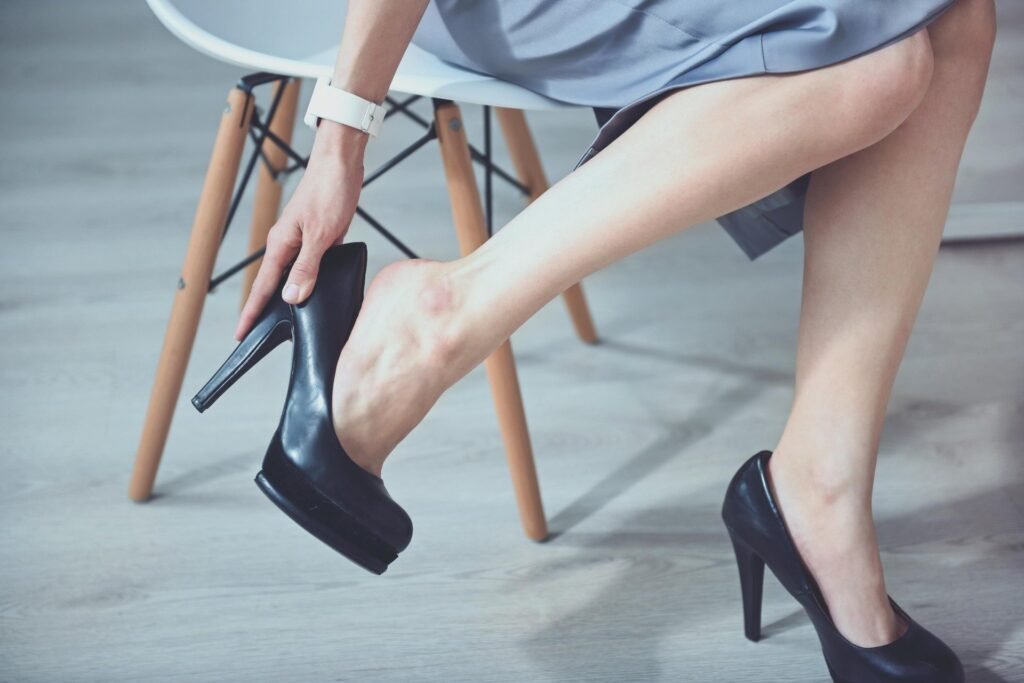
Teachers, nurses, retail workers, wedding guests, office workers — millions of us spend entire days on our feet in heels, and most of us are doing it in shoes that punish us by 3pm. Finding comfortable heels for standing all day isn’t about settling for ugly “comfort shoes”. It’s about knowing which engineering features actually make heels wearable, because comfort in heels is physics, not luck.
I’ve done full wedding days, trade shows and 12-hour shifts in heels. The difference between agony and fine is never the price tag — it’s specific design features. Here’s what to look for.
Comfortable Heels for Standing All Day: The Engineering
1. Heel height: the 5cm sweet spot
Research on foot pressure shows a clear threshold: heels up to about 5cm (2 inches) distribute weight reasonably; beyond that, forefoot pressure climbs steeply. The most wearable all-day heel is 3–5cm — enough for elegance and leg line, low enough for endurance. Sky-high stilettos are event shoes, not work shoes. Accept this and everything gets easier.
2. Heel shape: block beats stiletto
Block heels, wedge heels and flared heels distribute weight over a larger area and provide inherent stability — no wobbling, no sinking into grass, far less calf fatigue. A 5cm block heel is dramatically more wearable than a 5cm stiletto. For all-day standing, block or wedge is the answer; stilettos are for sitting-down events.
3. Platform: the hidden helper
A platform under the forefoot reduces the effective heel height (the pitch your foot actually feels). A 8cm heel with a 3cm platform feels like a 5cm heel. This is how performers survive stage shows — platforms are legitimate comfort technology, not just a look.
4. Cushioning and arch support
Look for: padded insoles (memory foam or gel), arch support that matches your foot, and a shank (the stiffener between heel and toe) that prevents the shoe folding painfully. Many comfort brands (Clarks, Hotter, Gabor) build these in; with fashion brands, add aftermarket insoles (£10–£20, transformative).
5. Fit specifics
- Toe box: round or almond toes beat pointed for all-day wear — pointed toes compress toes over hours. If you love the pointed look, size up half a size.
- Straps and support: ankle straps, Mary Jane straps or T-bars keep feet from sliding forward — the sliding is what causes toe-crushing and blisters. More support = more comfort.
- Heel grip: the heel cup should grip without rubbing. Heel grips (£3) fix minor slipping.
- Break them in: never debut heels on an all-day event. Wear them around the house for several evenings first.
Best Heel Styles for All-Day Standing
- Block-heel court shoes: the workhorse — professional, stable, endlessly versatile. Every all-day heel wardrobe starts here.
- Wedge heels: maximum stability and weight distribution. Espadrille wedges for summer, leather wedges year-round.
- Low heeled boots: ankle or knee boots with 3–5cm block heels — the support of a boot plus the lift of a heel. Autumn/winter’s answer.
- Mary Janes: the strap keeps everything in place; the typically lower heel is a bonus. Very current.
- Kitten heels: 3–4cm, elegant, genuinely walkable. The fashion world’s worst-kept comfort secret.
Brands worth knowing
For comfort-engineered heels: Clarks, Hotter, Gabor, Ecco, Cole Haan (Nike Air technology in dress shoes), and LK Bennett’s lower lines. For fashion heels made bearable: invest in aftermarket insoles and heel grips — they close 80% of the comfort gap for £15.
Survival Strategies for Long Days
- The flat backup: keep foldable flats or trainers at the office/under the desk. Changing for the commute alone halves the day’s heel hours.
- Blister prevention: blister plasters before blisters (on known hotspots), anti-friction balm, and properly fitted shoes. Pack spares for weddings — see our wedding guest guide.
- Shift weight regularly: subtle weight shifts, calf raises, and sitting when possible. Static standing is harder than walking.
- End-of-day recovery: roll feet on a tennis ball, raise your legs up against a wall, and stretch calves — heels shorten calf muscles over time, so counteract it.
Pair your comfortable heels with outfits that work as hard — our midi dress shoe guide and smart casual office guide both assume you’ll be on your feet. Which? comfort footwear reviews test popular brands independently.
How to Break In Heels Properly
New heels and all-day wear are a painful combination — unless you break them in first. The method:
- The thick-sock method: wear thick socks with the heels around the house for 30–60 minutes over several evenings. The socks stretch the leather gently without the pain of bare feet. Focus on the tight spots — usually the toe box and heel counter.
- Targeted stretching: shoe stretchers (£10–£15) with stretching spray work on specific pressure points. Cobblers offer professional stretching (£8–£15) — worth it for expensive pairs.
- Bend the sole: gently flex the sole back and forth to soften it before first wear. Stiff new soles fight your foot’s natural movement.
- Short outings first: wear new heels for a dinner before the wedding, a half-day before the full day. Build up like training — because that’s what it is.
- Blister-proof from day one: apply anti-friction balm to known hotspots before the first wear, not after the first blister. Prevention beats treatment.
Materials matter
Real leather breaks in and moulds to your foot; synthetic patent and plastic don’t — what pinches on day one pinches on day one hundred. This is the hidden cost of cheap heels: the price is low because the materials never adapt. For heels you’ll wear all day, leather (or quality suede) uppers are worth the premium — they’re the difference between shoes that improve with wear and shoes that punish forever.
Heel Alternatives for All-Day Polish
Sometimes the answer isn’t a better heel — it’s no heel. All-day polish without elevation: Pointed flats: the leg-lengthening effect of a pointed toe without any heel — the smartest flat choice. Loafers: chunky or classic — polished, comfortable, endlessly versatile. The menswear-inspired loafer is a legitimate power shoe. Low block-heeled boots: 3cm counts as “flat” in comfort terms while giving presence. Elegant trainers: minimal leather trainers in white, black or metallics — acceptable in most modern offices, transformative for commutes. The honest truth: no heel is more comfortable than the best heel, and modern dress codes increasingly accept it. The power move isn’t suffering beautifully — it’s choosing the shoe that lets you be fully present all day. Save the heels for the hours that matter, not the hours that hurt.
The practical takeaway: 3–5cm block or wedge heels with cushioning, arch support and straps are the all-day formula. Add insoles to fashion pairs, break everything in before the big day, and keep flats for the commute. Comfortable heels aren’t a myth — they’re just engineered, not accidental.






