How to Socialise a Shy Rescue Dog: A Gentle Step-by-Step Guide
Wondering how to socialise a shy rescue dog? This gentle, vet-approved plan covers safe introductions, reading body language and building trust at your dog’s pace.
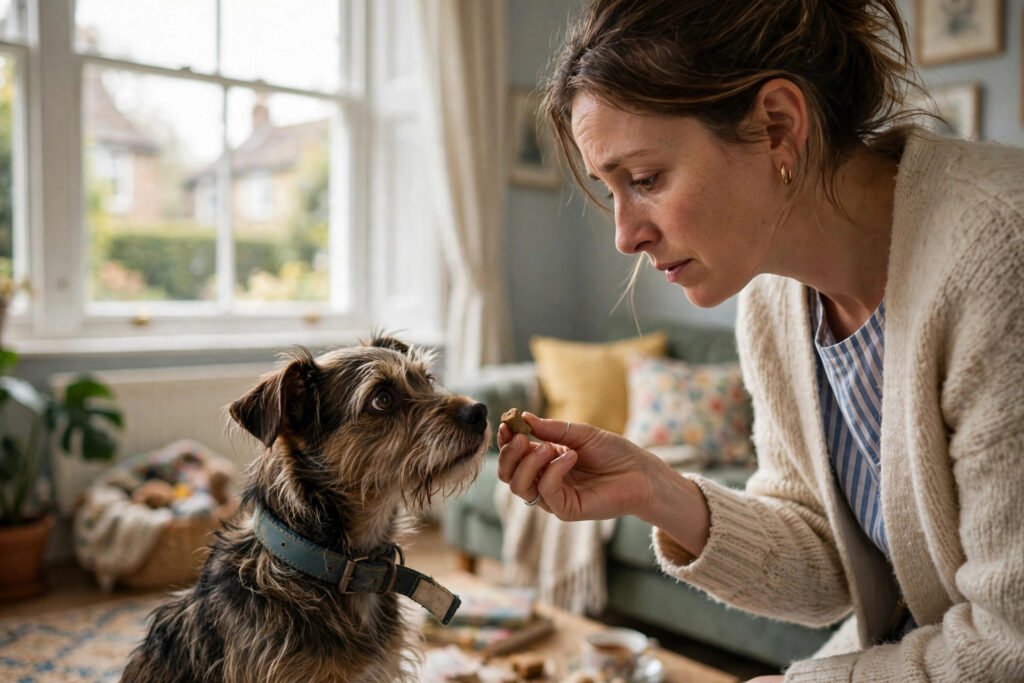
Bringing a rescue dog home is one of the kindest things you can do, but the first weeks with a shy dog can feel like living with a ghost. She hides behind the sofa. He flinches when you reach for the lead. She eats only when you leave the room. If this sounds familiar, take heart: shyness in rescue dogs is not a life sentence. It is a starting point, and with the right approach, most timid dogs blossom into confident, joyful companions within a few months.
Socialising a shy rescue dog is different from socialising a puppy. You are not working with a blank slate; you are working with a dog who has learned, often the hard way, that the world can be unpredictable. Your job is to rewrite that lesson. This guide walks you through a gentle, evidence-based plan, from the crucial first 72 hours to the moment your dog chooses to approach a stranger for a fuss, entirely on their own terms.
Why Rescue Dogs Become Shy in the First Place
Shyness in dogs is rarely about temperament alone. Most rescue dogs arrive with a backstory written in their body language. Some were under-socialised as puppies, missing the critical socialisation window between roughly three and fourteen weeks when positive exposure to people, sounds, and environments shapes lifelong confidence. Others experienced neglect, punishment-based handling, or frightening events that taught them humans are best avoided.
It helps to understand that fearful behaviour is a coping strategy, not disobedience. A dog that cowers, tucks its tail, licks its lips, yawns excessively, or freezes is communicating stress, not defiance. According to the RSPCA’s guidance on dog behaviour, recognising these calming signals is the foundation of helping a nervous dog, because you cannot build trust with an animal whose warnings you keep missing.
Some dogs are also simply cautious by nature, which reframes the goal: you are not turning an introvert into an extrovert, just helping a nervous dog feel safe.
The First 72 Hours: Decompression Comes First
Rescue organisations talk about the “3-3-3 rule”: three days to decompress, three weeks to learn your routine, three months to feel at home. Your new dog has lost everything familiar, so expect shutdown behaviour at first: hiding, refusing food, toileting accidents. This is normal.
Set up a safe den
Before your dog arrives, create a quiet corner: a crate with the door open and covered, a comfortable bed, water, and long-lasting chews. This is the dog’s embassy, where nobody bothers them. A dog with a safe retreat explores sooner than one that feels cornered.
Keep the world small
For the first few days, limit life to one or two rooms plus short garden toilet breaks. Let the dog come to you: sit nearby reading, toss treats in their direction without eye contact, and let curiosity do the heavy lifting.
Reading Your Dog’s Body Language
Socialisation without observation is just flooding, and flooding a fearful dog makes things worse. Learn the stress vocabulary: lip licking with no food present, whale eye, ears pinned flat, a tucked tail, and panting when it is not hot. These are requests for space; honour them and your dog learns you are trustworthy.
Equally, learn the green lights: soft eyes, a loose mid-height tail wag, play bows, and voluntarily approaching you. The Blue Cross advice for rescue dog owners emphasises rewarding these brave moments, because confidence is built one rewarded choice at a time.
Try the “consent test”: stroke for three seconds, then stop. If the dog nudges for more, continue; if they move away, stop. This tiny ritual teaches a shy dog they have agency and you will listen.
Building Trust Through Routine
Predictability is the antidote to anxiety: same walk times, same meal times, same calm goodnight ritual. Toss high-value treats near you several times a day so your presence predicts good things.
Training is one of the fastest trust-builders available, but keep sessions to three or four minutes and always end on a success. Teach a simple hand touch or “find it” (tossing treats into grass to sniff out): sniffing lowers a dog’s heart rate, and scatter-feeding meals in the garden turns dinner into a confidence-building treasure hunt.
Introducing New People the Right Way
Most socialisation failures happen here. Well-meaning visitors loom over the dog, stare into its eyes, reach for its head, and coo loudly, which is essentially a recipe for terror. Brief every visitor before they arrive with three rules: ignore the dog completely at first, let the dog approach them, and if the dog does approach, offer a treat with an open palm held low rather than reaching over the dog’s head.
Ask a calm friend to sit sideways (less threatening than head-on), avoid eye contact, and toss treats nearby. Over several visits, most shy dogs progress from tossed treats to a gentle chin scratch. Never force it: a dog allowed to retreat approaches sooner than one that feels trapped.
Coach children separately: their quick movements and high voices frighten timid dogs. Supervise every interaction, teach kids to stand still like “boring trees” if the dog worries, and never allow hugging.
Careful Exposure to the Wider World
Once your dog is comfortable at home, usually after two to four weeks, begin gentle exposure to the outside world using desensitisation: present a mild version of something scary, pair it with treats, and only increase intensity when the dog is relaxed. Traffic noise? Start by sitting in the garden at a quiet time with a stuffed Kong. Busy high street? Begin at a distance where the dog notices but stays under threshold, the point where they can still take treats and respond to you.
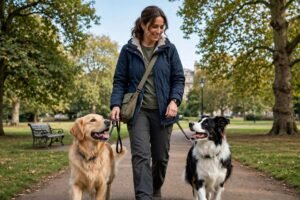
Choose walking routes strategically: wide, open spaces beat narrow lanes with surprise encounters, and a five-to-ten-metre long line gives freedom without off-lead vulnerability. Parallel walking with one calm dog teaches more than any chaotic dog park. When you fancy a trip further afield, our guide to dog-friendly holidays in the UK covers destinations where nervous dogs are welcome.
What about doggy daycare and group classes?
Hold off. Noisy group environments overwhelm shy dogs. When you are ready for training support, look for a trainer accredited by the Animal Behaviour and Training Council who uses reward-based methods and offers small, calm classes or one-to-one sessions first. Avoid anyone promising quick fixes with choke chains, rattle cans, or “dominance” techniques; these suppress behaviour through fear and will set a shy dog back months.
Setbacks Are Normal: The Two-Steps-Forward Rule
Progress is rarely linear: your dog may greet a visitor confidently on Tuesday and hide from the postman on Wednesday. Fireworks, house moves, or changed work hours can trigger regression. This is information, not failure: drop back to whatever last felt easy and rebuild. Keep a diary of brave moments; on hard days it shows how far you have come.
When to Call in Professional Help
Seek a qualified behaviourist (CCAB or APBC accredited) if your dog shows fear-driven aggression such as snapping when cornered, if they cannot eat, drink, or toilet normally after two weeks, or if progress stalls for a month. Your vet should also rule out pain, which often masquerades as behaviour problems, and can discuss short-term anti-anxiety medication if needed.
Conclusion
The formula is simple even when the execution is slow: keep the world small at first, learn your dog’s language, stay predictable, reward every brave choice, and never force an interaction. Around month three or four, the trembling shadow that arrived at your door will be leaning against your leg, sighing contentedly. That moment, earned on the dog’s terms, is worth every quiet week, and everyday decisions get easier too, from whether a robot vacuum suits a pet home to planning adventures together.
Frequently Asked Questions
How long does it take to socialise a shy rescue dog?
Most show meaningful improvement within three to six months of consistent work; severely traumatised dogs may need up to a year. Rushing the process almost always slows it down.
Should I comfort my dog when they are scared?
Yes. The idea that comfort “reinforces fear” is a myth; you cannot reinforce an emotion. Calm, quiet reassurance helps a frightened dog recover faster. The key is staying calm yourself.
Is it better to get a second dog to help a shy rescue?
Not as a first resort. A calm, confident dog can model brave behaviour, but a boisterous one may overwhelm a timid dog. Settle your shy dog first, then consider a carefully matched companion.
Can an adult rescue dog be socialised, or is it too late?
It is not too late. Adult dogs learn throughout life through desensitisation and positive associations. They may progress more slowly than puppies, but they progress.
What should I do if my shy dog growls at visitors?
Respect it. A growl is polite communication meaning “I’m scared, give me space.” Never punish growling; increase distance, slow down introductions, and consult an accredited behaviourist if it escalates.