
How to Host a Eurovision Party at Home
How to host a Eurovision party at home: scorecards, sweepstakes, themed food and drinking games for the ultimate Eurovision night.
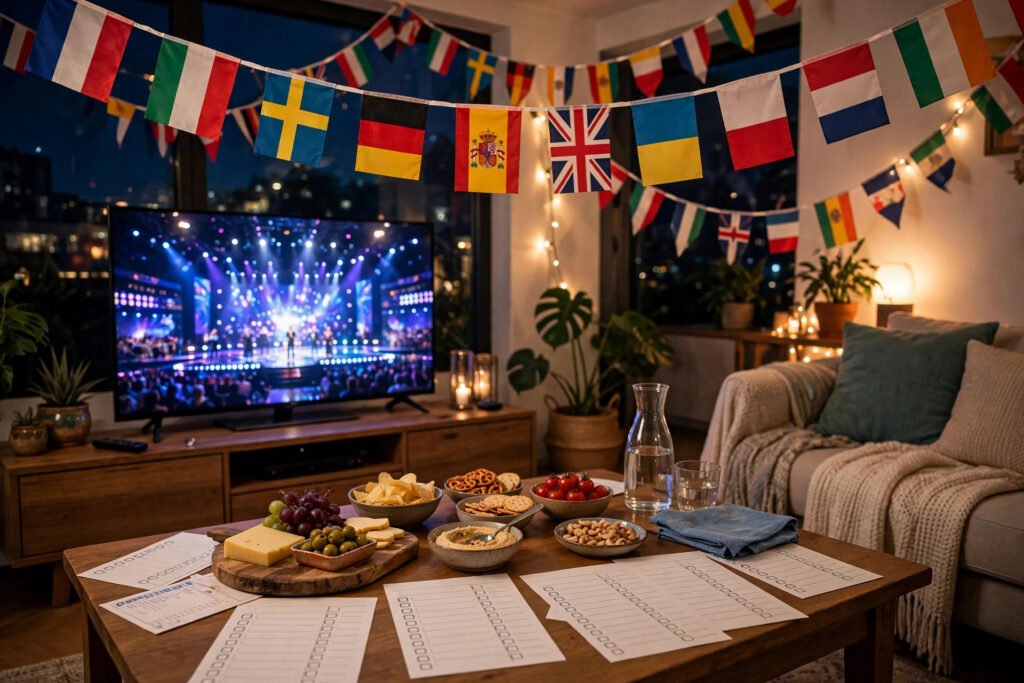
Learning to host a Eurovision party properly is a May tradition in my house, and I’ve refined the formula over years of increasingly elaborate evenings. Eurovision is the perfect party television: it’s long, it’s gloriously unpredictable, it gives everyone something to shout about, and the voting sequence is genuinely tense. But a great Eurovision night doesn’t happen by accident — it needs structure, snacks, and scorecards. Here’s the complete playbook.
The Invitations and the Guest List
Eurovision parties work best with 6–12 people — enough for atmosphere and sweepstake variety, few enough that everyone can see the screen. Send invitations early (the final is always a Saturday in mid-May) and set the tone: fancy dress optional but encouraged, national colours welcomed, strong opinions mandatory. Assign each guest a country in advance for fancy-dress purposes — or draw them from a hat on arrival for maximum chaos.
Host a Eurovision Party: The Essential Kit
- Scorecards: non-negotiable. Print or hand-make scorecards listing every competing country, with space for each guest to award their own 12, 10, 8–1 points. Everyone scores every act; compare with the real results at the end. The arguments about who deserved the douze points are half the fun.
- The sweepstake: £2–£5 per entry, each guest draws a country at random, winner takes the pot (split it between jury/televote winners if you’re feeling fancy). Someone always draws the favourite and someone always draws the obvious last place — that’s the game.
- Bingo cards: Eurovision bingo is a party institution. Squares include: wind machine, key change, interpretive dancers, costume reveal, pyrotechnics, a song about peace, Graham Norton being sarcastic, someone crying during the voting. First to a line shouts — you know the drill.
- Flags and decorations: bunting with competing nations’ flags, which you can buy cheaply every May. Go big — Eurovision rewards excess.
- A big screen and good sound: this is spectacle television; watch it as loudly and largely as you can. Our budget home cinema guide can help if your setup needs an upgrade before May.
Food and Drink: The Themed Spread
Themed food is where Eurovision parties shine. Options: the potluck of nations (each guest brings a dish from their assigned country — the variety is wonderful), the grazing table (cheeses, charcuterie, breads from across Europe — easy and impressive), or full kitsch (fondue for Switzerland, meatballs for Sweden, stroopwafels for the Netherlands). Drinks: a signature cocktail for the night (something blue and sparkly, obviously), European beers and wines, and plenty of soft options — it’s a long evening.
For the voting sequence — which runs long — have substantial snacks ready. People get genuinely peckish during the douze points marathon. Our adult party games guide has more structured fun if you want activities during the slower moments.
The Running Order: How the Night Flows
7–8pm: guests arrive, sweepstake draw, scorecards distributed, food served. 8pm: the show starts — scorecards at the ready, bingo Dabbers out. During the performances: score each act, shout at the television, enjoy the chaos. The interval: top up drinks, stretch legs, argue about the frontrunners. The voting: the main event — follow along with your scorecards, track your sweepstake country, and savour Graham Norton’s commentary. After: crown your party’s winner (often different from the real one), award the sweepstake pot, and argue about it until midnight.
Drinking Games (the Responsible Version)
Eurovision drinking games are traditional, but pace them — it’s a four-hour show. Gentle rules: sip for every key change, every wind machine, every time Norton is sarcastic about an outfit. The bingo card doubles as the drinking game if you prefer. Keep water and food flowing, and remember the voting is the best part — you want everyone compos mentis for the douze points.
The Day After: Keeping the Tradition Alive
The best Eurovision parties become annual institutions — but only if someone keeps the flame lit. Straight after: announce next year’s date immediately (it’s always mid-May; put it in the group chat that night while enthusiasm is high). Crown a champion: keep a running tally of your party’s winners versus the real winners — the divergence is usually hilarious and becomes part of the lore. The playlist: make a collaborative playlist of the year’s entries (see our Spotify Family plan guide for the shared-playlist features) — it’ll be the soundtrack to your summer, and hearing the songs in June will transport you straight back. Recruit: every year, add one new person. Traditions die when the group calcifies; a new guest brings new energy, new opinions about the key changes, and new sweepstake money.
Junior Eurovision and the Wider Universe
Did you know there’s a whole Eurovision universe beyond the main event? Junior Eurovision (November/December) is genuinely charming — kids aged 9–14 performing with complete sincerity, and the songs are often better than you’d expect. It makes an excellent family viewing night if your Eurovision party guests have kids. National selections: Sweden’s Melodifestivalen (six weeks of heats across February and March) is an event in itself — many fans argue it’s better than Eurovision proper. Norway, Finland and Spain all have entertaining selections. Following the national final season turns Eurovision from one night into a three-month hobby, and by May you’ll have opinions about the Lithuanian entry that surprise even you. The BBC’s Eurovision coverage tracks the whole season, from the first national final to the final douze points.
The Scorecard System, Perfected
Casual scoring is fun; a proper system is unforgettable. Here’s the refined version my party uses: each guest scores every act out of 12 (not the Eurovision 12-10-8-1, just a straight score — simpler and fairer). Categories optional but encouraged: song (out of 5), staging (out of 4), chaos factor (out of 3). Total them at the end for your party’s true ranking. The sweepstake tie-in: bonus points if your sweepstake country wins your party vote. The awards: your party’s winner, the wooden spoon (unanimous last place — always contentious), best costume, and the “robbed” award for the act the real voting undervalued. Keep every year’s scorecards — the archive becomes part of the tradition, and comparing years (“2024 was stronger than 2025, obviously”) fuels the group chat for months.
The takeaway: scorecards, sweepstake, bingo, themed food, big sound. Eurovision is the one night a year when earnestness and irony coexist beautifully — lean into both, and you’ll host the party people talk about until next May.








1 thought on “How to Host a Eurovision Party at Home”