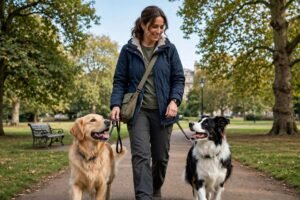
How to Help an Overweight Dog Lose Weight Safely
Here’s how to help an overweight dog lose weight safely: vet checks, portion control, the right food and gentle exercise plans that slim your dog down without risk.
Nearly half of Britain’s dogs are overweight, and most of their owners have no idea. Extra weight on a dog is not a cosmetic issue: it shortens lives. Studies, including long-running research by the University of Liverpool, have found that overweight dogs can live up to two years less than their lean counterparts, with higher rates of arthritis, diabetes, heart disease and breathing problems. The encouraging part is that safe, steady weight loss transforms a dog’s energy and comfort remarkably quickly. Here is how to help your dog slim down safely, without crash diets or misery for either of you.
First, confirm your dog actually needs to lose weight
Vets use a nine-point body condition score. At a healthy weight you should be able to feel your dog’s ribs easily under a thin layer of fat (but not see them prominently), see a visible waist when viewed from above, and notice a tucked-up tummy from the side. If the ribs are buried, the waist has vanished and the tummy sags, your dog is overweight. Many owners are genuinely surprised — we are so used to seeing chunky Labradors that a healthy-weight one can look “thin” by comparison. If you are unsure, your vet or vet nurse will score your dog in seconds during a routine visit, and most practices run free weight clinics.
Get a vet check before you start
Before changing anything, rule out medical causes. An underactive thyroid, Cushing’s disease and certain medications can cause weight gain or make it stubbornly resistant to diet. Your vet can also calculate your dog’s ideal weight and daily calorie target, which takes the guesswork out of portion sizes. This matters because the difference between “a bit extra” and “too much” in dog food is surprisingly small — a few dozen extra calories a day is enough to keep a small dog overweight indefinitely. The PDSA’s pet health advice has a useful overview of obesity-related conditions worth ruling out, and the Kennel Club’s dog health and wellbeing pages are another solid reference for breed-specific weight guidance.
Food: measure everything, and mean it
Weight loss in dogs is roughly 80 per cent diet. The most common saboteur is the unmeasured scoop: studies of pet owners repeatedly show we underestimate portions. Buy a cheap set of kitchen scales and weigh every meal. Use your vet’s calorie target, not the feeding guide on the packet — packet guides are written for active, intact dogs and are generous by design.
Cut calories, not meals
Dogs cope better with two smaller meals than one tiny one. Replace a portion of the kibble with low-calorie bulk: steamed green beans, carrot batons, courgette or a spoonful of tinned pumpkin (plain, not pie filling) add volume without many calories. Cut table scraps entirely during the weight-loss phase, and audit treats — a single pigs’ ear can contain a quarter of a small dog’s daily calories. Swap to tiny training treats or pieces of the measured daily kibble as rewards.
Slow down fast eaters
Dogs that inhale food feel less satisfied. A slow-feeder bowl or a portion of kibble scattered on the lawn turns a 30-second gorge into a ten-minute forage, which improves satiety and adds gentle mental stimulation. Puzzle feeders are particularly good for food-obsessed breeds like Labradors and Beagles.
Exercise: build up gently
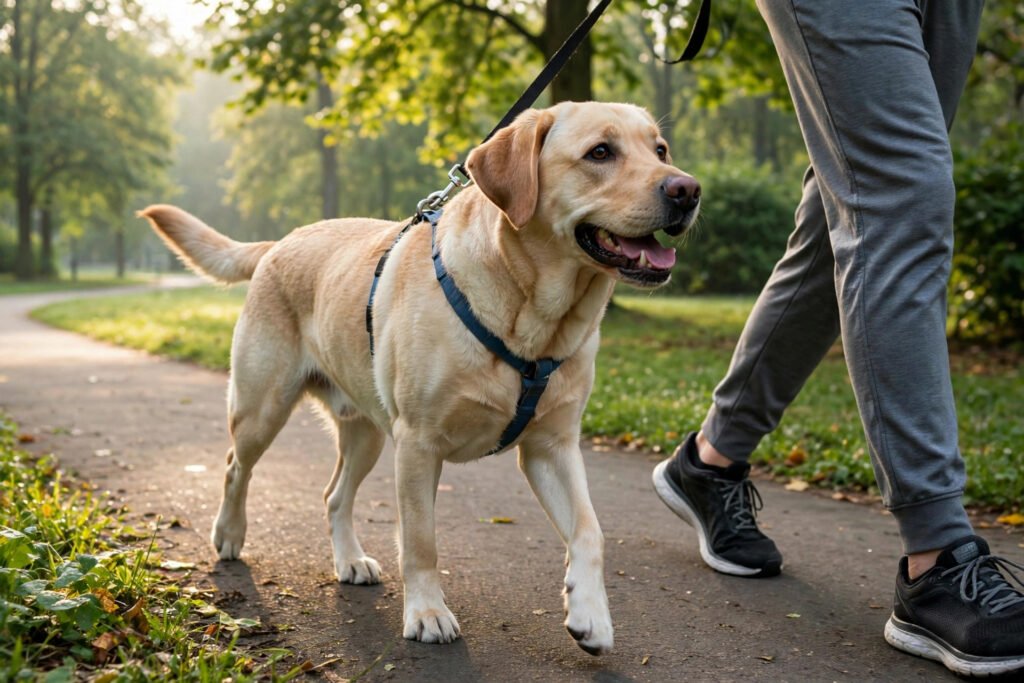
An overweight dog cannot go from couch to 5k. Start with what your dog can do comfortably — for a very heavy dog that might be two ten-minute lead walks a day — and add five minutes a week. Walking is the foundation: it is low impact and easy to dose. Swimming is superb for arthritic or very heavy dogs because the water supports their weight; many areas have canine hydrotherapy pools.
Play counts too. Gentle fetch on grass, nose-work games (hiding treats around the garden), and short training sessions all burn calories and build the habit of activity. Watch for heavy panting, lagging behind or stiffness afterwards, and scale back if you see them. As fitness improves, most dogs rediscover a playfulness their owners had forgotten — which makes the whole project self-reinforcing. Building a proper daily walking rhythm matters enormously; professional dog walkers structure exercise in consistent daily blocks, and borrowing that consistency is one of the simplest things an owner can do.
Track progress and adjust
Weigh your dog every two weeks on the same scales — your vet’s waiting-room scales are free to use. Safe weight loss is about 1 to 2 per cent of body weight per week; faster than that risks muscle loss and is unsustainable. Plot it on a simple chart on the fridge. If weight stalls for three weeks despite measured food and regular walks, go back to your vet: either the calorie target needs adjusting or something medical is going on. Celebrate milestones — the first visible waist, the first time they choose to play — because this is a months-long project and morale matters.
It helps to keep perspective on what a healthy weekly weight-loss rate looks like: the same principles of slow, measurable, sustainable loss apply to dogs as to people, just on a smaller scale.
The whole household has to agree
Every successful canine diet has been sabotaged by a soft-hearted family member slipping cheese under the table. Hold a household summit: everyone feeds the same measured meals, treats come from the daily allowance only, and the “just a little bit won’t hurt” era is over. Dogs are exquisite lobbyists — the mournful stare at the fridge is theatre, not starvation. Consistency across the whole family is the difference between a diet that works and one that mysteriously never does.
Conclusion
Helping an overweight dog lose weight safely comes down to four things: a vet check first, precisely measured food, gradually increasing exercise, and a united household. Aim for one to two per cent of body weight per week, track it honestly, and be patient — most dogs reach a healthy weight within three to six months. The reward is a livelier, more comfortable dog with years of extra life ahead, which is about the best return on investment in all of pet ownership.
Frequently Asked Questions
How fast should my dog lose weight?
Aim for 1 to 2 per cent of body weight per week. Faster loss can mean muscle wasting and is hard to sustain. Weigh every two weeks and adjust the plan with your vet if progress stalls.
Can I just feed my dog less of their normal food?
Reducing the normal food works, but large cuts can leave nutritional gaps. Your vet may recommend a purpose-made weight-loss food, which is lower in calories but still nutritionally complete, plus low-calorie bulk like green beans for satiety.
Are treats completely banned during a diet?
No, but they must be counted. Use tiny treats or pieces of the measured daily kibble, and keep all treats within roughly 10 per cent of daily calories. Table scraps should stop entirely.
My dog begs constantly since the diet started. Am I starving them?
Probably not — begging is habit, not hunger, especially in the first two weeks. Slow feeders, puzzle toys and splitting food into two or three meals help. If begging is extreme, check the calorie target with your vet rather than abandoning the plan.
When should I see the vet about my dog’s weight?
Before starting any diet, if weight will not budge after a month of measured feeding, or if you notice lethargy, excessive thirst or breathing difficulty. Some medical conditions cause or mimic obesity and need treatment first.