How to Cook the Perfect Steak at Home
How to cook the perfect steak at home — choosing the cut, the sear, temperatures for every doneness, and resting done right.
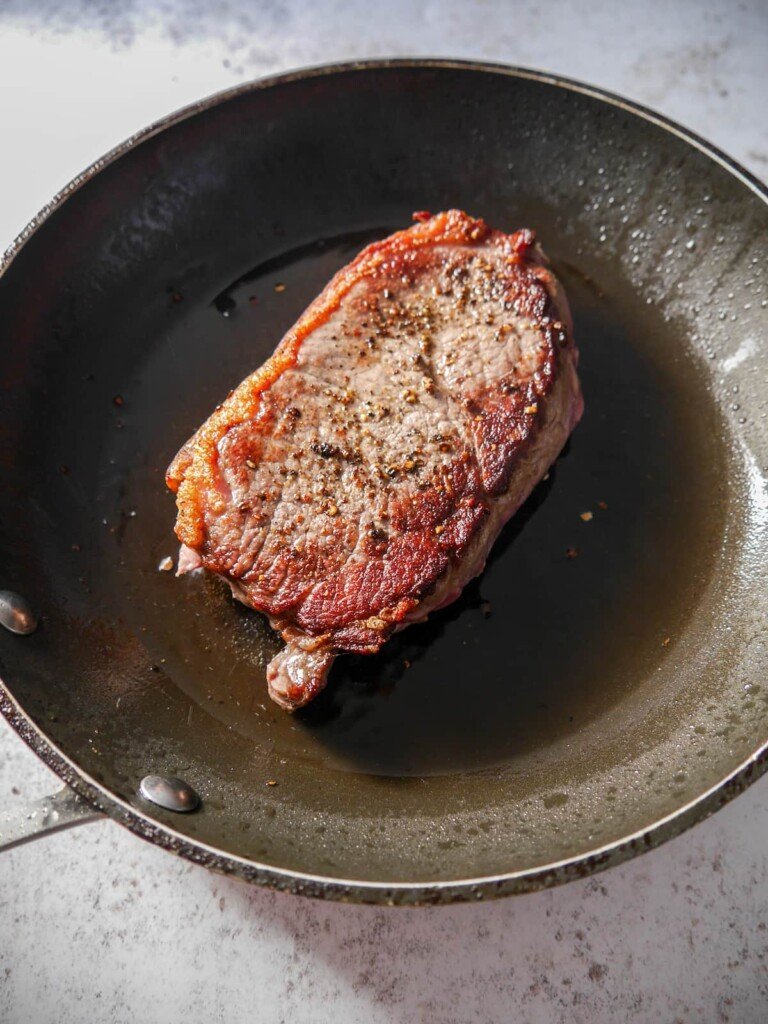
Restaurant steak at home feels like it should be simple — it’s just meat and heat — but the gap between a grey, chewy steak and a deeply crusted, blushing-pink one is where technique lives. The good news: there are no secrets, just physics. Sear hard, cook to temperature (not time), rest properly. That’s the whole game.
Here’s how to cook the perfect steak at home: choosing the right cut, the method that works in a home kitchen, temperatures for every doneness, and the mistakes that ruin good meat.
Choose the cut (and buy it well)
For home cooking, ribeye is the most forgiving: generous marbling bastes the meat from within, so it stays juicy even if you overshoot slightly. Sirloin is leaner and beefier — excellent, but less forgiving. Fillet is tender but mild (you’re paying for texture, not flavour). For value, bavette and flat iron (£12–18/kg) deliver 80% of the ribeye experience at half the price — they’re butchers’ favourites for a reason.
Buy thick: 3–4cm minimum. Thin steaks overcook before they sear — the crust needs fierce heat, and thin meat can’t survive it. Look for dry-aged if you can (21–28 days — deeper flavour, more tender), bright red colour, and marbling (white flecks through the meat, not just a fat cap). And bring it to room temperature 30–45 minutes before cooking — cold centres are the hidden cause of grey bands.
- Ribeye: most forgiving (marbling = insurance). Bavette/flat iron: best value.
- Buy 3–4cm thick — thin steaks can’t survive a proper sear.
- Room temperature 30–45 mins before cooking; cold centres cause grey bands.
How to cook the perfect steak at home: the sear
The setup: a heavy pan (cast iron or thick stainless — thin pans can’t hold heat), heated until just smoking, with a high-smoke-point oil (groundnut, sunflower — not olive oil, which burns). Pat the steak completely dry (moisture steams; dryness sears), season generously with salt and pepper just before it hits the pan.
Lay it away from you, press gently for 10 seconds for full contact, then don’t touch it for 2–3 minutes — the crust forms undisturbed. Flip once (tongs, never a fork — piercing loses juices), add butter, crushed garlic and thyme for the last minute, tilting the pan and basting the foaming butter over the steak. That’s the restaurant finish: the butter baste adds flavour and evens the cooking. Total time for medium-rare on a 3.5cm ribeye: about 6–7 minutes.
- Cast iron, smoking hot, high-smoke-point oil; steak patted bone-dry.
- Don’t touch for 2–3 mins per side — the crust forms undisturbed.
- Butter + garlic + thyme baste in the final minute: the restaurant finish.
Temperature: the only doneness guide that matters
Forget timing charts — thickness, starting temperature and pan heat vary too much. Use a thermometer (£10–15): rare 48–50°C, medium-rare 52–54°C, medium 57–60°C, medium-well 63–65°C, well-done 70°C+ (we don’t judge, but the steak deserves better). Pull the steak 3–5°C before target — carryover cooking finishes the job while it rests.
The touch test (comparing the steak’s firmness to parts of your hand) is folklore — it varies wildly between people and steaks. The cut-and-peek method (slicing to check) loses juices and looks anxious. The thermometer is objective, cheap and instant. Professionals use them; home cooks should too. There’s no prize for guessing.
- Thermometer temps: rare 48–50°C | med-rare 52–54°C | medium 57–60°C.
- Pull 3–5°C early — carryover finishes the job during resting.
- Touch tests and cut-and-peek are folklore; thermometers are truth.
Rest it (properly)
Resting is non-negotiable: 5–10 minutes for a single steak, tented loosely in foil on a warm plate. The fibres, contracted by the heat, relax and reabsorb the juices — cut immediately and those juices run all over the board instead of staying in the meat. The steak also finishes cooking gently and the temperature evens out (no more cold centre, overdone exterior).
What not to do while resting: don’t wrap tightly (it steams the crust soft — loose tent only), don’t rest on a cold plate (it chills the steak), and don’t slice to ‘check’ (see above). Use the resting time productively: deglaze the pan with red wine or stock for a 2-minute pan sauce (the browned bits are pure flavour), warm the plates, and finish the sides. Our crispy roast potatoes were designed for exactly this moment.
- Rest 5–10 mins, loosely tented, on a warm plate. Non-negotiable.
- Loose tent only — tight wrapping steams the crust soft.
- Deglaze the pan while resting: 2-minute sauce from the browned bits.
The mistakes that ruin steak
The greatest hits: cooking fridge-cold (grey band, raw centre), under-seasoning (salt generously — much of it stays in the pan; under-salted steak tastes flat no matter how well cooked), a pan that’s not hot enough (steaming instead of searing — grey, not crusted), moving it constantly (no crust forms), and skipping the rest (juice on the board, dry in the mouth).
The expensive mistakes: buying thin steaks (can’t sear without overcooking), cooking premium cuts past medium (you paid for marbling and tenderness — well-done wastes both), and saucing a great steak into oblivion (a perfect ribeye needs salt, pepper and maybe that pan sauce — not a gallon of peppercorn). Respect good meat with good technique and minimal interference. And for the full plate, cheap cuts for slow cooking prove that great beef doesn’t have to be steak-priced.
- Fridge-cold, under-seasoned, lukewarm pan, fiddled-with, unrested: the five sins.
- Thin steaks can’t sear properly — buy thick or adjust expectations.
- Great steak needs salt, heat and rest — not complicated sauces.
The perfect steak at home is: a thick, well-marbled cut at room temperature, seared hard in a smoking pan, cooked to thermometer temperature, rested properly. Four steps, no secrets. Master them and the steakhouse becomes a choice rather than a necessity — though you’ll still go, if only to confirm yours is better. BBC Good Food’s steak recipes cover sauces and sides for the full steakhouse plate.