PlayStation vs Xbox in 2026: How to Choose
PlayStation vs Xbox in 2026: hardware, exclusives, Game Pass vs PlayStation Plus, controllers and total cost compared so you can choose the right console.
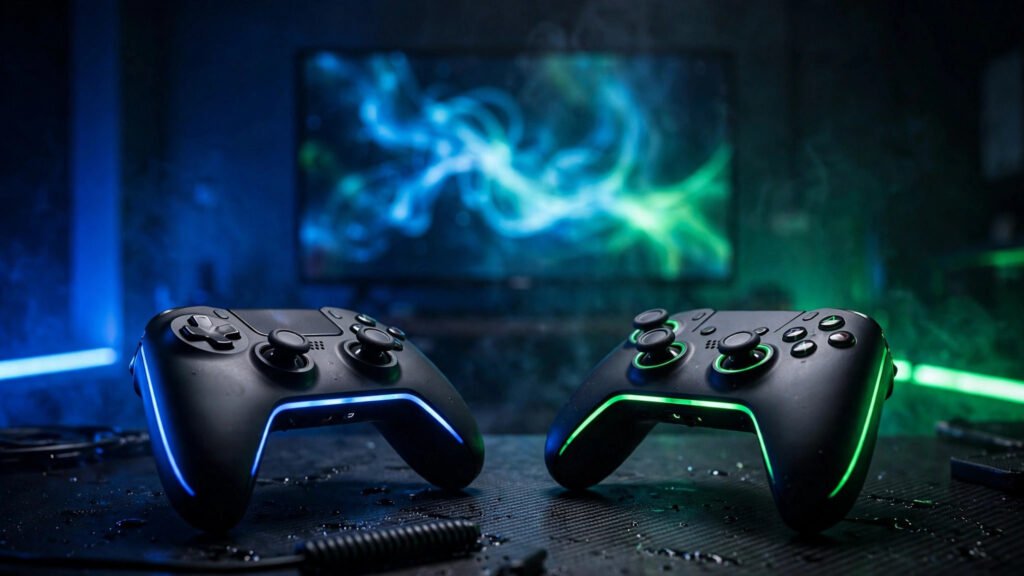
The console war never really ends — it just changes battlefields. In 2026, the PlayStation 5 and Xbox Series X|S are mature platforms with vast libraries, mid-generation refreshes behind them, and very different philosophies about where gaming is heading. Sony bets on blockbuster exclusives and premium hardware; Microsoft bets on subscriptions, value and playing anywhere.
This guide compares the two ecosystems as they stand in 2026: hardware, games, subscriptions, online services and total cost of ownership — so you can choose with your head, not your tribal loyalty.
Hardware: power, price and the mid-gen refreshes
On raw specs, the PS5 and Xbox Series X remain closely matched — both deliver 4K gaming, fast SSD loading and ray tracing, and in multi-platform games the differences are usually imperceptible without a pixel-counter. The PS5 Pro, launched as the premium option, targets enthusiasts with enhanced ray tracing and AI-upscaled performance modes; Xbox countered with storage-expanded Series X variants rather than a full “pro” console, keeping its lineup simpler and cheaper.
At the budget end, the Xbox Series S remains the cheapest route into current-gen gaming — a genuinely capable 1440p machine at a price no PlayStation matches, though its smaller storage and weaker GPU show their age in the most demanding 2026 titles. Sony’s PS5 Slim digital edition sits above it in price. Practical advice: buy the disc version if you buy physical games (second-hand and sale discs are far cheaper over a console’s life); go digital-only if you live on downloads and subscriptions. Whichever you choose, a fast, stable connection matters — improving a weak home signal is worth sorting before blaming the console for laggy downloads.
Games: exclusives vs everywhere
This is where the philosophies diverge hardest. PlayStation’s identity is its first-party blockbusters — cinematic single-player epics from its storied studios that win Game of the Year awards and define the platform. If your gaming diet is prestige single-player adventures, PlayStation’s exclusive catalogue remains the strongest argument in console gaming. These titles eventually reach PC, but typically a year or more later.
Xbox, especially after its major studio acquisitions, has pivoted to “play our games everywhere”: first-party titles launch day-one on Game Pass, and Microsoft has increasingly released its games on PlayStation too — a once-unthinkable shift that blurs the old exclusivity lines. The result: Xbox’s exclusive advantage is now less about games you cannot play elsewhere and more about getting them cheapest via subscription. For multi-platform blockbusters (Call of Duty, FIFA/EA Sports FC, GTA), both consoles play them essentially identically — your friends’ platform matters more than the hardware.
Subscriptions: Game Pass vs PlayStation Plus
Xbox Game Pass remains the best value deal in gaming: a monthly fee for a rotating library of hundreds of games including every Microsoft first-party title on launch day. For a player who tries many games, the maths is overwhelming — a year of Game Pass Ultimate costs less than two full-price releases. The tiers have been restructured over the years, so check the current lineup: the top tier adds cloud streaming and day-one releases, lower tiers offer the library without them.
PlayStation Plus has three tiers: Essential (monthly games + online play), Extra (a large downloadable catalogue), and Premium (adds classics, trials and cloud streaming). It is a good service that has never quite matched Game Pass’s day-one proposition — Sony keeps its blockbusters full-price at launch. Total cost of ownership over five years: an Xbox Series S plus Game Pass can undercut a PS5 plus individually purchased exclusives by hundreds of pounds, while a PS5 disc owner who buys second-hand physical games can claw much of that back. Model your own buying habits honestly.
Online play, controllers and ecosystem extras
Both platforms charge for online multiplayer (folded into their base subscription tiers) and both offer broadly comparable network performance. Controllers are a genuine differentiator: the PS5’s DualSense, with its adaptive triggers and haptic feedback, remains the most technically impressive standard controller ever made — developers who use it well create a tactile experience Xbox cannot match. Xbox’s controller is less flashy but ergonomically beloved, with unmatched battery flexibility (standard AAs or rechargeable pack) and the superb Elite Series 2 for competitive players.
Ecosystem extras: Xbox’s backwards compatibility programme is the industry’s gold standard — decades of older Xbox games enhanced and playable, many from discs you already own. PlayStation’s classics catalogue via Premium is improving but narrower. Cloud streaming on both lets you play on phones and tablets, handy for households sharing one TV. And both now integrate with PC gaming to varying degrees — Xbox most deeply, via Play Anywhere titles and Game Pass for PC. If the telly is contested territory, a budget home-cinema setup might settle more arguments than any console choice.
Which should you buy in 2026?
Choose PlayStation 5 if: you live for prestige single-player exclusives, you want the DualSense experience, your friends are on PlayStation, or you buy physical discs second-hand. Choose Xbox Series X if: you want maximum value via Game Pass, you play across console and PC, backwards compatibility matters to you, or you want the strongest hardware for multi-platform games. Choose Xbox Series S if: budget is the priority and you are happy with digital-only 1440p gaming — it remains an astonishing machine for the money.
The honest 2026 reality: there is no bad choice, only a mismatched one. Both platforms will be supported for years, both play the biggest games brilliantly, and the fiercest online arguments are between people who would be happy on either. Match the console to your games, your friends and your budget — in that order — and ignore anyone telling you the other side is “dead”. It is not; it never is.
Buying advice: deals, bundles and timing
Never pay full price if you can avoid it. Both consoles see regular discounts around Black Friday, in January sales and during spring promotional periods, with bundles (console plus a game or extra controller) offering the best effective value. Refurbished units from reputable retailers with warranties are another smart route — consoles are robust, and a certified refurbished PS5 or Series X can save £60–£100.
Check what is in the box carefully: storage sizes vary (1TB is the sensible minimum in 2026, with some games exceeding 150GB), and expansion storage is proprietary and pricey on both platforms — factor a storage upgrade into your first-year budget if you play many large games. Buy from established UK retailers for straightforward warranty and returns rights under the Consumer Rights Act 2015. Which? regularly tests consoles and retailers for reliability.
Conclusion
In 2026, PlayStation sells you unmissable exclusive experiences and the best controller in the business; Xbox sells you unbeatable subscription value and the freedom to play anywhere. Work out which of those sentences excites you more, check where your friends play, and price the five-year cost including games — not just the box. Do that, and whatever you unbox on the day will be the right console.
Frequently Asked Questions
Which is more powerful, PS5 or Xbox Series X?
They are very closely matched; in most multi-platform games the difference is negligible. The PS5 Pro offers a premium step up for enthusiasts.
Is Xbox Game Pass worth it in 2026?
For players who try many games, yes — it remains the best value in gaming, with Microsoft first-party titles included on launch day. Check current tiers before subscribing.
Can I play PlayStation exclusives on Xbox?
No — Sony’s first-party blockbusters remain PlayStation (and later PC) exclusives. Conversely, Microsoft now releases many of its games on PlayStation too.
Is the Xbox Series S still worth buying?
Yes, as a budget entry to current-gen gaming, especially digital-only players. Its weaker GPU shows in demanding titles, but the value is unmatched.
Do I need PlayStation Plus or Xbox Game Pass Core for online play?
Yes — online multiplayer requires the base subscription tier on both platforms. Single-player games need no subscription.