
How Do AI Voice Assistants Actually Understand Speech?
How do AI voice assistants actually understand speech? Wake words, speech recognition, language understanding and why they still get it wrong.
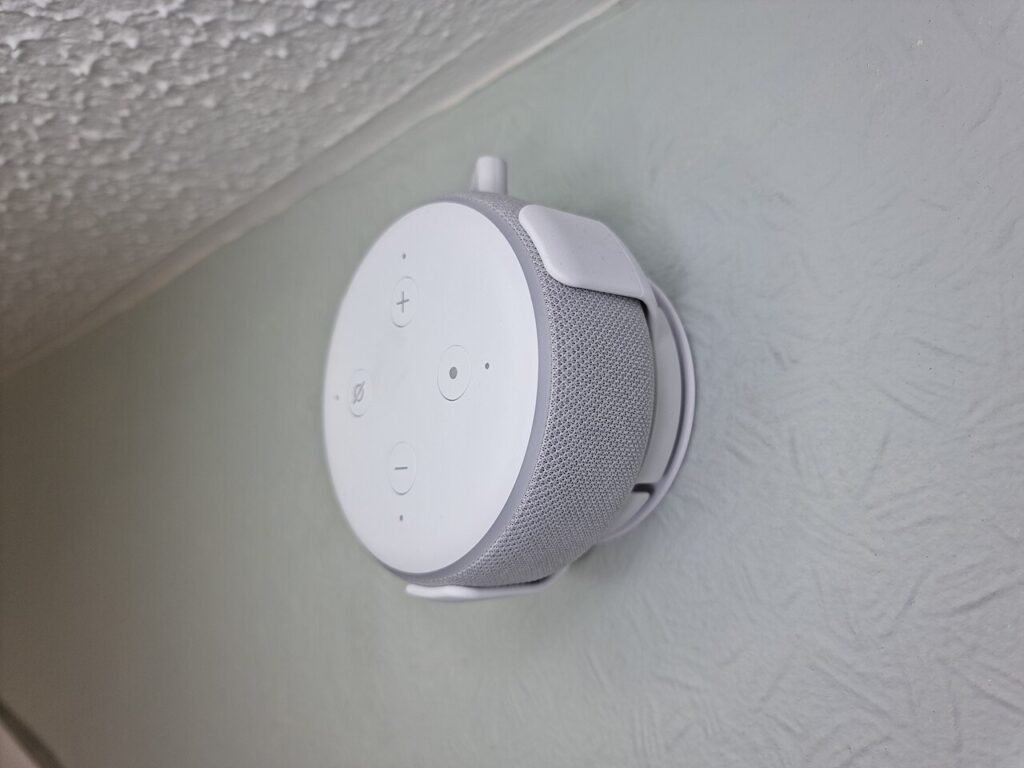
“Hey Siri.” “Alexa, set a timer.” “OK Google, what’s the weather?” Voice assistants feel almost magical — you speak, they understand, they act. But how do AI voice assistants actually understand speech? The journey from sound waves in your kitchen to an answer in under a second involves a remarkable chain of AI systems, each solving a genuinely hard problem. Here’s what’s really happening when you talk to one.
Step 1: The wake word — always listening (sort of)
First, the reassurance and the reality. Your device is always listening — but only for its wake word (“Alexa”, “Hey Siri”). This is handled by a tiny, low-power model running on the device itself, which discards everything that isn’t the wake word. Nothing is sent to the cloud until that trigger is detected.
The caveat: wake-word detection isn’t perfect. Studies have found assistants accidentally activate dozens of times a day in some households, briefly streaming audio to company servers. And those accidental recordings have occasionally been reviewed by human workers. It’s one reason privacy-conscious users mute the microphone when not in use — and worth knowing alongside our guide on sharing personal information with AI chatbots.
Step 2: Speech recognition — sound to words
Once triggered, your speech is converted to digital audio and usually sent to powerful cloud servers. There, an automatic speech recognition (ASR) system — a deep neural network trained on thousands of hours of recorded speech — converts sound into text.
This is harder than it sounds. The system must handle:
- Accents and dialects — from Glaswegian to Cornish to Scouse; modern systems train on diverse UK speech, but strong regional accents still cause more errors
- Background noise — the telly, the kettle, kids shouting; noise-cancellation models separate your voice from the chaos
- Homophones and context — distinguishing “their”, “there” and “they’re” from sound alone requires understanding the sentence
- Continuous speech — there are no gaps between words in natural speech; the model must decide where one word ends and the next begins
Modern ASR is astonishingly good — word error rates for clear speech are now in the low single digits — but it’s probabilistic guessing, not perfect hearing. That’s why “call Mum” occasionally becomes “call… someone else entirely.”
Step 3: Understanding meaning — from words to intent
Transcribed text (“set a timer for ten minutes”) then goes to a natural language understanding (NLU) system. This figures out two things:
- Intent — what you want: setting a timer, not asking about timers in general
- Entities — the key details: ten minutes, not ten hours
This stage handles the messiness of human language: “remind me in a bit” (how long is “a bit”?), “play something cheerful” (cheerful is subjective), “what’s he doing now?” (who’s “he”? — resolved from conversation context). Large language models have dramatically improved this stage, which is why assistants feel noticeably smarter than they did five years ago.
Step 4: Doing something — and speaking back
Once the intent is understood, the assistant executes: querying a knowledge base, controlling a smart home device, or calling another service. Then a text-to-speech (TTS) system converts the response into audio — modern neural voices built from hours of recorded human speech, with intonation modelled to sound natural rather than robotic.
The whole pipeline — wake word to spoken answer — typically completes in under two seconds. That speed is itself an AI achievement: enormous models compressed and optimised to run at conversational pace.
Why they still get things wrong
- Ambiguity — human language is vague; assistants guess, and guesses fail
- Lack of true understanding — the system matches patterns brilliantly but doesn’t comprehend like a person; novel or complex requests expose this
- Context limits — they forget earlier conversation turns and can’t see what you’re pointing at
- Training data gaps — unusual names, niche topics and strong dialects are underrepresented
The newest generation — assistants powered by large language models with real conversational memory — is closing many of these gaps. Expect the “dumb” moments to get rarer, though probably never extinct.
What it means for you
Understanding the pipeline explains the quirks: why assistants mishear in noisy rooms (ASR struggling), why they take things literally (NLU guessing intent), and why they’re brilliant at “set a timer” but shaky at “sort out my evening” (multi-step reasoning is hard). It also clarifies the privacy picture — your voice travels to the cloud, gets stored, and may train future models. Older people finding assistants genuinely life-changing can read how AI assistants help older people at home.
The future: truly conversational assistants
The voice assistants of today are impressive but limited — command-based, forgetful, literal-minded. What’s coming:
- Real conversation. Next-generation assistants maintain context across long, natural conversations — handling interruptions, clarifications and multi-step tasks (“book a table for Friday, somewhere quiet, near the theatre, and tell Sarah”). The stilted command style is fading.
- Proactive assistance. From reactive (“set a timer”) to anticipatory: noticing your calendar clash, suggesting you leave early for traffic, reminding you of the anniversary you always forget. Useful or creepy depending on implementation — and your settings.
- Multimodal understanding. Assistants that see (via camera) as well as hear: “what’s this plant?”, “is this mole worth checking?” (with appropriate medical disclaimers), real-time translation of signs and menus.
- Agent capabilities. Actually doing things, not just answering: booking, buying, negotiating, coordinating — the “AI agent” wave applied to voice.
- Personalisation with memory. Assistants that remember your preferences, routines and history — dramatically more useful, dramatically more privacy-sensitive.
Each advance magnifies both the utility and the concerns: more capable assistants need more data, raising the stakes of the privacy questions covered in our chatbot privacy guide. The trajectory is clear — voice interaction becoming the primary interface for many tasks, especially for those who find screens difficult (see AI assistants for older people). The winners in this future won’t be the most advanced assistants but the most trustworthy ones: capable, transparent about data, and firmly under user control.
The practical takeaway
Voice assistants are a relay race of AI models — wake-word detection, speech recognition, language understanding, action, speech synthesis — each remarkable, each imperfect. Knowing which leg is failing helps you work around it: speak clearly in noise, be specific with requests, and check privacy settings if the always-listening bothers you. The technology will keep improving; your awareness of what it is (and isn’t) doing is what keeps you in control.








1 thought on “How Do AI Voice Assistants Actually Understand Speech?”