Best Apps for Learning an Instrument 2026: 10 Tested & Ranked
The best apps for learning an instrument 2026 offers, tested across guitar, piano and drums: compare pricing, lesson quality and genuine progress results.
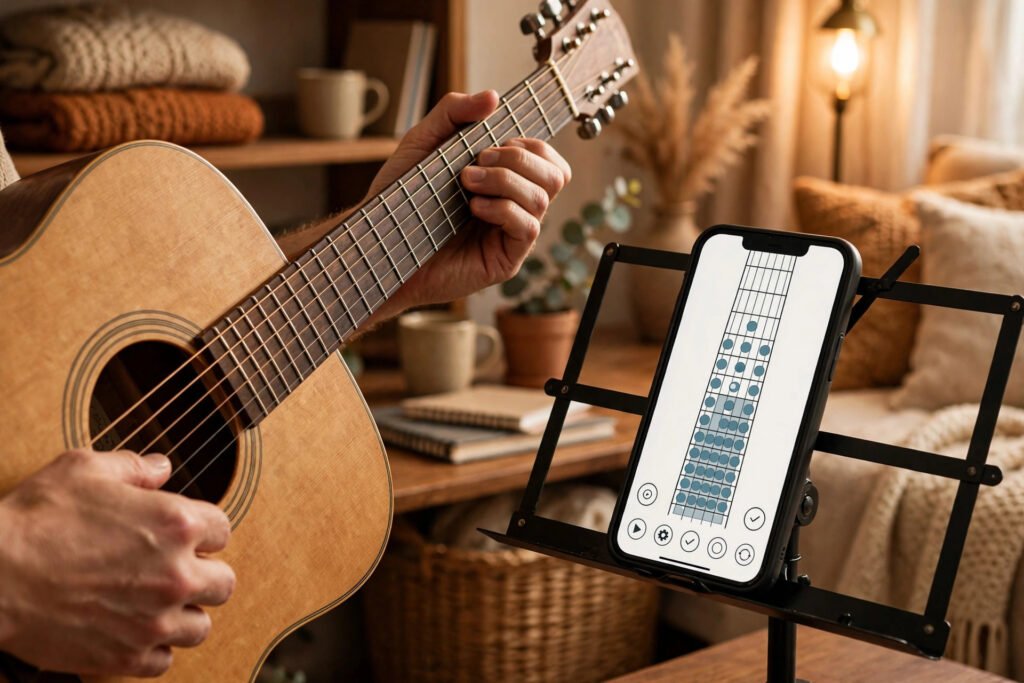
“I have always wanted to learn piano” is one of adulthood’s most common unfulfilled sentences, usually followed by the reasons it never happened: lessons are expensive, teachers are intimidating, practice time is scarce. In 2026, the excuses are thinner than ever. A new generation of learning apps offers structured lessons, instant feedback, and genuine pedagogy for a fraction of traditional tuition, and the best of them actually work.
This guide tests the landscape: ten standout apps across guitar, piano, drums, and more, compared on lesson quality, feedback technology, pricing, and whether they produce real progress or just gamified distraction.
Can an App Really Teach an Instrument?
The honest answer: up to a point, and that point is further than sceptics admit. Apps excel at the early stages: note reading, chord shapes, rhythm, basic technique, and repertoire building. Instant feedback on pitch and timing, via your device’s microphone or MIDI connection, corrects the errors beginners cannot hear themselves. Structured curricula prevent the random YouTube-tutorial wandering that stalls most self-taught players.
The limits are real, though. Apps cannot watch your posture, hand position, or tension, the physical foundations that determine long-term progress and injury prevention. They struggle with musicality: phrasing, dynamics, expression. The ideal is hybrid: an app for daily structured practice plus periodic human lessons, even monthly, to correct what the microphone cannot see. Think of the app as a tireless practice partner, not a replacement teacher.
What to Look for in a Learning App
Prioritise structured curricula over song libraries: an app that teaches progressively from first principles beats one that just sells popular songs with simplified arrangements. Feedback quality matters enormously: the best apps detect pitch, rhythm, and even dynamics in real time; the worst just check you played roughly the right notes. Check the free tier genuinely: generous free content signals confidence, while a paywall after three lessons signals a sales funnel.
Consider your instrument’s specifics. Piano apps benefit from MIDI or USB connection for precise feedback; guitar apps need good microphone pitch detection and chord-recognition; drum apps need rhythm precision above all. Read reviews from players of your instrument, not generic app-store ratings.
Ten Standout Apps for 2026
Best for piano beginners
The leading piano app combines a genuinely progressive curriculum with excellent real-time feedback via MIDI or microphone, taking absolute beginners to intermediate repertoire within a year of consistent practice. The song library is vast, and the sight-reading exercises are the best in class.
Best for guitar
The top guitar app teaches chords, strumming, and songs with impressive pitch detection, and its structured paths for acoustic, electric, and bass suit different ambitions. The tone-shaping features for electric players are a delightful bonus.
Best for ukulele
The ukulele’s simplicity makes it the ideal app-taught instrument, and the dedicated apps are charming: quick wins, cheerful design, and genuine musicianship within weeks. The perfect gateway instrument for the hesitant.
Best for drums
Drum apps focus on rhythm training with pad-based exercises and play-along tracks. They cannot teach kit technique fully without a real kit, but for timing, coordination, and groove, they are superb.
Best for music theory
A dedicated theory app, gamified but rigorous, builds the reading and understanding that accelerates every instrument. Fifteen minutes daily alongside practical practice compounds remarkably.
Best for kids
Child-focused apps use characters, rewards, and short sessions to hold young attention. They work best with parental involvement: sit with your child for the first weeks to establish the habit.
Best for ear training
The ability to recognise intervals, chords, and rhythms by ear transforms musicianship, and dedicated ear-training apps drill it efficiently. Ten minutes daily produces audible results within months.
Best for advanced players
Beyond beginner level, look for apps offering jazz harmony, advanced technique, and stylistic deep-dives rather than more songs. The best function as digital masterclass libraries.
Best free option
Several genuinely useful apps cost nothing, funded by optional premium tiers. They lack the polish of paid rivals but cover the fundamentals honestly; ideal for testing commitment before spending.
Best all-rounder
One app to rule the household: multi-instrument support, family profiles, and solid pedagogy across piano, guitar, and ukulele. The compromise choice that pleases everyone.
Pricing: What Should You Pay?
Subscriptions typically run £10-15 monthly or £80-120 annually, with lifetime options sometimes available. Annual billing usually halves the effective monthly cost, so commit only after a proper trial month. Compare against local lesson prices: even the priciest app costs less than two private lessons, which reframes the value decisively. Watch for the upsell treadmill: some apps constantly push premium song packs and extras; the best include everything in one subscription.
Making It Stick: The Practice Habit
Apps live or die on consistency, and consistency is a design problem. Schedule practice like an appointment: twenty minutes daily beats three hours on Sunday. Use the app’s streaks and reminders shamelessly; they work. Set up your instrument permanently, not packed away: friction kills practice, and a guitar on a stand gets played while one in a case does not.
Track progress visibly: record yourself monthly and compare. The Musicians’ Union practice advice emphasises deliberate, regular practice over marathon sessions. The ABRSM guidance on effective music practice offers a structured framework for planning sessions. And feed your motivation with live music: finding live gigs near you reminds you why you started, while building a vinyl collection on a budget deepens the listening habit that sustains playing.
When to Get a Human Teacher
Apps take you far, but certain moments demand human eyes. If you develop pain, tension, or a plateau lasting months, a teacher diagnoses in one lesson what an app cannot see in a year. Before performances or exams, human coaching on interpretation and nerves is irreplaceable. And if motivation collapses, the accountability of a weekly lesson restores it faster than any streak feature. The good news is that teachers and apps complement rather than compete: arrive at lessons having drilled the basics via app, and the teacher’s expensive time goes to the high-value corrections only humans provide. Many teachers now offer flexible video lessons, making hybrid learning easier than ever. The most successful adult learners use both, each covering the other’s blind spots.
Conclusion
The best instrument-learning apps of 2026 are legitimate educational tools: structured, responsive, and capable of taking beginners to genuine musicianship. Choose by curriculum quality and feedback technology, commit to daily short practice, and supplement with human guidance for the physical foundations. The instrument you have always wanted to learn is one app and twenty minutes a day away.
Frequently Asked Questions
Can adults really learn an instrument with an app?
Yes. Adults often progress faster than children initially due to better discipline. Apps suit adult schedules particularly well: twenty focused minutes daily fits around work in a way weekly lessons often do not.
How long until I can play songs?
Simple songs within weeks on ukulele or piano; recognisable guitar songs within one to three months of daily practice. Complex repertoire takes a year or more, which is normal and fine.
Do I need a real instrument or will a keyboard app do?
A real instrument matters enormously for technique and motivation. Even a budget keyboard or guitar transforms the experience versus tapping a screen; the physical feedback is irreplaceable.
Are free music learning apps any good?
The best free apps cover fundamentals honestly and suit testing your commitment. Paid apps offer deeper curricula and better feedback; upgrade when you are practising consistently.