
How to Grow Your Own Food to Cut Emissions
How to grow your own food to cut emissions: allotments, containers and high-impact crops that shrink your food footprint and grocery bill. Here’s how to begin.
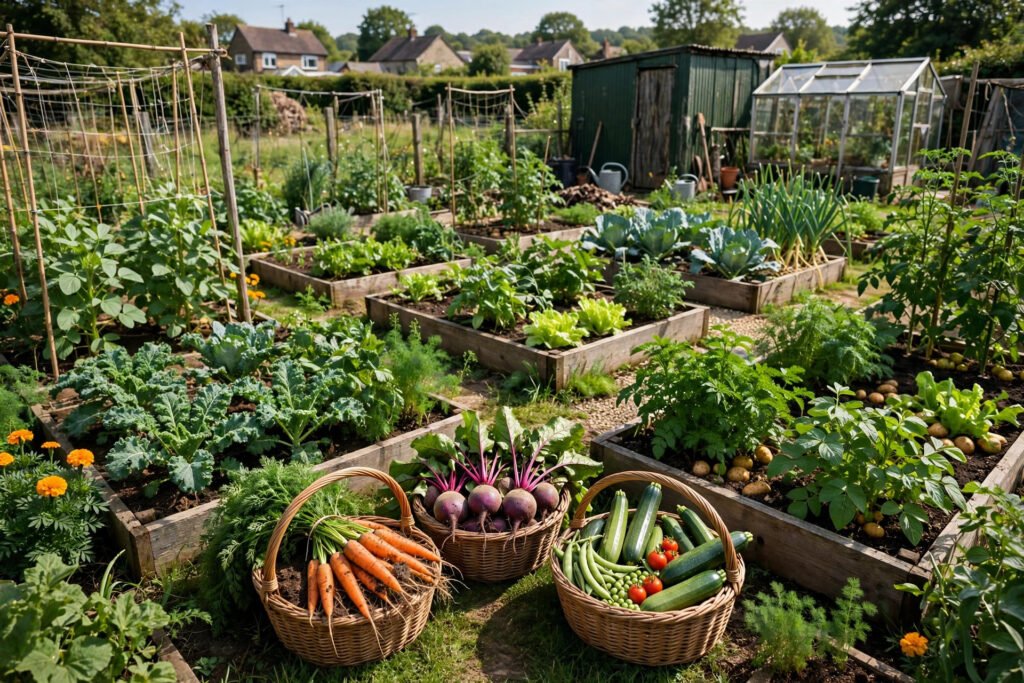
Your weekly shop has a carbon footprint: the lorry miles, the refrigeration, the packaging, the air-freighted asparagus. Growing your own food will not zero it — but it can cut a meaningful slice while saving money and producing vegetables that taste like the idea of vegetables. Beyond the romance, home growing genuinely reduces emissions: no transport, no packaging, no heated greenhouses, and compost replacing synthetic fertiliser. This guide shows you how to grow your own food to cut emissions, whatever space you have.
We will cover where the food footprint really comes from, the highest-impact crops to grow, allotments versus containers, composting and soil, and eating seasonally from your plot.
Where your food’s emissions actually come from
Food accounts for roughly a fifth of the average Briton’s carbon footprint, but the sources surprise people. Transport (“food miles”) matters less than assumed — for most foods, production dominates. The big emission sources: meat and dairy (methane, feed, land use), heated greenhouses (British winter tomatoes), air freight (out-of-season berries, asparagus), and synthetic nitrogen fertiliser (energy-intensive to manufacture, plus nitrous oxide emissions in the field).
This is why home growing cuts emissions asymmetrically: your unheated greenhouse or outdoor tomatoes replace the highest-footprint kind; your potatoes replace field-grown ones with minimal transport and zero packaging; your compost replaces synthetic fertiliser. You do not need to grow everything — replacing the highest-footprint items you buy with homegrown equivalents delivers most of the benefit. And the diet shift that growing encourages (more veg, more seasonal eating) compounds the savings.
The highest-impact crops to grow
Prioritise crops where homegrown beats shop-bought by the widest margin. Salad leaves top the list: shop-bought salad travels far, comes in plastic, wilts fast, and is absurdly easy to grow — cut-and-come-again varieties give months of harvests from a windowsill or small bed. Herbs are second: supermarket herb pots are flown in and die in days, while a perennial herb patch (growing herbs on a kitchen windowsill is the starter version) provides years of zero-mile flavour.
Tomatoes grown outdoors or in an unheated greenhouse beat heated-greenhouse imports hands down. Soft fruit — strawberries, raspberries, currants — is high-footprint when air-freighted out of season and trivially easy to grow. Potatoes, beans and courgettes give huge yields for little effort. And anything you eat a lot of: the maths of home growing favours volume crops you actually consume. Grow what you buy, not what looks impressive on Instagram.
Allotments, gardens and containers
A full allotment (typically 250 square metres) can supply a family with vegetables for much of the year — but it demands serious time, often 5–10 hours a week in season. Be honest about your availability before taking one on; neglected plots get repossessed and waiting lists are long. A more realistic start for most: dedicate part of the garden to vegetable beds. Preparing garden soil for planting vegetables covers the groundwork, and raised beds concentrate fertility where it counts.
No garden? Containers work brilliantly: potatoes in bags, tomatoes in pots, salad in troughs, herbs on windowsills, dwarf fruit trees on patios. A sunny balcony can produce a surprising share of summer vegetables. Community growing is the middle path — shared gardens, city farms and community orchards offer land and knowledge without solo commitment. The Royal Horticultural Society and the Soil Association both publish excellent beginner growing guides.
Compost: closing the loop
Home growing’s emission advantage multiplies when you compost: kitchen scraps and garden waste become free fertiliser, replacing synthetic nitrogen (whose manufacture is hugely energy-intensive) and keeping organic waste out of landfill (where it generates methane). A simple compost bin or heap, layered greens and browns, turned occasionally, produces black gold within 6–12 months. Wormeries suit small spaces and produce superb liquid feed.
Go further with green manures — clover, vetch or winter rye sown on empty beds, then dug in — which fix nitrogen from the air for free. Mulch with your own compost to feed soil biology. Avoid peat-based composts (peat extraction releases vast stored carbon; peat-free is now standard and excellent). The goal is a closed loop: your waste feeds your soil feeds your food, with almost nothing imported and nothing wasted.
Eat seasonally from your plot
The emission logic of home growing collapses if you heat a greenhouse all winter to grow summer crops — that is worse than importing. Work with the seasons: sow with the calendar, eat gluts in summer, and preserve the surplus (freezing, bottling, fermenting, storing) for winter. A chest freezer full of August tomatoes and October apples is low-carbon winter eating.
Learn the British seasonal rhythm: asparagus in May, strawberries in June, courgettes in August, apples in October, kale through winter. Winter growing is possible unheated — leeks, parsnips, kale, winter salads under cloches — extending the season without energy input. Seasonal eating reconnects you with the year in a way supermarkets erased, and it is delicious: a tomato eaten warm from the vine in August needs no air miles to justify itself.
The money side: what home growing saves
The emission case is strong, but the financial case closes the deal for many. A packet of salad seeds (£2–£3) produces what would cost £30–£50 as bagged supermarket salad. A £3 strawberry plant fruits for years; shop-bought strawberries cost £2–£3 per punnet in season. Herbs are the most dramatic: a £1.50 supermarket basil pot (usually dead within a fortnight) versus a perennial herb patch supplying free basil, thyme, rosemary and mint indefinitely.
Realistic savings for a modest vegetable patch run £200–£500 a year against supermarket prices — more if you grow soft fruit and salads heavily. Set against minimal costs (seeds, compost, a few tools amortised over years), the return is excellent. Allotment rents (£30–£100 a year typically) pay for themselves many times over. Growing your own is one of the rare climate actions that pays you: lower emissions, lower bills, better food. The economics, like the ecology, favour the gardener.
Conclusion
Growing your own food cuts emissions by replacing the highest-footprint shop-bought items — salad, herbs, tomatoes, soft fruit — with zero-mile, unpackaged, compost-fed equivalents, while nudging your diet seasonal. Start with containers or a small bed, compost everything, and let the loop close. The planet benefits; your plate benefits more.
Frequently Asked Questions
Does growing your own food really reduce emissions?
Yes, meaningfully for the right crops: unheated homegrown tomatoes, salad and soft fruit replace high-footprint imports (heated greenhouses, air freight, packaging). The savings are largest when you also compost and eat seasonally.
What is the easiest food to grow for beginners?
Salad leaves, herbs, potatoes, courgettes, beans and strawberries — all high-yield, low-effort crops. Start with what you buy most; volume crops you actually eat give the best return.
How much time does an allotment take?
Typically 5–10 hours a week in the growing season for a full plot. Beginners should start smaller — a few raised beds or containers — and scale up only if the time commitment proves sustainable.
Is home composting worth it for emissions?
Yes. It replaces synthetic nitrogen fertiliser (energy-intensive to make) and keeps organic waste out of landfill (where it produces methane). A simple bin or heap produces usable compost within 6–12 months.






