
How to Reduce Plastic in Your Bathroom Routine
How to reduce plastic in your bathroom routine: bar swaps, refills and reusable tools that cut waste without wrecking your budget or skin. Here’s how to begin.
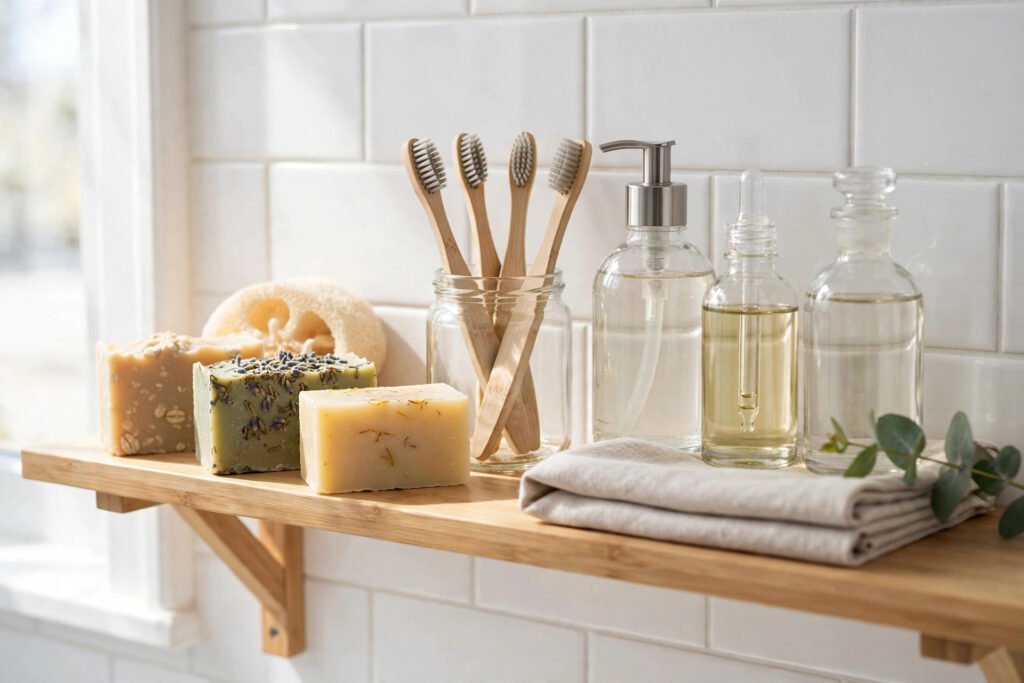
Open your bathroom cabinet and count the plastic: shampoo bottles, shower gel, toothpaste tubes, moisturisers, deodorants, razors, cotton buds in their tubs. The average bathroom generates a shocking share of household plastic waste — and unlike kitchen packaging, much of it is small, mixed-material and hard to recycle. But the bathroom is also where plastic-free swaps are easiest, because the alternatives are often cheaper, better and longer-lasting. This guide shows you how to reduce plastic in your bathroom routine, room by room, swap by swap.
We will cover auditing your bathroom plastic, the easy wins (bars, refills, reusables), trickier swaps (makeup, skincare, dental), recycling what remains properly, and making the changes stick without overwhelm.
Audit first: know your plastic
Before buying anything, do a five-minute audit: gather every plastic item in your bathroom and sort it. You will find three categories: single-use (cotton buds, disposable razors, sample sachets), short-life consumables (shampoo, shower gel, toothpaste — replaced monthly), and durables (the brush holder, the toilet brush). The short-life consumables are your targets — they generate the most waste over time, and each has a proven plastic-free alternative.
Weigh or count to establish a baseline; even a rough “we bin about six plastic bottles a month” gives you something to beat. Photograph the cabinet for a “before” shot — progress photos are motivating, and the “after” is satisfying. This audit also stops impulse eco-purchases: you will buy swaps for things you actually use, not attractive zero-waste gadgets that gather dust.
The easy wins: bars, refills and reusables
Start with the swaps that save money immediately. Shampoo bars (£6–£10) replace 2–3 plastic bottles each and last months; the transition takes a couple of weeks as hair adjusts, then most people never go back. Soap bars replace shower gel and hand wash at a fraction of the cost — a £1.50 bar outlasts a £3 bottle. Conditioner bars, shaving soap and deodorant in cardboard or glass complete the bar-based bathroom.
Where bars do not suit, refill: many supermarkets and independent shops now offer refill stations for shampoo, conditioner, shower gel and hand soap — bring your own bottles and pay by weight, typically cheaper than new. Reusables replace the disposables: a safety razor (£20–£30, with blades at pennies each) pays for itself within months against cartridge razors; washable cotton pads and flannels replace single-use wipes; a bamboo toothbrush replaces plastic ones (though check local recycling — handles are compostable, bristles usually not). These are the changes that also shrink your shopping bills, complementing easy ways to be more eco-friendly at home across the whole house.
Trickier swaps: skincare, makeup and dental
Skincare is harder because products are personal — but the plastic is optional. Cleansing balms and oils in glass jars replace plastic cleanser bottles; moisturisers in glass or aluminium tins abound; sunscreen now comes in plastic-free sticks and tins. Buy the smallest size when trialling to avoid waste from rejects, and use up existing products first — the greenest product is the one already in your cabinet.
Makeup’s plastic footprint is stubborn (compacts, tubes, wands), but progress exists: refillable compacts and lipsticks, mascara in glass tubes, bamboo-handled brushes. Dental care: toothpaste tablets in glass jars replace tubes (a bigger adjustment than expected — commit for two weeks), silk or bamboo floss in refillable glass containers, and mouthwash tablets. None of these need to happen at once; replace each item with its plastic-free version as it runs out, and the bathroom transforms over six months without a single dramatic shop.
Recycle what remains — properly
Some plastic will remain, and recycling it correctly matters. In the UK, bathroom plastics are widely recyclable — shampoo and shower gel bottles, cleaner bottles — but only if empty, rinsed and with lids on (lids are recyclable too, contrary to old advice). Pumps are the problem: mixed materials (metal spring, plastic parts) mean most cannot be recycled — remove and bin them, or buy pump-free refills.
Toothpaste tubes, toothbrushes and mascara wands are generally not kerbside-recyclable; use dedicated schemes (TerraCycle programmes, some retailer take-backs) or accept these as your residual waste while minimising them. Recycle Now has the definitive postcode-level guide to what your council accepts, and GOV.UK tracks the evolving regulations on single-use plastics — the UK has already banned plastic cotton buds, stirrers and straws, with more restrictions expected.
Making it stick: the no-overwhelm method
The number-one killer of plastic-free ambitions is trying to do everything at once, spending £80 on swaps, then resenting the whole project. The method that works: one swap per shop. Each time you finish a product, replace it with the plastic-free version. In six months, the transformation is nearly complete, the cost is spread, and each swap has been road-tested.
Involve the household — imposed eco-rules breed rebellion, but a shared audit and a “let’s try the shampoo bar” invitation usually win converts when the swaps work well. Keep a note of what failed (some bars do not suit some hair; some deodorants do not survive gym days) and try alternatives rather than abandoning the project. And extend the mindset: the kitchen generates more plastic overall, so reducing food waste in a family kitchen is the natural next frontier once the bathroom is tamed.
The bigger picture: beyond your cabinet
Individual swaps matter, but the bathroom plastic problem is ultimately systemic — and it is shifting. The UK’s single-use plastic bans are expanding, extended producer responsibility rules are making brands pay for packaging waste, and refill infrastructure is growing fast in supermarkets. Support the shift: choose brands with genuine refill programmes, back deposit-return schemes, and respond to government consultations on packaging — consumer voices demonstrably shape these policies.
Also talk about it. Normalising the shampoo bar, the safety razor, the refill station — mentioning them casually, gifting them, reviewing them — accelerates adoption far beyond your own cabinet. Cultural change is contagious: every bathroom that goes low-plastic makes the next one easier. Your cabinet is the start, not the end.
Conclusion
Reducing bathroom plastic is a sequence of small, money-saving swaps: bars for bottles, refills where bars do not fit, reusables for disposables, and proper recycling for what remains. One swap per shop, no grand gestures — and in six months, your cabinet will be barely recognisable.
Frequently Asked Questions
Do shampoo bars really work?
Yes, for most hair types — one bar replaces 2–3 bottles and lasts months. Allow a 2-week transition as hair adjusts, and choose a bar suited to your hair type (many brands offer variants for dry, oily or curly hair).
What bathroom plastics can be recycled in the UK?
Shampoo, shower gel and cleaner bottles are widely recyclable if empty, rinsed and with lids on. Pumps, toothpaste tubes and toothbrushes generally cannot go in kerbside recycling — check Recycle Now for your council’s rules.
Are safety razors better than disposable razors?
Financially and environmentally, yes: a £20–£30 safety razor with blades costing pennies replaces years of cartridge purchases. There is a short learning curve, but most users adapt within a couple of weeks.
How do I start going plastic-free without spending a fortune?
Replace one item per shop as products run out, starting with the easy wins (soap bars, shampoo bars). Use up existing products first — the greenest swap is a gradual one.






