How to Manage Screen Time for Young Gamers
Struggling with limits? How to manage screen time for young gamers: healthy rules, parental controls and conversations that work without constant battles.
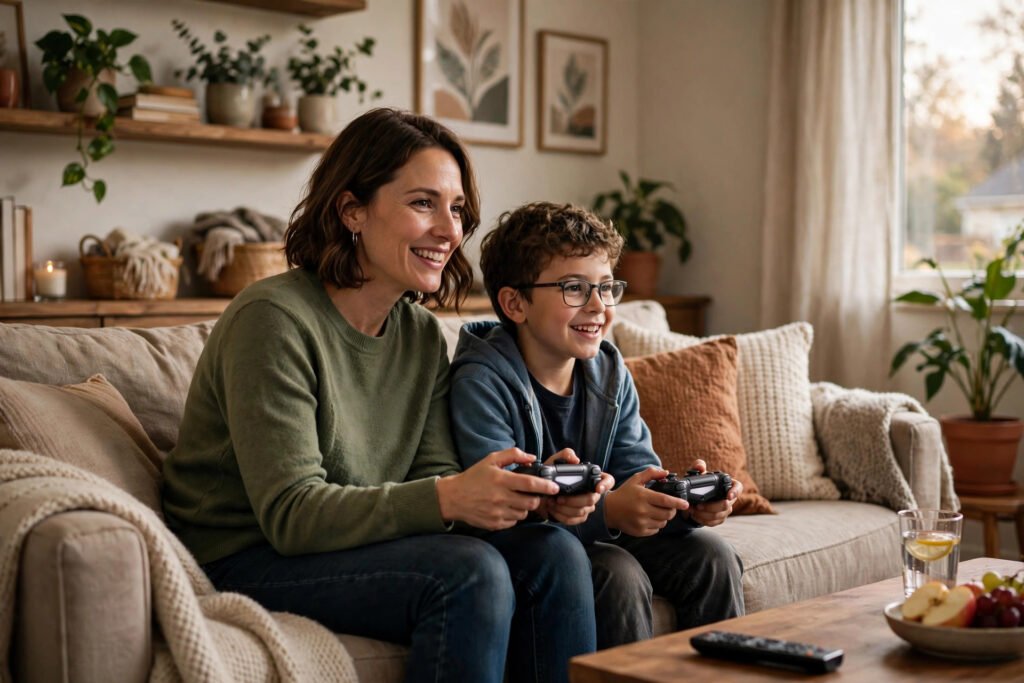
“Just one more game” at 9pm becomes midnight, homework undone, and a zombie at the breakfast table. Managing screen time for young gamers is one of the defining parenting challenges of the 2020s — and the old answers (ban it all, or surrender entirely) both fail. Games are not the enemy: they are social, creative, cognitively demanding play. The goal is not less gaming but healthy gaming — balanced with sleep, school, exercise and family life. Here is how to manage it without daily warfare.
Understand what gaming gives them first
Before setting limits, understand what you are limiting. For most young gamers, games are where their friends are — multiplayer titles are the modern playground, and excluding a child entirely can mean social exclusion. Games also teach genuine skills: problem-solving, teamwork, perseverance through failure, even leadership in team games. Research on moderate gaming is broadly positive; the harms cluster around excess — displaced sleep, displaced exercise, and compulsive patterns. Your rules land better when your child feels you understand what gaming means to them, so play with them occasionally. You will be surprised how much respect “I get it” earns.
Build the structure together
Rules imposed unilaterally invite evasion; rules agreed together invite ownership. Sit down (not mid-game — choose a calm moment) and negotiate: how much on school days versus weekends, which hours are off-limits (before school, during meals, the hour before bed), and what the non-negotiables are (homework done, chores done, offline activity daily). Write the agreement down and display it — ambiguity is where arguments breed. Build in their priorities too: an uninterrupted weekend session with friends matters to them the way your Saturday lie-in matters to you. Review the agreement monthly; rigid rules that never adapt get rejected wholesale.
Use the tools — they exist for this
Every platform now has robust parental controls, and using them is not spying — it is parenting. Set up age-appropriate content filters, playtime limits that enforce themselves, and purchase approvals on consoles, phones and PCs. Setting up parental controls on a Fire tablet shows the principles, which apply across devices. Use the PEGI ratings (pegi.info) when buying games — they are clear, reliable and shown everywhere. And keep gaming devices out of bedrooms overnight; the single most effective screen-time intervention in the research is simply where the device sleeps. Internet Matters’ parental guides and the NSPCC’s online safety resources walk through every platform’s controls step by step.
Protect sleep ruthlessly
If you enforce one boundary, make it this: no screens in the hour before bed, and devices charge outside bedrooms overnight. Gaming is uniquely sleep-hostile — stimulating, social, and structured around “one more game” loops designed to prevent stopping. Blue light suppresses melatonin, but the bigger thief is engagement: an excited brain does not fall asleep on schedule. Tired children are harder to parent the next day in every dimension, which makes the bedtime boundary the highest-leverage rule you have. The same principle applies to adults — reducing evening screen time improves the whole family’s sleep.
Watch for the warning signs
Healthy enthusiasm and problematic use look different. Warning signs: gaming crowding out sleep, schoolwork, friendships and previously enjoyed activities; lying about time spent; irritability or distress when not gaming that goes beyond normal disappointment; using games to escape persistent low mood or anxiety. These patterns — not the hours alone — signal a problem worth addressing, potentially with professional support. Most heavy gaming phases pass with structure and maturity; a minority need help. Trust your instincts: you know your child.
Model it yourself
The hardest part. Children notice when the screen-time lecture comes from a parent who scrolls through dinner. Family-wide norms — no phones at the table, devices down in the evening, one screen-free day activity weekly — work infinitely better than child-only rules. You do not need to be perfect; you need to be visibly trying. The goal is a household culture where screens serve life rather than replacing it — for everyone.
When gaming becomes a career dream: supporting esports ambitions
Many young gamers dream of going pro — and while the odds are long, the dream deserves respect, not mockery. Esports is a real industry with real careers: players, coaches, analysts, casters, content creators. If your child is serious, treat it like any ambitious pursuit: structured practice with goals (not just grinding), physical fitness (reaction time and stamina are athletic), schoolwork protected (even pros need fallback plans — careers are short), and honest assessment after a defined trial period.
Set the same boundaries as for any elite youth activity: it must not cost their education, health or social life. Help them understand the economics — tiny fractions of players earn a living, and most income comes from content, not competition. Encourage adjacent skills with longer shelf lives: video editing, commentary, community management, game design. And keep perspective: the discipline, teamwork and performance-under-pressure learned chasing the dream transfer to any career. Support the ambition seriously, plan for the likely outcomes honestly, and you will parent it well whatever happens. Finally, revisit the agreement as your child grows — a system that works at eight will feel oppressive at fourteen. Gradually transfer control, teaching self-regulation rather than enforcing compliance. The goal was never the rules; it was the judgment to live without them.
Conclusion
Managing screen time for young gamers means understanding what gaming gives them, negotiating structure together, using parental controls properly, protecting sleep above all, watching for genuinely problematic patterns, and modelling the behaviour yourself. Done well, it is not a war — it is teaching a life skill they will need long after the consoles change.
Frequently Asked Questions
How much screen time is healthy for a child gamer?
There is no magic number — patterns matter more than hours. Reasonable frameworks: 1–2 hours on school days, more on weekends, with sleep, schoolwork, exercise and offline socialising protected first.
Should I ban violent video games?
Use PEGI ratings as your guide rather than blanket bans — they rate content by age appropriateness. Discuss game content with your child; blanket bans often just drive play underground at friends’ houses.
How do I enforce limits without constant arguments?
Agree rules together in calm moments, write them down, use platform controls that enforce themselves, and give warnings before stopping (“20 minutes left”) rather than abrupt cutoffs mid-game.
Are parental controls enough on their own?
No — they are a backstop, not a strategy. Conversation, agreed structure, modelling and attention to the child’s broader wellbeing matter far more than any filter.
When should I worry about gaming addiction?
When gaming displaces sleep, school, friendships and other activities persistently, involves deception, or is used to escape ongoing distress. The pattern, not the hours, is the signal — seek professional advice if you are concerned.
Should different rules apply on weekends and holidays?
Most families relax limits on non-school days — and that is fine, as long as the weekday structure holds. The danger is not the weekend binge; it is the binge becoming the default. Agree the holiday rules in advance, together.
At what age should kids manage their own screen time?
Gradually from the early teens — shifting from enforced rules to agreed principles, with you as coach rather than warden. Full independence usually arrives around 15–16, at the pace your particular child demonstrates responsibility.