How to Stop Your Cat Scratching the Furniture for Good
Learn how to stop your cat scratching the furniture with scratching posts, deterrents and training that redirect the instinct — without declawing or punishment.
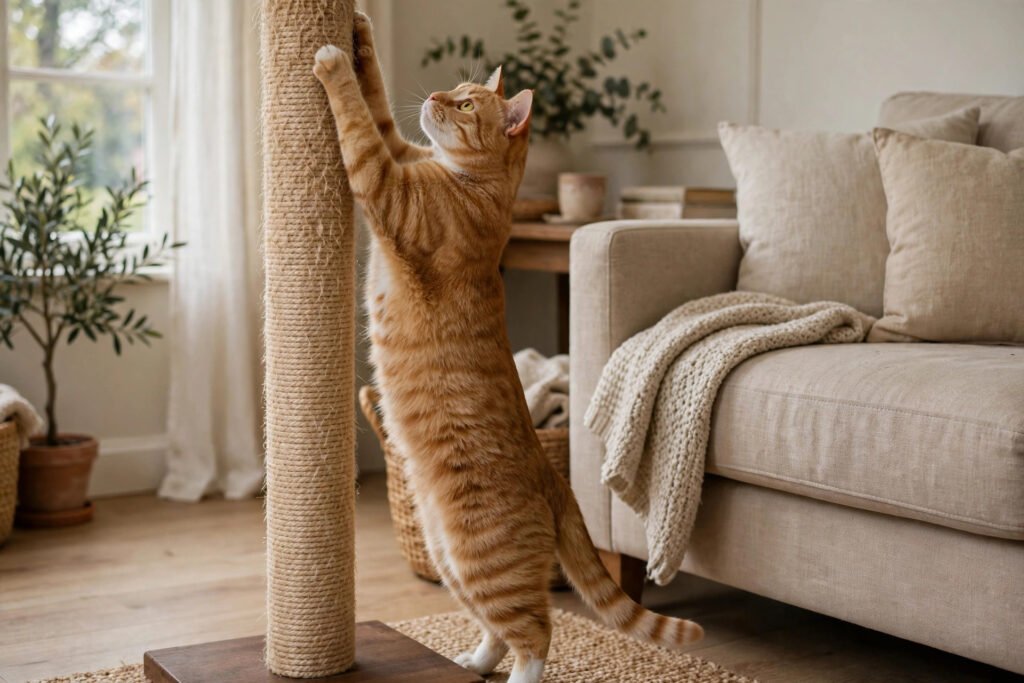
Your cat is not scratching the sofa out of spite. Scratching is one of the most deeply wired behaviours a cat owns: it keeps claws sharp, stretches the muscles of the back and shoulders, and leaves both a visual mark and a scent signal from glands in the paws. In the wild that is a “I live here” signpost. In your living room it is a shredded armchair. The trick is not to stop your cat scratching — that is impossible and unfair — but to move the scratching onto things you do not mind losing. Here is how to protect your furniture without a single shout, spray bottle or declawed cat.
First, understand what your cat is telling you
Watch where and when your cat scratches. Most cats have a favourite scratching session right after a nap — that full-body stretch against the nearest vertical surface — and another when they are excited or want attention. The location matters: cats scratch prominent, socially significant spots. The arm of the sofa you sit on is prime territory-marking real estate. Scratching near doors and windows marks boundaries. Once you see the pattern, you can place the legal alternatives exactly where the illegal ones are happening.
Also note the texture. Some cats are sisal devotees, others prefer carpet, cardboard or bare wood. If your cat ignores a sisal post but shreds the carpeted stairs, you do not have a stubborn cat — you have a carpet-preferring cat being offered sisal. Match the material and you are halfway there.
Give them something better to scratch
One scratching post in the corner of a spare room is not a solution; it is decoration. You need the right posts in the right places.
Height and stability matter more than price
A good vertical scratcher must be tall enough for a full stretch — at least 70 to 80 centimetres for an average cat — and absolutely rock solid. Wobbly posts teach cats that posts are scary and sofas are reliable. Weight the base or choose a tall, heavy design. Many owners find a tall scratching tower near the sofa outperforms three cheap posts hidden around the house.
Offer both vertical and horizontal options
Some cats are horizontal scratchers and will always prefer the rug or the carpet. For them, flat cardboard scratchers or a carpet sample board on the floor works far better than any upright post. Watch your cat’s natural angle and provide for it.
Location is everything
Put the new scratcher directly in front of the furniture your cat currently targets. Yes, it looks odd to have a scratching post parked against your sofa for a fortnight. Once your cat is using it reliably, you can inch it toward a more convenient spot a few centimetres a day. Cats Protection’s behaviour guides emphasise this placement-first approach, and in practice it is the single most effective step.
Make the sofa boring and the post irresistible
While the new scratcher earns its place, make the furniture unappealing. Double-sided sticky tape (sold as anti-scratch tape) on the scratched areas works because cats dislike sticky paws — most cats abandon the spot within days. A throw or fitted cover over the arm of the sofa also breaks the habit, since the texture and scent-marking payoff change. Aluminium foil is another classic deterrent for the same reason.
At the same time, make the scratcher the best thing in the room. Rub dried catnip into sisal, dangle a toy from the top, and reward every use with a treat and calm praise. You are not bribing; you are building a habit. Most cats switch allegiance within two to three weeks when the alternative is genuinely rewarding and well placed.
Trim claws the low-stress way
Keeping claws blunt reduces damage dramatically, and it is kinder than any deterrent. Trim only the sharp transparent tip, well clear of the pink quick, using proper cat nail clippers. If your cat hates paw handling, desensitise gradually: touch a paw, treat; press gently to extend a claw, treat; clip one nail, jackpot treat. One nail a day is a perfectly respectable pace. If you are nervous, ask your vet nurse to demonstrate — most practices will show you for free during a routine visit, and the Blue Cross pet advice pages include clear nail-trimming guidance.
What not to do
Declawing is effectively banned in the UK under the Animal Welfare Act and involves amputating the last bone of each toe — it is not a solution and no ethical vet will do it. Punishment does not work either: shouting or spraying water teaches your cat to scratch when you are not looking, and damages your bond. Yelling at a cat for being a cat is, to put it bluntly, a human problem, not a feline one.
Also avoid covering every surface in deterrents permanently. The goal is a short transition period while the new scratching habit beds in, not a house wrapped in sticky tape for a decade.
Protecting furniture long term
Once the habit has moved, keep the scratcher attractive: replace worn sisal before it unravels completely, keep cardboard scratchers fresh, and keep at least one scratcher in the room where your cat spends most of its time. Washable throws on favourite perching spots protect against the general wear of claws during kneading and jumping, and they are far cheaper than reupholstery. For rented homes, where deposit deductions loom large, combining a good scratching setup with washable covers is the most cost-effective strategy there is — alongside the wider project of making a rented flat feel like home without risking your deposit.
And remember that a cat which scratches, plays and patrols is a healthy cat. The practical side of living with pets, from fur on the cushions to the odd scuff, is part of the deal — the aim is managed coexistence, not a showroom.
Conclusion
Stopping your cat scratching the furniture is not about discipline; it is about real estate. Provide tall, stable, well-placed scratchers in the materials your cat prefers, make the sofa temporarily unappealing, reward the right choice, and keep claws trimmed. Do that consistently and most cats redirect their scratching within a few weeks — leaving you with intact furniture and a cat that is still gloriously, unapologetically a cat.
Frequently Asked Questions
Why does my cat scratch the furniture right in front of me?
Often it is attention-seeking or excitement scratching — your cat has learned that scratching the sofa reliably summons you. React calmly, redirect to the scratcher, and reward use of the post instead.
Will a scratching post definitely stop my cat scratching the sofa?
Nothing is guaranteed, but a tall, stable post placed right against the targeted furniture, combined with temporary deterrents on the sofa, succeeds in the large majority of cases within two to three weeks.
Is it cruel to use sticky tape on the furniture?
No. Anti-scratch tape is simply unpleasant to touch; it does not harm the cat. Most cats touch it once or twice and choose the scratcher instead, after which you can remove it.
Should I get my cat declawed to protect my furniture?
No — declawing is effectively illegal in the UK and involves amputating the end bone of each toe. It causes pain and behaviour problems. Scratching posts, claw trimming and deterrents are the humane alternatives.
My cat only scratches one corner of one sofa. What should I do?
Place a tall scratcher flush against that exact corner and cover the corner with a throw or anti-scratch tape for a couple of weeks. Single-spot scratchers are usually the easiest habit to redirect.