How to De-Ice Your Car Quickly on Frosty Mornings
Frosty morning? How to de-ice your car quickly — the 5-minute method, what never to do, night-before prevention tricks and the legal bits drivers miss.
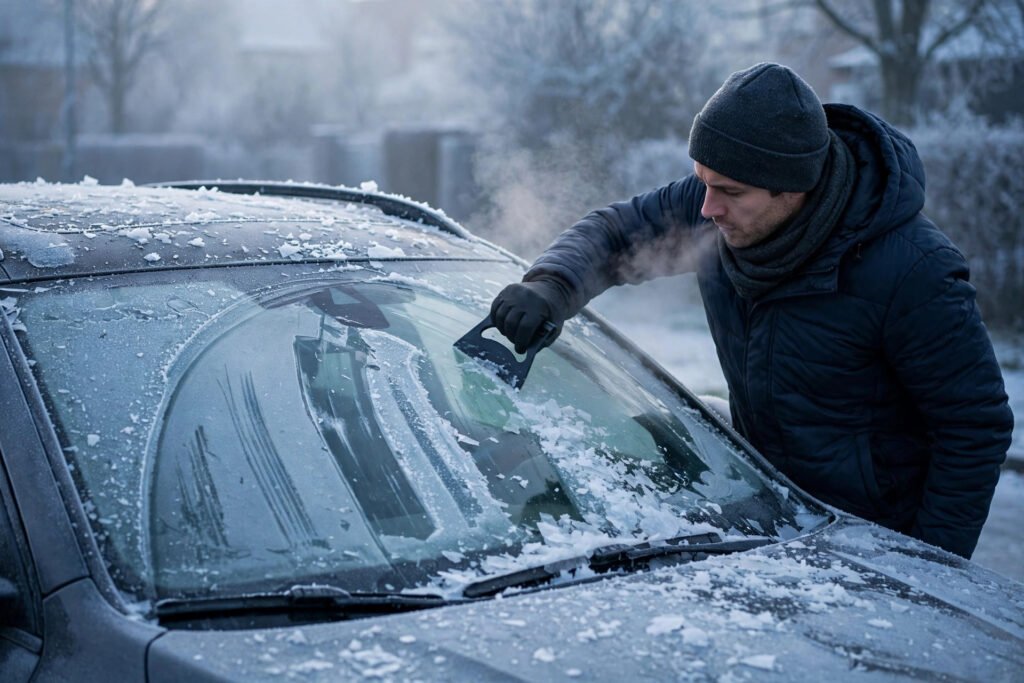
Minus three, pitch dark, and your windscreen is a sheet of opaque ice. You’re already late, and the de-icer is frozen in the boot. Every British winter brings these mornings — and every year, drivers waste fuel, risk fines, and damage their cars with bad de-icing habits. Here’s how to clear your car fast, legally and without scratching everything in sight.
The Fast Method: 5 Minutes, Done Right
1. Start the engine first (if you’ll stay with the car) — heaters and heated screens need running time. Turn the blowers to the windscreen on full heat, air-con on (it dehumidifies — crucial for inside condensation), and switch on heated front/rear screens and mirrors.
2. Spray de-icer on all glass while the car warms. Proper de-icer (not water — never hot water, see below) chemically melts the bond between ice and glass. A £3 can lasts weeks and works in seconds.
3. Scrape with a proper scraper — broad, flat, plastic. Work from the edges inward, clearing the entire windscreen and all windows, not just a porthole. Side windows and mirrors matter as much as the screen.
4. Clear snow from the whole car — roof included. Snow sheets sliding forward under braking blind you; flying off at speed, they blind the driver behind. It’s also an offence if it causes danger.
5. Lights and plates: clear headlights, taillights and number plates — obscured plates earn fines, dimmed lights earn danger.
Total: about five minutes with the engine running from step one. The AA’s winter driving guidance and Met Office winter advice both stress the same fundamentals: full clearance, properly, before moving.
What NOT to Do
Never pour hot or boiling water on glass. The thermal shock can crack windscreens instantly — a £200+ replacement for a moment’s impatience. Lukewarm water is less risky but still pointless; it refreezes quickly in sub-zero air.
Don’t use credit cards, CDs or metal scrapers. They scratch glass and destroy wiper blades. A proper scraper costs £2 and lasts years.
Don’t leave the car unattended with the engine running. Beyond the theft risk (insurers may refuse claims for stolen cars left running — “keys in car” exclusions are standard), it’s illegal to leave a vehicle unattended with the engine running on public roads (Construction and Use Regulations — “quitting” offence, fixed penalty). Stay with the car or use remote start systems designed for it.
Don’t drive with a porthole. Clearing only a small patch and driving is illegal — windscreens and windows must be clear. “I was in a hurry” has never impressed a traffic officer, and restricted vision causes winter collisions daily. The RAC reports thousands of winter incidents annually traceable to poor visibility preparation.
Prevent It: The Night-Before Tricks
The fastest de-ice is the one you don’t need:
Windscreen cover: a £10 foil cover prevents ice bonding entirely — peel off, drive away. The highest-ROI winter motoring purchase there is.
Park facing east: morning sun (when it appears) works on the windscreen while you have tea. Marginal, but free.
Vinegar solution: a 3:1 water-to-white-vinegar mix sprayed the evening before lowers the freezing point and makes morning ice thinner and easier to shift. Cheap and surprisingly effective.
Lift wipers: prevents blades freezing to the glass (which tears the rubber when you switch them on). Remember to lower them before driving — and never use wipers to clear heavy ice; you’ll strip the mechanism.
De-icer in the house, not the boot: the number of drivers locked out of their own de-icer by a frozen-shut boot is a winter comedy staple. Keep a can indoors and a scraper in the door pocket.
Winter preparation extends beyond the windscreen — our guide to winter condensation tackles the same physics indoors, and our layering guide keeps you warm while the car defrosts.
Inside Condensation: The Other Frost
Often the windscreen’s inside is as bad as the outside. Causes: moisture from wet coats, breathing, and leaks (check door seals and pollen filters). Fixes: air-con on with heat (dehumidifies brilliantly), a moisture-absorbing bag on the dash overnight (£5 silica bags work for weeks), and clearing wet items from the car. Persistent interior fogging with a musty smell suggests a leak or blocked drain — investigate before it becomes mould.
Conclusion
Fast, safe de-icing is a routine: engine on (stay with it), heaters and heated screens blazing, de-icer spray, proper scraper, full clearance of every window plus lights and plates, snow off the roof. Never hot water, never the porthole, never the unattended idling car. And the real pro move is prevention — a £10 windscreen cover and the vinegar spray turn frosty mornings from ordeals into non-events. Winter’s coming regardless; be the driver who’s already moving while everyone else is still scraping.
Winter Driving Beyond De-icing: The Full Cold-Weather Check
De-icing gets you moving; winter preparation keeps you safe. Before the cold truly bites: check antifreeze strength (a £5 tester from any motor factor — weak coolant risks a cracked block), switch to winter-grade screenwash (neat, not diluted — summer wash freezes in the jets), check battery health (cold cranking is batteries’ hardest test; a 4-year-old battery plus −5°C equals a non-start), inspect tyre tread (3mm minimum for winter, whatever the legal 1.6mm says — braking distances on cold damp roads are unforgiving), and pack a winter kit (blanket, torch, phone charger, water, snacks, shovel for rural drivers). The Met Office issues cold weather alerts worth heeding — and if conditions are truly severe, the bravest winter driving decision is not driving at all.
Frequently Asked Questions
Is it illegal to leave my car running to defrost it?
Yes, on public roads — leaving a vehicle unattended with the engine running is an offence (“quitting”), punishable by fixed penalty. It’s also a theft risk insurers may not cover. Stay with the car, or use a manufacturer remote-start system.
Can I pour warm water on my windscreen?
Don’t — even lukewarm water risks thermal shock cracking, and it refreezes fast in sub-zero temperatures, potentially making things worse. De-icer spray and a scraper are faster, safer and cheaper than a new windscreen.
How do I stop my windscreen freezing overnight?
A windscreen cover is the best solution — prevents ice bonding entirely. Alternatives: park under cover, face east for morning sun, or spray a vinegar-water solution the evening before to weaken ice formation.
Do I really need to clear snow from the roof?
Yes — snow sliding forward under braking can blind you, and sheets flying off at speed endanger others. Police can prosecute if dislodged snow causes danger. It takes 60 seconds with a brush; do it.
Why does the inside of my windscreen freeze?
Interior moisture (wet clothing, breathing, leaks) condensing and freezing on cold glass. Run air-con with heat to dehumidify, use moisture-absorbing bags overnight, remove wet items, and check door seals and pollen filters if it’s persistent.
Should I get winter tyres in the UK?
For most of lowland Britain, quality all-season tyres are the sweet spot — winter tyres excel below 7°C but most UK winters hover around it. If you live in Scotland, the Pennines, or rural high ground with regular snow, dedicated winters (or all-seasons at minimum) are genuinely worthwhile. Whatever you choose, tread depth matters more than marketing.