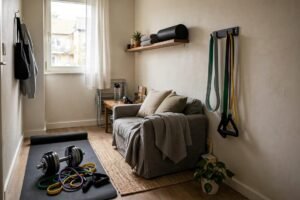
Gym Membership vs Home Workouts: What’s Best for Families?
Gym membership vs home workouts for UK families? Honest cost comparison, the time factor, what each does better and the hybrid setup most families use.
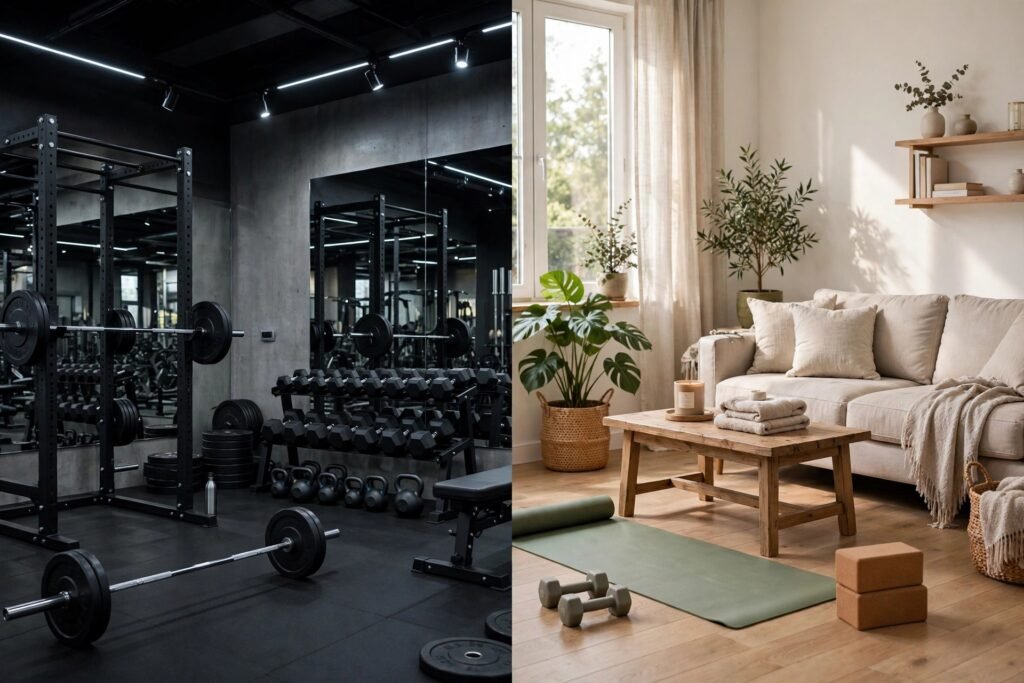
It’s the great fitness fork in the road for busy British families: sign the whole household up for the local leisure centre, or clear a corner of the living room and work out at home? The gym industry wants you to believe there’s no substitute for the real thing; the home-fitness boom insists the gym is an overpriced relic. The truth, as usual, is that it depends — on your budget, your schedule, your personality, and how many small humans share your house. Here’s the honest comparison.
The Real Cost Comparison
Let’s do the maths properly, because the headline prices mislead in both directions.
Gym membership
A council leisure centre family membership typically runs £60–£100 a month; private gyms £40–£70 per adult. For a family of four, that’s easily £100–£150 a month — £1,200–£1,800 a year. Add joining fees, annual price rises (check the contract’s small print), and the travel costs of getting there. The killer statistic: most members attend fewer than twice a week, which can push the true cost above £10 per visit.
Home workouts
The startup cost is real but one-off: a decent set of adjustable dumbbells (£80–£150), resistance bands (£20), a yoga mat (£20–£30), and maybe a bench or kettlebell. Call it £150–£300 for a setup that lasts years. Ongoing costs are minimal — free YouTube workouts, or £10–£15 a month for an app like Fiit or Apple Fitness+. Over three years, home training typically costs under £500 total versus £3,600+ for gym memberships.
But cost-per-use is what matters. A £1,500-a-year membership used 200 times is £7.50 a session — reasonable. The same membership used 40 times is £37.50 a session — madness. Be brutally honest about which person you are. Our winter motivation guide has a useful self-test for your real exercise personality.
Time: The Hidden Deciding Factor
For families, time usually matters more than money. A gym session costs 60–90 minutes door to door once you add travel, changing and waiting for equipment. A home workout is 25–40 minutes, start to finish, in whatever you’re wearing — and you can do it while dinner’s in the oven or the baby naps.
That time saving is transformative for parents. The choice isn’t really “gym vs home” — it’s “home workout vs no workout,” because the 90-minute gym block simply doesn’t exist in many family schedules. If your available window is 30 minutes between school pickup and dinner, home wins by default. Shift workers and anyone with unpredictable schedules should weight this factor double.
What Each Option Does Better
The gym wins on:
- Heavy strength training: you can’t replicate barbells, squat racks and cable machines at home without serious space and money.
- Classes and coaching: spin, BodyPump, coached swimming — the energy of a group and a qualified instructor watching your form.
- Focus: the gym is a dedicated environment. No kids asking for snacks, no doorbell, no “I’ll just quickly tidy that.”
- Social motivation: workout buddies, familiar faces, the mild accountability of being seen.
- Facilities: pools, saunas, courts, crèches — many leisure centres offer childcare while you train, which solves the parent problem elegantly.
Home wins on:
- Convenience: zero travel, any hour, no booking, no waiting for the squat rack.
- Cost: dramatically cheaper over any period beyond a year.
- Family integration: kids can join in, copy you, or just be nearby — modelling active behaviour beats any lecture.
- Privacy: no audience for the learning phase. Many beginners — especially those self-conscious about fitness — train harder at home.
- Consistency: the lowest-friction option gets used most. A 20-minute home session you’ll actually do beats the perfect gym programme you skip.
The Family-Specific Considerations
Space: you need about 2×2 metres of clear floor — the area of a coffee table plus margin. That’s it for 90% of home workouts. Adjustable dumbbells replace a whole rack; resistance bands pack into a drawer.
Noise: jumping exercises in a flat with downstairs neighbours require diplomacy — low-impact alternatives or a thick mat solve it. Mention it to the neighbours before they mention it to you.
Kids: under-16s are restricted in most gyms (many allow 14+ with induction, some have junior gym sessions), while at home the whole family can train together. Family circuits — everyone does the same moves at their own level — are genuinely fun and build the habit early.
Motivation: this is home training’s Achilles heel. Without the sunk cost of membership and the social environment, skipping is easy. Counter it with scheduled sessions, a visible streak tracker, and a workout buddy — even a virtual one. Desk-bound parents should also check posture fixes for desk workers, since home workouts pair well with movement breaks.
The Hybrid Answer (What Most Families Actually Do)
The binary choice is false. The setup that works for most British families:
- Home base: 2–3 short home sessions a week (strength, HIIT, yoga) — the consistency engine.
- One facility session: a pay-as-you-go swim, a climbing wall visit, a parkrun — the variety and social element, without the membership.
- Active lifestyle: walking, cycling, weekend outings — free, family-wide, and where most weekly activity should come from anyway.
Many leisure centres offer off-peak or pay-as-you-go access that makes this affordable. And before signing any membership, always ask for a free trial week and read the cancellation terms — some contracts lock you in for 12 months with brutal exit fees. MoneySavingExpert tracks the cheapest gym deals, and the NHS exercise hub has excellent free home workout programmes.
The 30-Day Test Drive
Still undecided? Run a 30-day experiment before committing to either path. For the home route: buy just a mat and one set of resistance bands (under £40), follow a free 30-day programme from the NHS exercise hub, and train three times a week. Track every session. At the end of the month, you’ll know whether home training suits your temperament — the data won’t lie.
For the gym route: take a no-contract trial or a one-month rolling membership (never the 12-month lock-in first), commit to a fixed schedule of two sessions a week, and track attendance honestly. If you hit 80%+ of sessions, the membership is justified; if you managed four visits, you’ve just saved yourself a year’s direct debit. Either way, the experiment costs little and answers the question with evidence instead of intentions. Whichever you choose, reassess every six months — life stages change, and your fitness setup should change with them.
Conclusion
For most UK families, home workouts win on cost, time and consistency — the three factors that actually determine whether you’ll still be exercising in six months. The gym wins for heavy lifting, coached classes and facilities like pools. The smart money is the hybrid: a small home setup for the weekly bread-and-butter, plus pay-as-you-go facility access for variety. Match the choice to your schedule honestly, and you’ll pick the option you’ll actually use — which is the only one that works.
Frequently Asked Questions
Is it cheaper to work out at home or join a gym?
Home is far cheaper long-term: £150–£300 of equipment lasts years, versus £1,200–£1,800 a year for a family gym membership. But calculate cost-per-visit honestly — a well-used membership can be reasonable value.
Can you get fit with home workouts alone?
Yes for general fitness, fat loss and muscular endurance — bodyweight circuits, dumbbells and resistance bands cover most needs. Serious heavy strength training and coached sports need a gym’s equipment.
How much space do you need for home workouts?
About 2×2 metres of clear floor space handles the vast majority of workouts. Adjustable dumbbells and resistance bands provide huge variety in minimal storage space.
What age can children use the gym in the UK?
Most gyms allow 14–16 year-olds with an induction; under-14s are generally restricted to junior sessions or the pool. Rules vary by operator, so check your local centre’s policy.
How do I stay motivated working out at home?
Schedule fixed sessions, track streaks visibly, lay out kit in advance, and get a workout buddy (even virtual). The lowest-friction setup wins — keep equipment visible, not buried in a cupboard.