Is It Better to Work From Home or Rent an Office as a Startup?
Work from home or rent an office as a startup? Honest cost and productivity comparison to help you decide what is right.
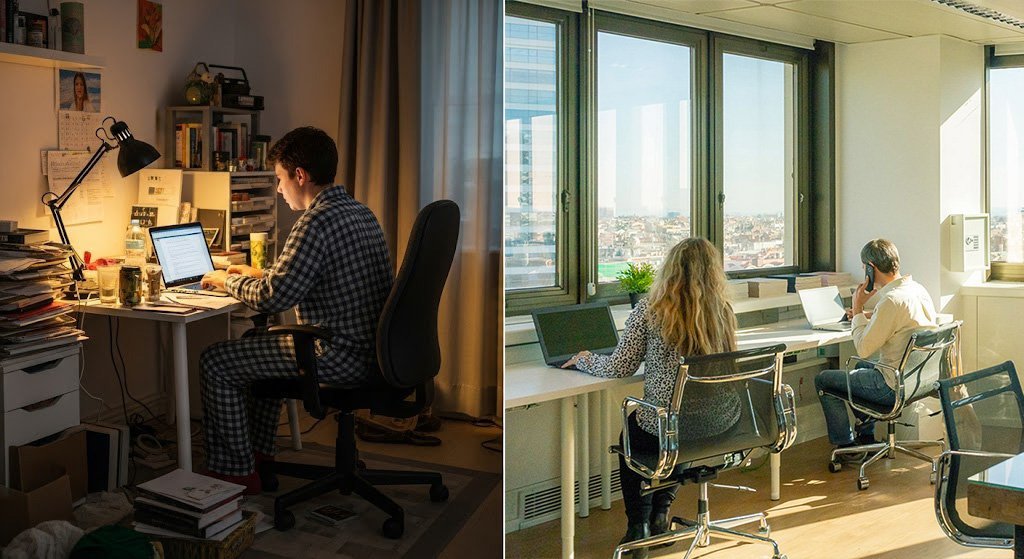
Your startup is growing. The kitchen table isn’t cutting it anymore, and you’re googling office space — then choking on the quotes. But is renting an office actually the right move, or is working from home still the smarter play? The work from home vs rent office decision for a startup isn’t just about money (though the money is dramatic) — it’s about productivity, credibility, hiring, and what kind of business you’re building.
I’ve run businesses from both. Here’s the honest comparison.
Work From Home vs Rent Office Startup: The Cost Reality
Working from home: the true cost
It’s not free — but it’s close:
- Extra costs: Higher heating/electricity (£30–£60/month), better broadband (£5–£15/month uplift), home office equipment (£200–£500 one-off)
- Tax relief: Claim £6/week flat rate (£312/year) without receipts, or actual costs proportionally. It doesn’t make you rich, but it’s something
- Hidden costs: Isolation, blurred boundaries, the psychological weight of never leaving “work”
- Total realistic: £500–£1,500/year in extra costs
Renting an office: the true cost
This is where founders get shocked. The rent is just the beginning:
- Rent: £200–£500/month per person outside London (£500–£1,000+ in London) for basic serviced space; traditional leases cheaper per sq ft but with commitments
- Business rates: Often overlooked — check relief eligibility (small business rate relief can reduce this to zero for small premises)
- Service charges, utilities, insurance: £100–£300/month
- Fit-out and furniture: £1,000–£5,000 one-off
- Commuting: Your time plus £100–£400/month in travel costs
- Total realistic: £5,000–£15,000/year per person, all-in
The gap is enormous: roughly 10× the cost. An office needs to generate serious value to justify that multiple. Our startup cost guide puts this in the broader financial picture.
When Working From Home Wins
- Early stage (0–5 people): Almost always. The cost saving funds 6–12 months of extra runway — often the difference between survival and failure
- Digital/knowledge work: If your work happens on a laptop, location is largely irrelevant. Our guide on broadband for home working covers the technical setup
- Distributed teams: If staff are spread geographically, an office for some is pointless
- Deep work businesses: Writing, coding, design, analysis — all benefit from quiet home environments over open-plan offices
- Tight cash flow: When every pound matters, £10,000/year on an office is £10,000 not spent on product or marketing
When an Office Wins
- Client-facing businesses: Some clients expect a proper office. A solicitor operating from a bedroom faces credibility headwinds (a virtual office address + meeting room hire can bridge this for £50–£150/month)
- Collaborative creative work: Whiteboards, spontaneous discussion, energy — some work genuinely benefits from physical presence
- Team culture: Beyond ~8–10 people, remote culture gets harder. Offices help with onboarding, mentoring and cohesion
- Separation needs: If home working is damaging your mental health or relationships, an office is a wellbeing investment, not a luxury
- Space requirements: Stock storage, equipment, workshops — some businesses physically need premises
- Hiring: Some candidates prefer office-based roles; offering the option widens your talent pool
The Middle Ground (Where Smart Startups Live)
- Coworking memberships (£100–£350/month): Hot desks or dedicated desks with no long commitment. The sweet spot for 1–5 person startups wanting separation without office overhead
- Virtual office (£30–£100/month): Prestigious address, mail handling, meeting room access — credibility without premises
- Hybrid: WFH by default, coworking 1–2 days/week for collaboration. Gets 80% of office benefits at 20% of the cost
- Meeting room hire (£20–£50/hour): For the occasional client meeting that needs gravitas
Most successful startups I know spent years in the middle ground before committing to a lease — and many never left it.
The Decision Framework
Ask yourself:
- Can we afford 12 months of office costs from current revenue? If not, it’s premature — no exceptions
- What specific problem does an office solve? “Feels more professional” is vague; “we lose clients who visit” is specific. Only pay for specific problems
- Have we tried the middle ground? 3 months of coworking answers most questions for £1,000 instead of £15,000
- Does the team want it? Forcing office attendance on a team that thrives remotely destroys morale. Ask, don’t assume
- What’s the commitment? Serviced offices (monthly rolling) vs traditional leases (3–5 years with personal guarantees). Never sign a long lease early — flexibility is worth the premium
Hybrid Working: Making It Work
Most startups land on hybrid — and most do it badly. The patterns that work:
- Anchor days, not mandates: “Everyone in Tuesday–Wednesday” works better than “three days a week, your choice” — the point is overlapping presence, not attendance statistics. Choose the days with the most collaborative work.
- One remote, all remote: If one person dials into a meeting, everyone dials in individually (even those in the office). Hybrid meetings where a room of people talks past a tiny video square are where remote workers go to feel excluded.
- Document by default: Decisions made in office chats must be written down where remote workers can find them. The rule: if it wasn’t written down, it didn’t happen. This single habit determines whether hybrid works or festers.
- Equalise the experience: Remote workers shouldn’t miss promotions, interesting projects, or social connection. Managers must consciously counter proximity bias — the tendency to favour people they physically see.
- Invest in home setups: A £300 home office stipend (chair, monitor, headset) pays for itself in productivity and goodwill. Don’t expect professional output from kitchen-table setups while providing nothing.
- Measure output, not presence: Hybrid fails when managers manage attendance instead of results. Clear goals, regular check-ins, trust by default — the management practices that make any arrangement work.
For the employment law side of hybrid and flexible working requests, Acas provides free, authoritative guidance on handling flexible working requests fairly and legally — essential reading as your team grows.
The Bottom Line
For most startups under 10 people: work from home, invest the £10,000/year saving in the business, and use coworking or meeting rooms for the gaps. Rent an office when you have a specific, expensive problem that only premises solve — client credibility, team scale, or physical space needs — and even then, start with flexible serviced space, never a long lease. The office is a tool, not a milestone. The startups that survive aren’t the ones with the nicest offices; they’re the ones that spent the office money on things that actually grow the business.