Best Sports for Kids to Build Confidence UK
The best sports for kids to build confidence UK: matching sport to temperament, team vs individual options, red flags to avoid and the parent’s sideline role.
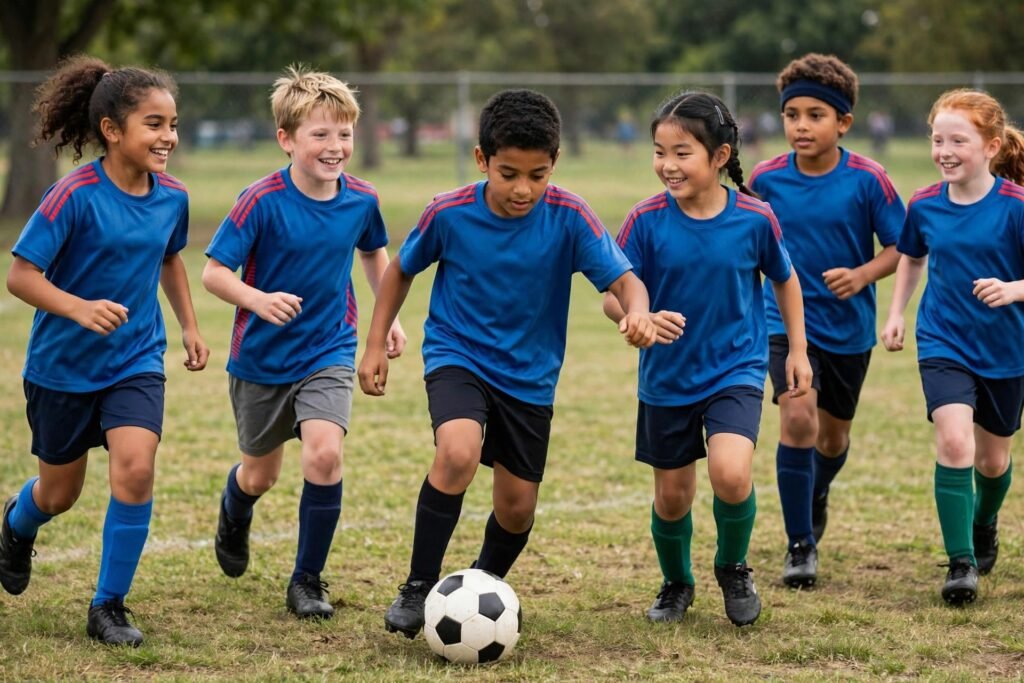
Ask any child psychologist what builds confidence in kids and sport comes up fast — but not for the reasons most parents assume. It isn’t winning that builds confidence; it’s belonging, mastery and being valued by teammates. The wrong sport — hyper-competitive, early-specialisation, shouty coaches — can demolish confidence faster than no sport at all. The right sport, matched to your child’s temperament, builds self-belief that transfers to classrooms and friendships. Here’s how to choose.
Why Sport Builds Confidence (When It Works)
The mechanism is well understood. Sport gives children regular experiences of mastery — skills visibly improving through effort, which teaches the growth mindset more powerfully than any classroom lesson. It provides belonging — a team identity and friendships outside school hierarchies. And it offers controlled adversity — losing, making mistakes, being benched — in an environment where the stakes are low enough to learn resilience rather than fear.
But these benefits depend entirely on the environment. Research consistently shows that children’s sporting confidence correlates with coaching quality and parental behaviour far more than with the sport itself. A supportive football coach builds more confidence than a toxic swimming coach, regardless of which sport is “better.” Choose the club and coach first, the sport second.
Team Sports: Belonging and Social Confidence
Football is Britain’s default for good reason: ubiquitous, cheap (grassroots fees are modest), and socially central — the playground currency of football fluency is real. For socially cautious children, the structured teamwork of football provides friendship scaffolding: you don’t need to be witty or popular, just reliable in your position.
Rugby deserves mention for its ethos — respect for officials, all body types valued (every shape has a position), and a culture that explicitly teaches humility in victory. Minis rugby (from age 6) is non-contact tag rugby, so the physicality worries are misplaced at young ages.
Cricket, netball, basketball and hockey all offer the team-sport benefits with different physical and social flavours. Netball is particularly strong for girls’ confidence in the pre-teen years, with a robust school and club pathway. The best choice is often whichever sport the child’s friends play — social connection drives attendance, and attendance drives confidence.
Individual Sports: Mastery and Self-Reliance
Some children wilt in team environments — the shy, the perfectionist, the child who crumbles under perceived judgement. For them, individual sports can be transformative:
Swimming is the ultimate confidence builder for anxious children. It’s non-competitive at entry level, progress is visibly measurable (stages and distances), and water competence is a life skill. Many timid children bloom in the pool precisely because nobody’s watching them fail — everyone’s face is underwater.
Martial arts (judo, karate, taekwondo) teach discipline, respect and physical self-assurance through graded progression — the belt system makes improvement tangible. Judo is particularly good: it’s grappling-based (no striking), teaches safe falling, and British Judo clubs are affordable and widespread.
Gymnastics, climbing and athletics suit energetic children who need to test their bodies. Climbing walls have exploded across Britain and are brilliant for cautious children — conquering a wall they feared is pure confidence in physical form.
Tennis and badminton offer individual competition with a social club structure — good for children who want personal challenge without team pressure.
Matching Sport to Temperament
This is the step most parents skip. Consider honestly:
The shy child often thrives in swimming, martial arts or climbing — environments where participation doesn’t require social performance, and confidence grows before social demands do.
The boisterous child needs rugby, football or athletics — high-energy outlets with clear rules, where physicality is channelled rather than suppressed.
The perfectionist benefits from team sports, where mistakes are shared and absorbed by the group, rather than individual sports where every error feels personal. (Perfectionists in gymnastics can struggle; in football they learn that missed shots are normal.)
The uncoordinated child — and this matters — should try martial arts, swimming or cycling before ball sports. Early failure at football when coordination is still developing can create a lasting “I’m not sporty” identity. Every child is physical; not every child is ball-shaped.
Red Flags: When Sport Destroys Confidence
Watch for these warning signs in any club: coaches who shout at children or single them out for mistakes; selection and streaming before age 11–12 (early deselection teaches most children they’re “not good enough” permanently); parents screaming from touchlines (the fastest way to make a child dread matches); and training loads that crowd out rest, schoolwork and unstructured play. The NSPCC’s Child Protection in Sport Unit provides guidance on safe sporting environments — any reputable club should meet its standards. And for parents’ own joint health on the sidelines, strengthening knees for running after 40 keeps you active alongside your children.
Early specialisation — one sport, year-round, before puberty — is increasingly discouraged by sports medicine. Multi-sport children develop better all-round athleticism, suffer fewer overuse injuries, and are less likely to burn out. The data on elite athletes is striking: most played multiple sports as children.
Practicalities: Cost, Time and Access
Grassroots sport in Britain is remarkably affordable — junior football or rugby often costs £100–£200 a year — but costs escalate with travel, kit and tournaments. Swimming lessons, martial arts and gymnastics typically run £20–£40 monthly. If money is tight, many clubs offer bursaries (ask — they rarely advertise), and Sport England’s funding supports access programmes. Time is the real cost: two sessions a week plus matches is a family commitment, so choose sustainably. Parents juggling these schedules alongside their own fitness should see how to stay motivated to exercise in winter.
The Parent’s Role: What to Do (and Not Do) on the Sidelines
Your behaviour shapes your child’s sporting confidence more than any coach’s. Do: praise effort and specific improvements (“your tackling was much braver today”), let the child own the experience (ask “did you enjoy it?” before “did you win?”), and model gracious behaviour toward officials and opponents. Don’t: coach from the touchline (it confuses and embarrasses — that’s the coach’s job), criticise mistakes on the journey home (the car ride is the most dreaded part of youth sport for many children — keep it positive or silent), or tie love and approval to performance. The research is unambiguous: children who feel parental pressure enjoy sport less, perform worse and quit earlier. The parents whose children thrive in sport are the ones who make it clear that their love doesn’t depend on the scoreline — and then prove it, week after week, especially after defeats.
The Bottom Line
The best sport for your child’s confidence is the one they’ll stick with, coached by someone kind, alongside friends, at an intensity that leaves them wanting more. Match the sport to the temperament, prioritise the club’s culture over its league position, keep it multi-sport and fun until the teens, and never let your touchline behaviour become the thing they remember. Confidence isn’t built by trophies — it’s built by Tuesday evenings where a child feels competent, included and glad they came.
Frequently Asked Questions
What age should children start organised sport?
Most sports accept children from 5–6, but “organised” should mean playful and multi-sport at that age. Structured competition can wait until 8–10. Before five, free play — running, climbing, swimming for fun — develops the foundations better than any class.
My child wants to quit after a month. Should I let them?
Distinguish between wrong-sport and wrong-moment. Try a different sport before quitting sport entirely — the child who hated football may love climbing. But never force continuation through misery; forced sport breeds lasting hatred of exercise. One term is a fair trial.
How competitive should children’s sport be?
Effort and improvement should be celebrated; results matter progressively more as children mature. Before age 12, leagues that don’t publish tables have it right. Competitive drive emerges naturally in teens — it doesn’t need manufacturing in eight-year-olds.
Is it too late to start a sport at 12 or 14?
Absolutely not. Late starters often progress fast with better focus and physical maturity. Sports like rowing, climbing, martial arts and volleyball actively welcome teen beginners, and many elite athletes started their sport in their teens.