
When Is The Best Time To Buy Bitcoin During A Dip For UK Families
Bitcoin’s dipping — should you buy? When the best time to buy during a dip really is, plus the disciplined strategies that beat panic decisions. Read more.
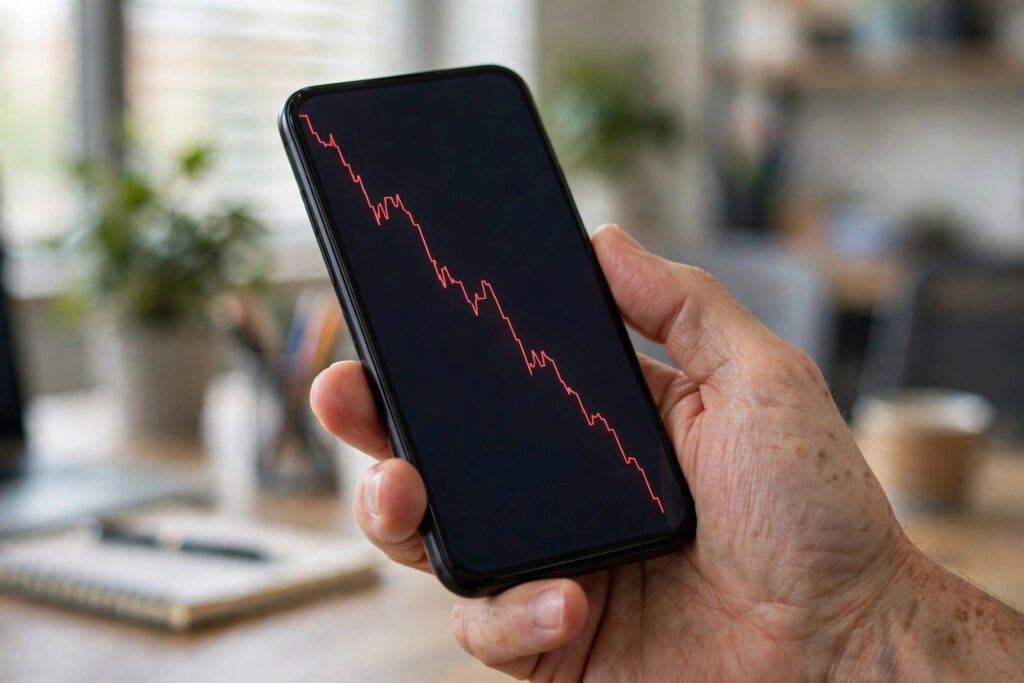
Bitcoin has dropped 20%. Your group chat is panicking, the headlines scream crisis, and some voice in your head whispers: buy the dip. It feels like the obvious move — buy low, sell high, the oldest advice in investing. But “buying the dip” in crypto is where more beginners lose money than almost anywhere else, because dips are only obvious in hindsight, and what looks like a dip is often the first leg of a much longer fall. The question is not whether dips can be opportunities — sometimes they are — but how to approach them without turning a strategy into gambling.
This guide gives an honest framework: what “the dip” actually means, why timing it is so hard, the disciplined approaches that work better, and the psychological traps to avoid — because understanding investment risk matters more than any timing trick.
What “Buy the Dip” Gets Wrong
The strategy assumes you can distinguish a dip (temporary drop before recovery) from the start of a crash (sustained decline). In real time, they look identical. Bitcoin’s history is full of 20% “dips” that became 50% drawdowns, and 50% drawdowns that became 80% crypto winters. Every buyer of the 2018 dip watched their purchase fall another 60%; every buyer of the March 2020 dip tripled their money within a year. Nobody knew which was which at the time — and anyone who claims they did is selling something.
The deeper problem is emotional: dip-buying feels rational but usually is emotional — fear of missing out dressed as strategy. The urge spikes precisely when prices fall, which is also when fear is highest and judgement worst. Professional traders have systems; amateurs have adrenaline. If your “strategy” is a feeling in your stomach when you see red candles, it is not a strategy.
The Approaches That Actually Work
Dollar-cost averaging (DCA): invest a fixed amount at regular intervals — £100 monthly, say — regardless of price. You automatically buy more when prices are low and less when high, without decisions, emotions or timing. Decades of data across all asset classes show DCA beats most amateur timing attempts, and it converts the dip question from a stressful decision into an automatic process. It also smooths the gut-wrenching volatility that shakes most beginners out entirely. For UK investors, many FCA-registered platforms support recurring buys.
Pre-committed dip rules: if you insist on dip-buying, systematise it in advance — written rules, made when calm. Example: “If Bitcoin falls 25% from its recent high, I deploy 20% of my cash reserve; at 40%, another 20%.” The rules remove emotion from the moment. Never deploy everything on one dip — keep reserves, because dips can always dip further.
Value-based buying: the sophisticated version — buy when your analysis says the asset is undervalued, not when the price fell. This requires genuine understanding of what drives Bitcoin’s value (adoption, network effects, macro conditions) rather than chart-watching. Few beginners can do this reliably; DCA exists precisely because most cannot.
Whatever you choose, size positions so that being wrong does not ruin you — never bet the rent money, however certain the opportunity feels. The discipline of systematic investing beats heroic timing calls every time.
When Dip-Buying Genuinely Makes Sense
To be fair, there are situations where buying dips is rational — when it is part of a system rather than a reaction. If you dollar-cost average, you are technically buying every dip automatically, without the stress. If you hold a written investment plan with target allocations (“crypto will be 5% of my portfolio”), then rebalancing after a drop — buying to restore the 5% — is disciplined dip-buying by another name, and it works because the decision was made in advance.
It also makes sense when the dip has a identifiable, temporary cause disconnected from fundamentals — an exchange outage sparking panic selling, or a short-term liquidity crunch. Distinguishing these from structural declines requires genuine market understanding, which is why this remains an advanced play. For everyone else, the boring truth stands: regular, automatic, emotionless buying beats heroic dip-catching over any meaningful timeframe. The investors who did best in crypto were not the cleverest timers — they were the most consistent buyers who never sold in panic.
The Psychology Traps
Catching a falling knife: buying aggressively into a decline that continues — each purchase immediately underwater, each “dip” deeper. Mitigation: staged entries, never all-in, and a pre-defined maximum allocation you will not exceed however tempting.
Anchoring: “It was £60,000 last month, so £45,000 is cheap!” — the previous high is psychologically compelling and analytically meaningless. Prices do not have memories; £45,000 is only cheap relative to fundamentals, not to past prices.
Revenge buying: after missing a rally, overcommitting on the next dip to “make up” for it — position sizes balloon, discipline evaporates. The market does not owe you the gains you missed.
Social proof: “everyone is buying the dip” — group chats and social media amplify confidence without adding information. When buying feels most socially validated, scepticism is most valuable. Make your rules alone, in calm; execute them mechanically, in storm.
UK-Specific Considerations
Remember the tax: in the UK, selling crypto (including swapping one coin for another) can trigger Capital Gains Tax — “buying the dip” by selling one asset to buy another creates a taxable disposal. Frequent trading multiplies both fees and tax complexity; DCA-and-hold is simpler on every front.
Use FCA-registered platforms, keep records of every transaction (the taxman expects them — HMRC’s crypto guidance is explicit on this), and never invest money you need within the next few years — crypto winters last longer than optimism suggests. The FCA’s crypto guidance is essential reading before committing significant sums, and the Bank of England’s educational resources explain the macro forces that move all risk assets, crypto included.
Frequently Asked Questions
Is buying the dip a good strategy for Bitcoin?
Sometimes it works brilliantly, sometimes it catches a falling knife — and you cannot tell which in advance. Systematic approaches (dollar-cost averaging, pre-committed dip rules) outperform emotional dip-buying because they remove timing decisions from heated moments.
How far should Bitcoin drop before I buy?
There is no magic number — a 20% drop can precede a 60% crash or a full recovery. If you dip-buy, use pre-written rules (e.g., staged entries at defined drawdown levels) made when calm, and never deploy everything at once.
What is dollar-cost averaging?
Investing a fixed amount at regular intervals regardless of price — £100 monthly, for example. You automatically buy more when cheap and less when expensive, with zero timing decisions. It is the most reliably successful approach for beginners.
Do I pay tax when I buy the dip in the UK?
Buying with pounds is not taxable, but selling or swapping crypto to fund the purchase can trigger Capital Gains Tax — each disposal counts. Keep records of every transaction; HMRC expects them.
How much of my money should go into crypto?
Only what you could afford to lose completely — for most people, a small single-digit percentage of their total investments. Crypto is a speculative, volatile asset; position sizing is your primary risk control, more important than any entry timing.






