How to Install a Child Car Seat Correctly: UK Rules
Install a child car seat correctly: UK law, ISOFIX vs belt fitting, step-by-step technique, the 7 mistakes everyone makes and travel with taxis and holidays.
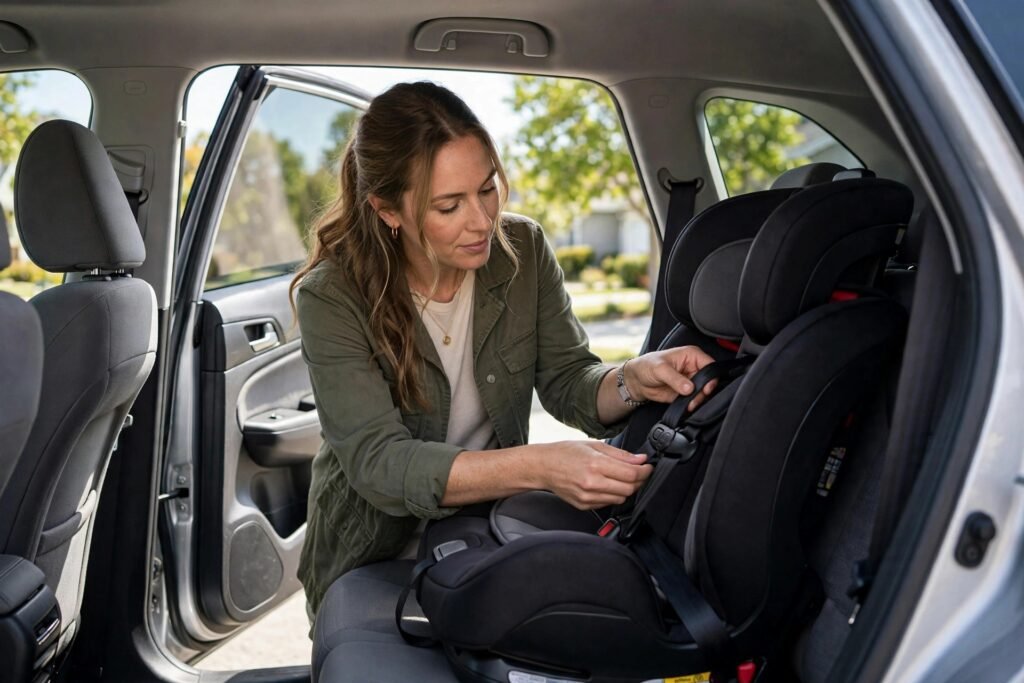
It’s the most anxiety-inducing 10 minutes of new parenthood: threading straps, clicking buckles, tugging at a seat that still wobbles — while doubting every decision. You’re not alone: studies consistently find a large majority of child car seats are fitted incorrectly in at least one way, dramatically reducing their protection. The good news: correct installation is a learnable skill, not a talent, and 20 careful minutes gets it right. Here’s the UK-specific guide to installing your child car seat correctly — the rules, the methods, and the mistakes to avoid.
The UK Rules You Must Know
British law is specific (gov.uk/child-car-seats-the-rules):
- Children must use a car seat until they’re 12 years old or 135cm tall, whichever comes first.
- Seats must meet UN R129 (i-Size) or ECE R44.04 standards — check the orange label. R44 seats are still legal if you own them, but all new seats sold meet R129.
- Babies must travel rear-facing until at least 15 months under R129 (many experts recommend to age 2–4 for the huge safety benefit — rear-facing protects the head, neck and spine far better).
- It’s the driver’s responsibility — you can be fined £100–£500 per incorrectly restrained child.
- Back seat is safest; front seat only with the airbag deactivated for rear-facing seats (an active airbag can kill a rear-facing baby).
Height-based (i-Size) versus weight-based (R44) sizing confuses everyone: check your specific seat’s manual for its limits, and move up stages when the child exceeds them — not before. RoSPA publishes detailed stage-by-stage guidance.
ISOFIX vs Belt-Fitted: Which System?
ISOFIX (strongly recommended)
ISOFIX anchor points — metal bars in the car’s seat crease — let compatible seats click directly to the chassis. It’s faster, far harder to get wrong, and mandatory in new cars since 2006 (check your car’s manual for anchor locations; they’re usually marked). The seat should click audibly on both sides, show green indicators, and have minimal movement when tugged at the belt path. Add the support leg or top tether exactly as the manual shows — they’re load-bearing safety components, not optional extras.
Belt-fitted
Some seats (and many older cars) use the adult seatbelt routed through the child seat. This works safely if routed exactly per the manual — the belt path diagrams are colour-coded (usually blue for rear-facing, red for forward-facing). The common failure is a belt that’s twisted, slack, or routed through the wrong path. If using belt-fit, get it checked by a professional — the error rate is much higher than ISOFIX.
Whichever system, compatibility matters: not every seat fits every car. Check the seat manufacturer’s vehicle fit list before buying — a “universal” claim isn’t a guarantee for your specific model. Retailers like Halfords and many independent specialists offer free fitting checks.
Step-by-Step: Getting It Right
- Read both manuals — the seat’s and the car’s. Ten minutes here prevents every common error.
- Choose the position: back seat, preferably the middle rear (furthest from impact points) if it has ISOFIX or a full 3-point belt. Never a rear-facing seat in front of an active airbag.
- Install the base/seat: ISOFIX — push until both sides click green, extend support leg to the floor (firm contact, correct angle), or attach top tether to the designated anchor. Belt-fit — route exactly per the colour-coded guides, remove all slack, lock the belt if your car has locking retractors.
- The 2.5cm test: grip the seat at the belt path and tug firmly side-to-side and forward. Movement should be minimal — under 2.5cm. More than that: reinstall.
- Position the child: back flat against the seat, bottom all the way back, harness at the correct height (rear-facing: straps at or below shoulders; forward-facing: at or above).
- Tighten the harness: the pinch test — try to pinch the strap vertically at the collarbone. If you can pinch fabric, it’s too loose. Snug, not strangling.
- Chest clip at armpit level (if fitted), bulky coats off — strap the child in their normal clothes, then put the coat on backwards over the harness. A puffy coat compresses in a crash, leaving lethal slack.
Which? crash-tests seats beyond the legal minimum — their Best Buys are worth consulting before purchase.
The Mistakes Almost Everyone Makes
- Moving up stages too early: forward-facing at 15 months because the seat allows it, boosters too soon. Keep children rear-facing as long as the seat permits — it’s roughly five times safer.
- Loose harness: the number-one error. The pinch test every single journey.
- Bulky winter coats under straps: as above — one of the most dangerous common mistakes.
- Twisted straps: straighten fully; twisted straps concentrate crash forces.
- Wrong belt path: the colour coding exists for a reason — double-check every install.
- Second-hand seats with unknown history: a seat that’s been in a crash — even visibly undamaged — may have compromised structure. Only accept second-hand from someone you trust completely, with full history.
- Accessories: aftermarket strap covers, head inserts and toys not made by the seat manufacturer can affect crash performance and may void the warranty.
New-parent life is overwhelming enough — finding time for yourself matters too — but this 20-minute job is worth doing meticulously. Many fire stations, councils and retailers run free car-seat checking clinics; use them.
Travelling: Taxis, Holidays and Grandparents’ Cars
UK law has narrow exemptions: licensed taxis and minicabs don’t require car seats (though you can use your own), and children over 3 may use adult belts for short unexpected journeys. But exemptions aren’t recommendations — for planned travel, bring the seat. For holidays, check airline policies (many allow seats on board if you buy the child a seat) and consider a lightweight travel seat. For grandparents’ cars: either a second base (ISOFIX bases make swapping seats between cars trivial) or a dedicated second seat — the faff of reinstalling weekly is when mistakes creep in. And when planning family travel, build seat logistics into the plan early. Child-focused safety extends beyond the car — our parental controls guide covers the digital side.
Conclusion
Correct car seat installation comes down to: the right seat for your child’s size, ISOFIX where possible, both manuals read, the 2.5cm tug test passed, harness pinch-tested every journey, and no bulky coats under straps. Twenty careful minutes, checked by a professional if you’re unsure, gives your child the full protection the seat was designed for. It’s the highest-value safety task in parenting — do it once, do it right.
Frequently Asked Questions
Until what age must children use car seats in the UK?
Until they’re 12 years old or 135cm tall, whichever comes first. After that, adult seatbelts — though high-back boosters remain safer for smaller children beyond the legal minimum.
Is ISOFIX safer than seatbelt installation?
Both are safe when done correctly, but ISOFIX is much harder to get wrong — misuse rates are dramatically lower. If your car has ISOFIX points (mandatory since 2006), use them.
How long should babies stay rear-facing?
Legally until 15 months under R129 rules, but safety experts recommend keeping children rear-facing until age 2–4 (as long as the seat allows) — it’s around five times safer for head, neck and spine.
Can you put a baby seat in the front of the car?
Only with the passenger airbag deactivated for rear-facing seats — an active airbag can be fatal to a rear-facing baby. The back seat is always the safest position.
Should children wear coats in car seats?
No bulky coats under the harness — they compress in a crash leaving dangerous slack. Strap the child in normal clothes, tighten properly, then put the coat on backwards over the harness or use a blanket.