
How to Cash Out Crypto to a UK Bank Account Safely
How to cash out crypto to a UK bank account safely: off-ramps, true costs, navigating bank fraud checks, handling the tax, and mistakes that freeze funds.
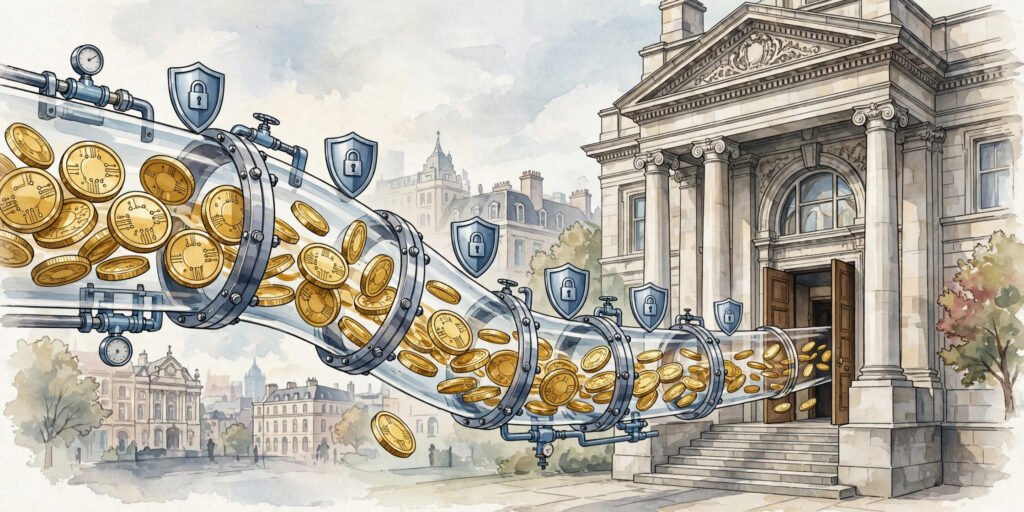
Getting money into crypto is easy — every exchange on earth will take your pounds. Getting it back out into your UK bank account is where the friction lives: frozen transfers, fraud checks, unexpected fees, tax bills and the occasional horror story of an account closed without explanation. Cashing out safely is a process, and doing it in the right order saves money and stress.
This guide walks through cashing out crypto to a UK bank account step by step: the route, the costs, the bank-compliance dance, the tax, and the mistakes that cause frozen funds.
Step 1: Choose your off-ramp
You have three main routes. Route A — sell on a UK-friendly exchange and withdraw via Faster Payments: the standard path. Transfer crypto to an FCA-registered exchange (or sell where you already hold it), sell for GBP, withdraw to your linked bank account via Faster Payments. Typically arrives within minutes to a few hours, fees 0.25–1.5% on the sale plus possible withdrawal fees. This is the route for most people, most of the time.
Route B — P2P sale: sell directly to another person for a bank transfer. Can achieve slightly better prices, but carries fraud risk (fake payment notifications, reversible transfers) and is a favourite venue for money-laundering — your bank may query the source. Only for the experienced, with escrow. Route C — crypto debit cards: spend crypto directly via a card that converts at point of sale. Convenient for small amounts, but every spend is a CGT disposal and the FX-like conversion spreads are poor value for large sums. For serious amounts, Route A wins on cost, safety and paper trail.
Step 2: Understand the true costs
Cashing out has four cost layers. Trading fees: 0.25–1.5% depending on platform and order type — use limit orders on the pro interface, not the one-click “sell” button, to halve this. Spread: the gap between buy and sell prices, often 0.5–1% on retail interfaces — another reason to use the order book. Withdrawal fees: usually £0–£2 for Faster Payments; some platforms charge more. Network fees: moving crypto to the exchange costs blockchain fees — time transfers for low-congestion periods.
On £50,000, the difference between the lazy route (instant sell, 1.5% + 1% spread) and the careful route (limit order, 0.25% + 0.2% spread) is roughly £1,000. That’s real money for ten minutes of extra care. Also consider timing disposals across tax years to use multiple £3,000 CGT allowances — selling £40,000 of gains as two £20,000 tranches across April uses two allowances instead of one. And never forget the biggest “fee” of all: the tax bill, covered below.
Step 3: Navigate the banks (the tricky part)
Here’s where cash-outs go wrong. UK banks are legally obliged to monitor for money laundering and fraud, and crypto-related transfers are inherently interesting to their systems. Large or unusual inbound transfers from exchanges can trigger holds, “source of funds” questionnaires, or in rare cases account reviews. This isn’t the bank being difficult — it’s the law (the Proceeds of Crime Act applies to them, not you, but you’re affected).
Minimise friction: use one consistent route — the same exchange to the same bank account builds a boring, explainable pattern. Withdraw in tranches rather than one enormous lump if the sum is life-changing — several £20k transfers over weeks attract less attention than one £150k arrival. Keep immaculate records — purchase history, exchange statements, wallet records — so any source-of-funds query is answered in minutes. Warn your bank for very large sums: a quick call to say “a £X transfer from [exchange] is coming from crypto sales, records available” transforms a fraud alert into a noted event. Never lie about the source — inconsistencies are what trigger deep reviews. If a bank treats you unfairly, the Financial Ombudsman can review your complaint. Understanding how banks’ fraud detection works helps you see this from their side: you’re trying to look boring to an AI, and boring is good.
Step 4: Handle the tax properly
Cashing out is a CGT disposal — the tax point is the sale, not the withdrawal. Compute your gain (proceeds minus pooled costs minus fees), apply your £3,000 annual exempt amount, and pay tax at 10% or 20% on the rest. If you’re cashing out a large sum, the planning in our tax-efficiency guide applies: spread across tax years, use spousal transfers, harvest losses.
Keep the tax money separate the moment you cash out — the classic disaster is spending the full proceeds then facing a five-figure bill the following January. A rule of thumb: immediately ring-fence 20% of gains for HMRC (adjust to your band), in a separate savings account, before you touch a penny. Report via self assessment by 31 January following the tax year. And remember that HMRC receives exchange data automatically now — the return should match what they already know. For the mechanics, registering for self assessment follows the same process whether you’re employed or not.
Mistakes that freeze funds or cost thousands
Sending crypto to the wrong network/address when moving to the exchange — test with a small amount first, always. Using an unregistered offshore exchange for the sale — if it collapses mid-transfer or your bank queries it, you have no recourse. Structuring withdrawals to “avoid detection” — deliberately splitting transfers to evade monitoring looks exactly like money laundering and achieves the opposite of its intent. Cashing out to someone else’s account — third-party withdrawals trigger every alarm in banking. Ignoring the tax — the most expensive mistake on this list, every time.
Panic-selling into volatility: cashing out during a crash because the bank transfer “might get harder” is emotion masquerading as prudence — decide your exit on investment grounds, execute on operational ones. And leaving it all on the exchange between sale and withdrawal: sell, withdraw promptly, don’t let pounds sit on a crypto platform longer than necessary.
Conclusion
Cashing out crypto to a UK bank safely is a four-step operation: sell on a reputable FCA-registered exchange using limit orders, understand the full cost stack, manage the bank relationship with consistency and transparency, and ring-fence the tax immediately. Do it in tranches for large sums, keep records that answer any question in minutes, and never try to look clever to a fraud-detection system — boring is the goal. The money is yours; this is how you bring it home without drama.
Frequently Asked Questions
How long does it take to withdraw crypto to a UK bank?
Via Faster Payments from a UK-friendly exchange, typically minutes to a few hours once the sale is complete. First withdrawals may take longer due to verification.
Will my bank block a transfer from a crypto exchange?
It can trigger fraud checks, especially for large or unusual amounts. Using a consistent route, withdrawing in tranches, keeping records, and warning the bank for large sums minimises issues.
What fees apply when cashing out crypto?
Trading fees (0.25–1.5%), spread (0.5–1% on retail interfaces), withdrawal fees (£0–£2 typically), and blockchain network fees for the transfer to the exchange.
Do I pay tax when I cash out crypto?
Yes — selling is a CGT disposal. Gains above the £3,000 annual exempt amount are taxed at 10% or 20%. Ring-fence the tax immediately; it’s due via self assessment.
Can I cash out crypto without an exchange?
P2P sales and crypto debit cards exist, but for significant sums a regulated exchange offers the best combination of price, safety and paper trail.






