Best Roof Boxes for Family Road Trips Britain
The best roof boxes for family road trips Britain: sizing, Thule vs mid-range vs budget, roof bars, fuel economy, security, packing tips and hire vs buy.
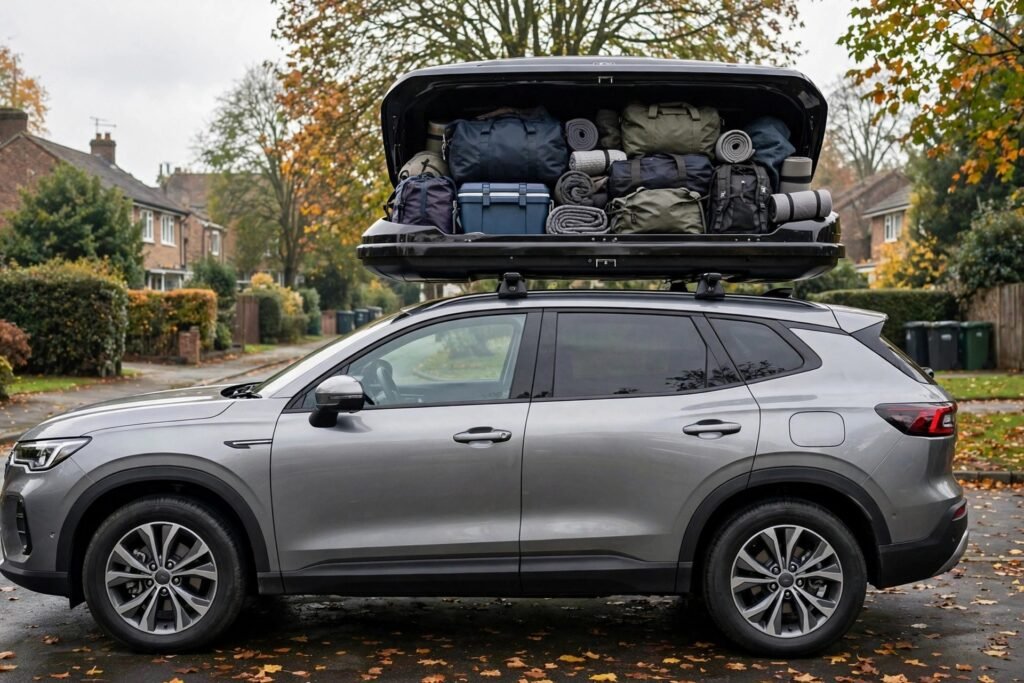
There’s a special kind of holiday misery known only to parents: four people, two weeks of luggage, and a car packed so tightly the children can’t move their legs. The roof box is the elegant solution — 300–500 litres of extra space above your heads, transforming a cramped hatchback into a genuine family tourer. But buy wrong and you’ll get whistling, leaking, fuel-guzzling misery. Here’s how to choose the right box for family road trips.
Size: How Big Do You Actually Need?
Roof boxes range from 300 to 600+ litres. For family road trips, the sweet spot is 400–500 litres — enough for a family’s soft bags, pushchair, or camping gear without becoming unwieldy. Measure your car’s roof first: the box shouldn’t overhang the windscreen or extend far beyond the rear. As a rule, the box length should roughly match your roof length — a 2.3m box on a small hatchback looks absurd and handles badly.
Consider shape too. Long, narrow boxes (good for skis, roof-friendly aerodynamics) versus wide boxes (easier to load, better for bulky family gear). For family holidays with soft bags and pushchairs, wide beats long. For ski trips, long and narrow is the tool.
The Big Three Brands (And Whether They’re Worth It)
Thule. The market leader, and the premium is largely justified — excellent locking, dual-side opening on most models, superb build quality, and the best aerodynamics (meaning less wind noise and fuel penalty). Expect £300–£600. Their Motion XT range is the benchmark family box.
KAMEI / Mont Blanc. Solid mid-range options at £150–£300. Good build, decent locks, slightly noisier and less refined than Thule. For occasional holiday use, the value proposition is strong — you’re paying half the price for 85% of the experience.
Budget boxes (£80–£150). Supermarket and online-marketplace boxes. Thinner plastic, basic locks, single-side opening, more wind noise. They work — but check weight ratings carefully, verify the mounting system’s compatibility with your roof bars, and accept that the latches may frustrate you at 6am in a rainy service station.
Roof Bars: The Foundation Everyone Forgets
The box is useless without compatible roof bars, and this is where most buying mistakes happen. Check: does your car have raised roof rails, flush rails, or fixed mounting points? Each needs different bar feet. The bars’ load rating must exceed the box plus contents (typically 75kg total including the box itself — check your car’s manual, as some roofs are rated lower).
Buy bars and box as a system where possible — Thule and others sell matched sets guaranteeing compatibility. Mixing brands works but requires careful measurement of bar width, T-track compatibility and clamp ranges. Budget £80–£200 for decent bars on top of the box price.
Fuel Economy: The Hidden Cost
A roof box increases fuel consumption — typically 10–20% at motorway speeds, more if overloaded or poorly positioned. On a 1,000-mile family road trip, that’s £20–£40 extra in fuel. Mitigate it: position the box as far back as aerodynamics allow (without blocking the boot), keep motorway speeds moderate (drag increases with the square of speed — 70mph versus 80mph makes a real difference), and remove the box when not in use (a fortnight of commuting with an empty box is pure waste).
Before long trips, it’s also worth checking your car’s health — a loaded car with a roof box stresses cooling, brakes and suspension more than normal driving, so pre-trip checks matter more.
Packing and Security
Pack heavy items low and centred, distribute weight evenly, and never exceed the rated load. The Highway Code covers securing loads safely, and National Highways provides journey planning and motorway driving advice for the trip itself. Soft bags pack more efficiently than rigid suitcases in the curved interior. Lock the box every time you leave the car — roof boxes are surprisingly easy targets at service stations, and insurance often excludes items stolen from unlocked boxes.
Remember height restrictions: with a box fitted, your car may exceed 2m — critical for car parks, ferries and the Channel Tunnel (check limits when booking). Measure your total height and write it on a sticky note on the dashboard. Every year, boxes are destroyed on car-park height barriers by drivers who forgot.
Driving in France or elsewhere in Europe? Rules on loads and equipment vary — our guide to driving in France covers the kit and regulations you’ll need beyond the box itself.
Roof Box Maintenance and Longevity
A quality roof box lasts 10–15 years with basic care — making the cost-per-holiday-trip remarkably low. Maintain it: clean it after each trip (road grime and salt degrade the plastic and seals — warm soapy water, never pressure washers on the seals), lubricate the locks annually with graphite or silicone spray (seized locks are the most common roof box failure, and they’re preventable), check the mounting hardware before each trip (U-bolts and clamps can loosen with vibration — a quick tighten takes minutes), inspect the seal (the rubber gasket keeps water out — replace it if cracked or compressed), and store it properly (hang it on wall brackets in a garage, or store flat under a bed — never standing on its end long-term, which warps the base). UV degradation is the slow killer — if stored outdoors, cover it. A £400 box used twice yearly for a decade costs £20 per trip: some of the cheapest motoring value available.
Hire vs Buy
Using a box once a year? Hire costs £40–£80 per week from specialists, including bars fitted to your car. Twice a year or more, buying wins financially within two years. Hire also solves storage — roof boxes are bulky to store (wall-mounted brackets in a garage work; flats are problematic). If you’ll use it three-plus times yearly, buy; if it’s one annual holiday, hire and skip the storage headache.
The Bottom Line
For family road trips, buy a 400–500 litre box from a reputable brand, matched to proper roof bars rated for your car’s roof load, and position it for aerodynamics. Thule for frequent users, mid-range for occasional holidays, hire for once-a-year trips. Pack it sensibly, lock it always, remember your new height, and remove it when the holiday ends. The children will still complain about the journey — but at least they’ll be able to move their legs.
Frequently Asked Questions
Do roof boxes damage your car?
Properly fitted boxes on quality bars don’t damage paintwork — the clamps grip the bars, not the roof. Damage comes from overloading (dented roofs from excess weight), poor fitting, or grit trapped under bar feet. Clean mounting points before fitting and respect load limits.
Can I leave a roof box on permanently?
You can, but shouldn’t. Permanent boxes hurt fuel economy year-round, degrade faster in weather, and invite theft. Remove it between trips — most modern boxes detach in minutes with practice.
Are roof boxes waterproof?
Water-resistant rather than waterproof. Quality boxes keep contents dry in normal rain; pressure washers, monsoons and faulty seals can let water in. Pack sensitive items (electronics, documents) in dry bags inside the box regardless of brand claims.
What’s the speed limit with a roof box?
There’s no specific UK legal limit for roof boxes, but most manufacturers recommend maximum 130km/h (80mph) — and handling, braking distances and crosswind sensitivity all degrade with a loaded box. Drive to the conditions, not the limit, especially in crosswinds on exposed motorway sections.