How to Set Up a Home Recording Studio Cheaply
How to set up a home recording studio cheaply: the essential mic, interface and software that matter, plus room tricks that cost almost nothing. Begin today.
You have got songs in your head and a spare corner of a bedroom. The leap from humming into your phone to recording proper-sounding music feels enormous — mostly because the industry wants you to believe you need a fortune in gear. You do not. Some of the most-streamed tracks of the last decade were recorded in bedrooms with setups costing less than a weekend away. This guide shows you how to set up a home recording studio cheaply: what to buy, what to skip, and the free tricks that make budget recordings sound expensive.
We will cover the essential signal chain, choosing a microphone and interface on a budget, free software that rivals paid tools, taming your room for nothing, and the recording habits that matter more than gear.
The only gear that actually matters
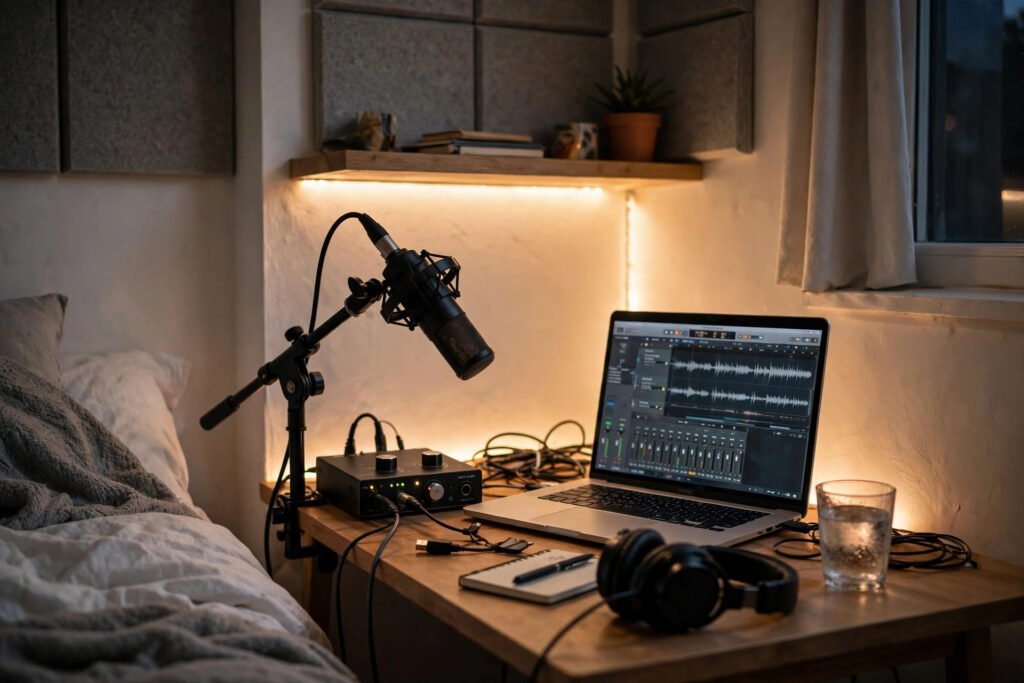
A recording chain has four links: microphone, audio interface, headphones, and computer. Everything else is optional at the start. Your computer is probably already good enough — any modern laptop handles basic multitrack recording. Spend your money where it counts most: the microphone and the interface, because these define your sound far more than any plugin.
For the interface — the box that converts your microphone’s signal into digital audio — the Focusrite Scarlett Solo (around £100) remains the default recommendation for good reason: clean preamps, reliable drivers, and it comes bundled with usable software. Alternatives like the PreSonus AudioBox or Behringer U-Phoria series cost less and perform respectably. For microphones, the Audio-Technica AT2020 (around £90) is the classic budget condenser: detailed, versatile, excellent on vocals and acoustic guitar. If your room is noisy, consider the Shure SM58 (around £95) instead — a dynamic mic that rejects background sound far better, and virtually indestructible. Add closed-back headphones like the Audio-Technica ATH-M40x so your backing tracks do not bleed into the microphone, and your chain is complete for roughly £250–£300 all in.
Free software that embarrasses paid tools
Your digital audio workstation (DAW) is where recording, editing and mixing happen, and the free options are astonishingly capable. Mac owners get GarageBand free — genuinely enough to produce releasable music. Windows users should grab Cakewalk by BandLab, a full professional DAW that is completely free, or try Reaper, which costs just $60 for a discounted licence and is loved by professionals worldwide. Audacity remains useful for quick edits, though it is not a full multitrack DAW.
Learn your DAW’s basics before buying a single plugin: cutting, fading, gain, EQ, compression and reverb cover 90 per cent of what records need. Free plugin bundles like Valhalla’s Supermassive (a gorgeous free reverb/delay) and the TDR Nova EQ outperform many paid equivalents. The trap to avoid is plugin collecting — professionals mix hit records with a handful of tools they know deeply. Depth beats breadth, always. Sound On Sound magazine publishes excellent free tutorials on getting the most from budget setups.
Taming your room for almost nothing
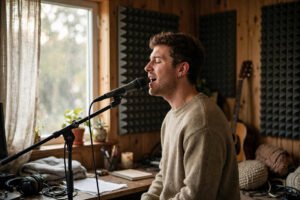
Here is the secret the gear industry whispers: your room affects your recordings more than your microphone does. Bare walls create flutter echoes and boxiness that no EQ fully fixes. But acoustic treatment does not mean expensive foam panels. Heavy duvets hung on the wall behind you absorb reflections dramatically. A rug on a hard floor tames harshness. A wardrobe full of clothes is a superb natural diffuser — many classic vocals were recorded facing an open wardrobe.
For vocals specifically, record in the deadest-sounding spot you can find: a clothes-filled cupboard with the door ajar is a legendary budget vocal booth. Keep the mic away from walls and corners where bass builds up. A DIY pop filter — tights stretched over an embroidery hoop — costs pennies and tames plosives as well as shop-bought versions. If you are also soundproofing a bedroom wall cheaply, note the distinction: soundproofing stops sound getting in and out (hard, expensive), while acoustic treatment improves how the room sounds (easy, cheap). For recording, treatment is what you need. A corner treated for recording doubles nicely if you are building a home cinema on a budget — controlled acoustics flatter films too.
Recording habits that beat expensive gear
Technique consistently outperforms equipment. Get your gain staging right: aim for peaks around -12dB to -6dB, leaving headroom — you can always turn it up later, but clipped distortion is forever. Position the microphone 15–20cm from your mouth, slightly off-axis, to balance clarity against plosives and sibilance. Record multiple takes and comp the best phrases together; every professional does this, and your DAW makes it easy.
Commit to sounds as you go rather than endlessly tweaking. Record acoustic guitar with a touch of the room by pulling the mic back slightly — close-miking everything sounds small and airless. Double-track important parts (record them twice and pan left/right) for instant width and richness. And reference your mixes on multiple systems: headphones, a Bluetooth speaker, the car. If it sounds good everywhere, it is good. The Musicians’ Union offers practical guidance for home-based creators on the business side too, from copyright to releasing.
What to buy second-hand (and what not to)
Microphones, stands, cables and headphones are excellent second-hand buys — microphones have no moving parts to wear out, and a used SM58 is practically immortal. Audio interfaces are usually safe too, though check driver support for your operating system first. Buy from reputable UK retailers of used gear like Gear4music’s pre-owned section or Andertons, where returns are possible.
Skip second-hand computers for audio work unless you know their history — a tired hard drive or failing fan will ruin sessions. Avoid no-name ultra-cheap microphones and interfaces from marketplace sellers; the false economy of replacing them within months costs more than buying the proven budget classics once. And resist studio monitors (speakers) until your room is treated — in an untreated room, good headphones give you more honest information than expensive speakers lying to you with room reflections.
Conclusion
A cheap home studio is not a compromise — it is a starting point that has launched countless careers. Buy the proven budget chain (interface, mic, headphones), learn free software deeply, treat your room with duvets and common sense, and develop recording habits that professionals respect. The songs matter more than the gear, and now nothing stands between them and the world.
Frequently Asked Questions
What is the minimum budget for a home recording studio?
Around £250–£300 buys a Focusrite Scarlett Solo interface, an Audio-Technica AT2020 microphone, a stand, cable and closed-back headphones — a complete chain capable of professional-sounding results, with free DAW software.
Can I record good vocals in an untreated bedroom?
Yes, with technique. Record facing an open wardrobe of clothes, hang a duvet behind you, keep the mic away from walls, and use a pop filter. These free tricks remove most of the boxiness that plagues bedroom recordings.
Do I need studio monitor speakers to start?
No. Quality closed-back headphones are better for beginners, especially in untreated rooms where speakers interact badly with wall reflections. Add monitors later, after basic room treatment.
What is the difference between soundproofing and acoustic treatment?
Soundproofing stops sound travelling in or out of a room (difficult and expensive). Acoustic treatment controls reflections inside the room to make recordings sound better (easy and cheap). Home recordists need treatment, not soundproofing.