How to Introduce Your Partner to Video Games
Want to share your hobby? How to introduce your partner to video games: the right first games, avoiding frustration, and keeping it fun for both of you.
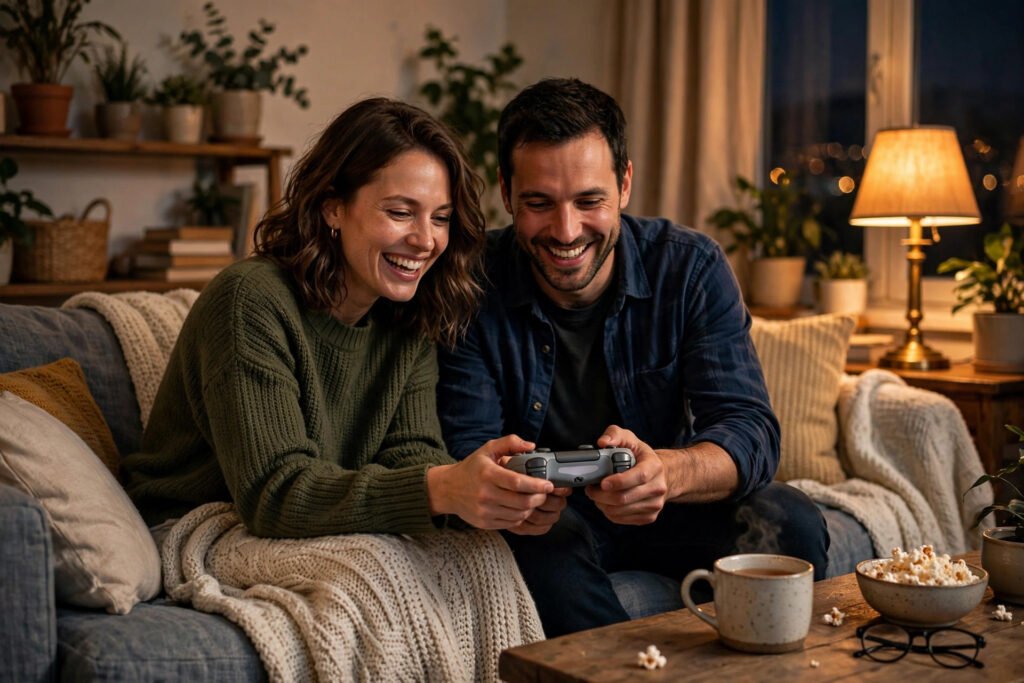
“Games are a waste of time.” “I am not a gamer.” If your partner has never held a controller, introducing them to video games can feel like proposing a hobby from another planet. But done badly, handing them a competitive shooter and laughing as they die, it confirms every prejudice. Done well, it opens a shared world: cooperative adventures, cosy evenings, inside jokes, and a genuinely new way to spend time together. Here is how to introduce your partner to video games without the eye-rolls.
First, drop the missionary zeal
The goal is not to convert your partner into a gamer; it is to share something you love and see if they enjoy it. That reframe changes everything: no pressure, no disappointment if they bounce off, no “just try this one more game”. Ask what they enjoy in other media, films, books, puzzles, sport, and match the game to their taste, not yours. A partner who loves mysteries wants a detective game, not your 400-hour RPG. And accept that they may simply not be into it; a shared hobby is lovely, but it cannot be forced. Respect for their autonomy is more attractive than any game. Relate’s relationship advice makes the same point about all shared activities: invitation beats pressure.
Start where the barriers are lowest
Controllers are the first wall, dual analogue sticks are genuinely unintuitive to newcomers. Start with games that need minimal input: narrative adventures with simple controls such as Firewatch or Life is Strange, cosy games like Stardew Valley or Animal Crossing, or mobile games they may already play without calling themselves gamers. The Nintendo Switch is the classic gateway console: intuitive, social, full of welcoming titles. Let them play at their pace with zero backseat driving, nothing kills enjoyment faster than “no, press X, no, the other X”. Check PEGI ratings together so they know what to expect from content.
Play together, not against each other
Cooperative play is the golden rule for beginners. Competitive games pit their day-one skills against your thousand hours, humiliating and pointless. Instead try It Takes Two, designed exactly for this with one experienced player and one newcomer both essential, or Overcooked’s chaotic kitchen teamwork, Lego games’ gentle co-op, or Stardew Valley’s shared farm. Sit together, pass the controller, laugh at failures. The shared experience matters more than the game, which is the same reason games nights for adults work as social events: the game is the excuse, the togetherness is the point. And planning a proper games night with other couples can make it a social thing rather than a solo conversion project.
Handle the skill gap with grace
They will be bad at first. You were too, you have just forgotten. Never laugh at their failures, laugh with them at shared disasters, which is different. Never grab the controller to show them, and never say “it’s easy”. Offer help only when asked, celebrate their wins genuinely, and choose games where both of you can contribute regardless of skill. If frustration builds, switch games, not partners. The right game at the wrong difficulty is still the wrong game. Difficulty settings exist precisely for this; there is no prize for suffering on normal.
Make it a ritual, not a lecture
The couples who game together successfully make it routine: a cosy co-op session on Friday nights, a puzzle game with morning coffee, taking turns choosing. Keep sessions short at first, an hour beats a marathon. Pair it with nice things: snacks, blankets, no phones. And let them choose what to play next; ownership of the choice builds investment. Some partners become genuine enthusiasts; others enjoy it as an occasional shared activity; both outcomes are wins.
Beyond the first game: building a shared gaming life
Suppose it worked — your partner enjoyed it. What next? Build on the momentum gently. Let them lead the next choice: browse a digital store together, watch trailers, pick whatever appeals. Their taste may diverge from yours entirely — the partner who loved Stardew Valley may next want a horror game you would never touch. Follow their curiosity; the shared activity matters more than the genre. Take turns choosing, and genuinely engage with their picks — nothing kills a shared hobby faster than one partner tolerating the other’s choices.
Expand the ritual: a regular gaming evening, gaming weekends with friends, even gaming holidays (yes, they exist — from cosy cabin co-op marathons to conventions). Introduce them to the culture gradually: the music, the art, the stories worth discussing. And keep the grace from the beginning — the skill gap never fully closes, and it should not need to. The couples who game together for years are not the most skilled; they are the ones who kept it fun, kept it kind, and kept choosing each other over the leaderboard. Player two, it turns out, was the real endgame all along. A last thought: the games are almost incidental. What you are really building is a new shared language — the jokes, references and memories that couples accumulate. Years from now you will not remember the boss fight; you will remember laughing together at 1am when everything went wrong. That is true of every great shared hobby. Games just happen to be an especially fun way to build it.
Conclusion
Introducing your partner to video games works when you drop the pressure, match games to their taste, start with simple controls, play cooperatively, handle the skill gap kindly, and make it a cosy ritual. You are not recruiting a gamer, you are inviting someone you love into something you love. Do it with grace and you might just gain a player two.
Frequently Asked Questions
What is the best game to introduce a non-gamer partner?
It Takes Two, designed for mixed-skill couples, Stardew Valley, Animal Crossing, or narrative adventures like Firewatch, all welcoming, cooperative or low-pressure.
How do I teach someone to use a controller?
Start with games needing minimal input, let them learn at their pace, never grab the controller, and avoid backseat driving. Most people pick up basics within a few sessions.
Should we play competitive or cooperative games?
Cooperative, always, at first. Competitive play against a vastly more experienced partner is discouraging; co-op builds teamwork and shared fun.
What if my partner just does not like games?
Accept it gracefully. Not every interest must be shared, the attempt itself shows care. Forcing it breeds resentment; a gracious retreat preserves goodwill.
Can gaming together actually help a relationship?
Shared enjoyable activities strengthen relationships generally, and cooperative games add teamwork, communication and shared laughter. The key is that both partners genuinely enjoy it.
What if my partner tries gaming and hates it?
Accept it gracefully — not every hobby must be shared, and pressuring them breeds resentment. Ask what specifically did not work (the game? the controls? the pressure?) and try once more with something different before calling it.
Can gaming together replace date nights?
Sometimes, but not always — variety keeps relationships healthy. Alternate gaming sessions with your usual outings rather than substituting entirely. The couch co-op evening is a great addition to the rotation, not the whole rotation.
What is a good first co-op game for total beginners?
Overcooked 2, Stardew Valley, It Takes Two or Lego games — all forgiving, funny and built for two. Avoid anything with complex controls or permadeath; the first session should feel like play, not homework.